2026 Golf Bags Guide: Trends, Types & Tips for Golfers & Brands serves as an all-in-one resource for both amateur golf enthusiasts and B2B golf retail brands, covering the latest industry trends, mainstream golf bag types, and practical selection & sourcing tips. The global golf equipment market continues to upgrade in 2026, with consumer demands shifting from basic durability to lightweight comfort, multi-scene adaptability, eco-friendly design, and personalized aesthetics. For individual golfers, choosing a suitable golf bag greatly improves on-course experience; for wholesale brands and retailers, mastering trending styles and product classification standards helps optimize product lines, reduce inventory risks, and capture higher market shares in US and European markets.
Whether you are a casual golfer looking for a cost-effective daily golf bag or a sustainable brand sourcing bulk golf bag products, this guide solves core pain points. It breaks down popular 2026 golf bag trends, clarifies the features and applicable scenarios of different golf bag types, and shares professional usage and wholesale sourcing tips. By following 2026 golf bags trends and professional selection rules, both end users and B2B brands can make smarter, more market-aligned decisions.
Hottest Golf Bag Trends Shaping 2026 Market
2026 golf bag design and manufacturing trends focus on practicality, sustainability, and minimalist aesthetics, abandoning outdated bulky and overly fancy styles. These trending upgrades are widely favored by Western golfers and have become standard iteration directions for B2B OEM orders.
First, lightweight ergonomic optimization remains the top trend. Modern golfers prefer low-burden portable designs for walking courses and frequent travel. Most new 2026 golf bags adopt high-tough ripstop fabrics, cutting unnecessary weight while maintaining waterproof, UV-resistant, and wear-resistant performance. Upgraded ergonomic shoulder straps and back support systems effectively relieve long-carry fatigue, perfectly matching casual golf lifestyles.
Second, eco-friendly sustainable design goes mainstream. Driven by EU and US environmental regulations, GRS-certified recycled fabrics, non-toxic water-based printing, and plastic-reduced structures have become core selling points for mainstream golf bags. Green and low-carbon golf bags not only meet cross-border compliance standards but also support brand sustainable marketing, becoming a must-have product line for premium golf brands.
Third, minimalist neutral aesthetics replace exaggerated designs. Matte textures, low-saturation neutral colors, and subtle logo embossing dominate 2026 new styles. The versatile and high-end look adapts to sports, business, and travel scenarios, suitable for all age groups and greatly improving product re-purchase rates.
4 Main Types of Golf Bags: Features & Best Use Cases
Understanding different golf bag types is the foundation for consumer selection and brand product layout. The 2026 market mainly includes four mainstream categories with clear positioning and differentiated functions.
1. Stand Bags As the most versatile type, stand bags feature retractable support legs and lightweight bodies. They are ideal for golfers who prefer walking courses and casual training. With moderate storage space and portable design, stand bags balance practicality and flexibility, making them the best-selling style in retail markets and the core conventional inventory for B2B brands.
2. Cart Bags Designed specifically for golf cart use, cart bags boast large storage capacity, complete segmented pockets, and stable structures. Equipped with 14-way club dividers and multi-functional storage areas including cooler pockets and valuables pockets, they suit professional players and high-frequency course users. Cart bags are high-margin mainstream products for mid-to-high-end wholesale orders.
3. Travel Golf Bags Focusing on transportation protection, travel golf bags adopt thickened shockproof structures and foldable portable designs. They protect golf clubs from collision damage during air travel and cross-city transportation. With the booming golf travel trend in 2026, travel bags have become a fast-growing segmented category for B2B sourcing.
4. Sunday Bags Ultra-light and compact Sunday bags are designed for short training and casual mini-golf scenarios. They feature small size, easy storage, and ultra-low weight, perfect for beginners and casual golf enthusiasts. This low-cost style helps brands cover entry-level consumer groups and enrich product matrices.
Practical Tips for Golfers & B2B Brands
This section shares targeted tips for individual golfers and wholesale brands to maximize product value and market competitiveness based on 2026 golf bags trends.
Tips for Individual Golfers: Prioritize stand bags for daily walking golf and cart bags for fixed-course frequent play. Choose lightweight recycled fabric styles for long-term use to ensure durability and environmental friendliness. Avoid over-sized redundant designs; focus on practical functions such as waterproof performance and anti-collision protection to improve gaming experience.
Tips for B2B Wholesale Brands: Optimize product structure based on 2026 trends. Take minimalist lightweight stand bags as mainstream bestsellers, deploy eco-friendly compliant cart bags for high-end markets, and supplement portable travel bags and Sunday bags to cover full price segments. Strictly verify supplier compliance certifications and batch quality consistency to reduce after-sales risks. Adopt private label subtle customization to avoid homogeneous price competition and boost retail premiums.
Final Thoughts
2026 Golf Bags Guide: Trends, Types & Tips for Golfers & Brands summarizes the latest industry trends, mainstream product types, and practical operational tips for both end consumers and B2B practitioners. In 2026’s upgraded golf market, lightweight comfort, green sustainability, and scenario-based functionality are irreversible development directions. Golfers can select more suitable equipment for better gaming experience, while golf brands can seize trending dividends through scientific product layout and standardized sourcing, achieving stable growth in US and European competitive markets.
OEM & ODM Service
Whether you’re planning to build your own brand, develop new products, or find a stable manufacturing partner for the US and European markets, working with a professional OEM & ODM factory can significantly improve your product quality and market competitiveness.
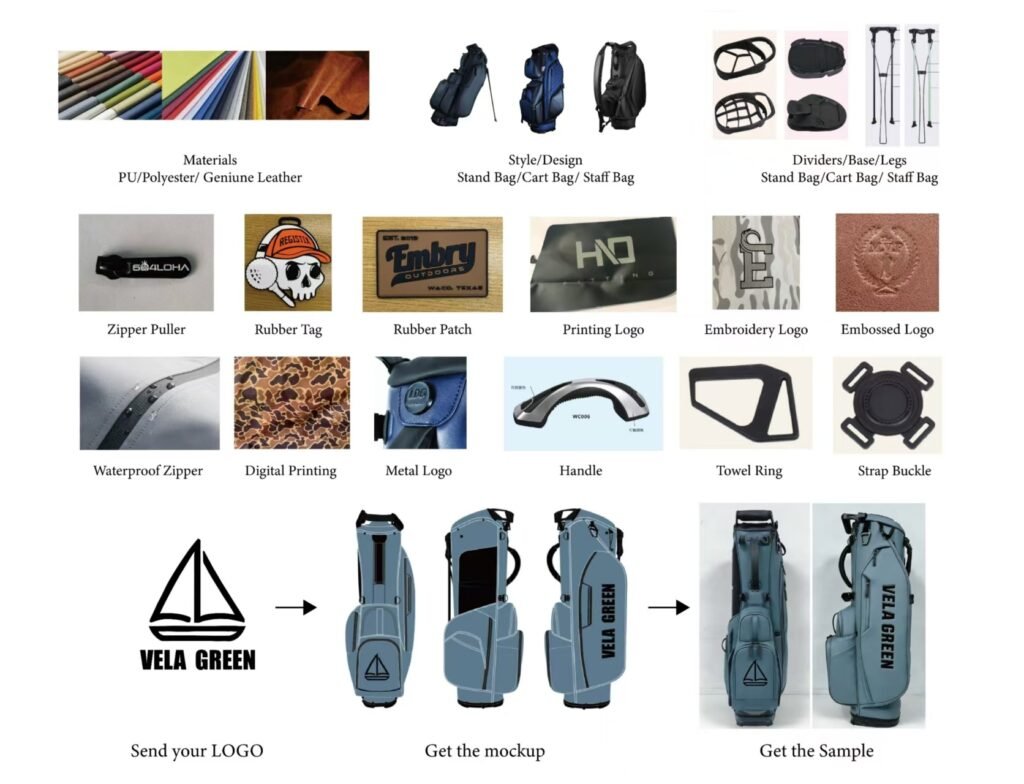
At Vela Green, we provide full-range OEM & ODM services for golf bags, golf headcovers, gloves, towels and other golf accessories. We support custom design, material selection, logo branding, color matching and mass production, strictly complying with CPSC, REACH and other international standards. With mature production experience, reliable quality control and professional export support, we help brands and importers develop market-oriented products with efficient lead times and flexible order quantities.