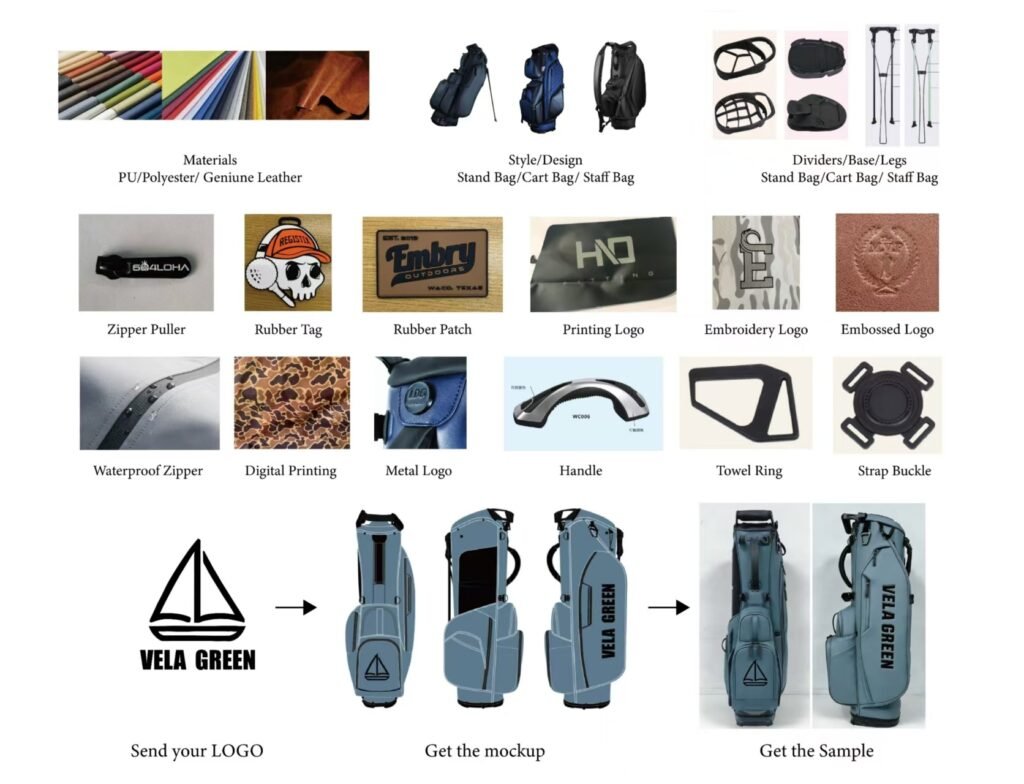
Effective golf bag procurement is about more than just finding a supplier—it’s about structuring deals that protect your margins, minimize risk, and build lasting partnerships. Yet many buyers approach golf procurement without a clear negotiation strategy, leaving thousands of dollars on the table. This guide reveals nine powerful bag procurement secrets that experienced buyers use to secure better terms, cut hidden costs, and avoid supply chain disasters.
Why Golf Bag Procurement Negotiation Matters More Than Ever
In 2026, the playing field for golf bag procurement has fundamentally changed. Raw material costs fluctuate monthly. Supply chains remain vulnerable to regional disruptions. And competition for reliable manufacturing capacity intensifies during peak seasons.
Professional golf bag procurement now requires buyers to think beyond the unit price. Successful negotiators consider the full lifecycle of the deal—from sample approval to final delivery—and build contracts that protect their interests at every stage. The nine secrets below will transform your golf bag procurement approach from transactional to strategic.
Secret #1: Master the True Cost of Your Golf Bag Procurement Deal
The most common mistake in golf bag procurement is comparing ex‑works prices without examining hidden fees. A factory might quote $18.00 per bag, but your final **landed cost** could be $28.00 or more after factoring in:
- Sample fees ($50–$200 per round, sometimes non‑refundable)
- Tooling/mold costs for custom logos or structural features
- Packaging surcharges for poly bags, cartons, or inserts
- Inspection fees for third‑party quality audits
- Freight and insurance (sea or air)
- Import duties and taxes based on HS code classification
- Port handling and inland transport to your warehouse
A skilled golf procurement professional always requests a full cost breakdown in writing before comparing quotes. If a supplier hesitates to itemize costs, consider it a red flag.
Secret #2: Negotiate Payment Terms That Protect Your Cash Flow
Payment terms are your primary leverage in golf bag procurement. The industry standard for new relationships is 30% deposit, 70% before shipment. However, savvy buyers push for more favorable structures:
| Payment Structure | Risk Level | Negotiation Difficulty |
|---|---|---|
| 30% deposit / 70% after passed inspection | Low | Moderate |
| 30% deposit / 70% after shipping (on B/L copy) | Medium | Moderate–High |
| 50% deposit / 50% before shipment | High for buyer | Easy (avoid if possible) |
| 100% upfront | Extreme | Walk away |
Never accept 100% prepayment in procurement. It eliminates your leverage entirely. Instead, negotiate the 70% balance payment to be contingent on a passed pre‑shipment inspection by a third‑party firm like SGS or Bureau Veritas. This ensures the factory has every incentive to deliver quality. For repeat orders, use on‑time payment history to negotiate lower deposits or extended terms-.
Secret #3: Build a Detailed Quality Control Clause
Every procurement contract must include a clear Quality Control (QC) clause referencing the AQL (Acceptable Quality Limit) standard. Industry standard is AQL Level II, 2.5 for major defects and 4.0 for minor defects.
What to specify in your QC clause:
- Responsibility: Supplier bears cost of replacement or repair for defects above AQL
- Inspection firm: Buyer’s right to hire third‑party inspectors at supplier’s expense if initial QC fails
- Defect definition: Clearly define what constitutes a major vs. minor defect
- Remedial timeline: Factory must respond and propose solution within 7 days of defect notification
A factory that refuses an AQL clause is hiding something. Professional golf bag procurement partners expect and welcome clear quality standards.
Secret #4: Leverage Sampling for Supplier Evaluation
Skilled procurement professionals use the sampling process as a diagnostic tool. A factory’s sample speed and quality reveal more than any brochure.
Benchmark standards for 2026:
| Metric | Poor | Acceptable | Excellent |
|---|---|---|---|
| Sample lead time | 20–30+ days | 10–15 days | 7–10 days |
| Sample revision rounds | 3+ required | 1–2 rounds | 0–1 rounds |
| Sample accuracy | Major mismatches | Minor adjustments | Production‑ready |
If a factory consistently produces poor samples during procurement, remove them from consideration. They will not improve at scale.
Secret #5: Secure Material Traceability and Certifications
Hidden material substitutions are a recurring nightmare in procurement. A sample might use premium 1680D ballistic nylon, but production bags could use cheaper 600D material unless specified.
Require your procurement contract to include:
- Material specifications sheet signed by both parties
- Certificates of origin for fabrics (e.g., Cordura, Invista)
- Zipper brand and model (e.g., YKK #5 Vislon)
- Third‑party test reports for REACH (Europe), Prop 65 (California), or OEKO‑TEX
Factories lacking compliance risk customs holds and entire shipment destruction. In 2026, this is non‑negotiable.
Secret #6: Plan for Logistics Before Finalizing Price
Logistics is the most overlooked variable in golf bag procurement. A factory may quote a competitive ex‑works price, but sea freight from China to Europe or the US can add $4–$8 per unit, plus port fees, customs clearance, and inland transport.
What to negotiate:
- Incoterms: Clarify whether price is FOB (factory loads to vessel) or CIF (supplier covers freight and insurance to destination port)-
- Consolidation options: For smaller orders, share container space with other buyers to reduce shipping costs
- Buffer for delays: Build 2–3 weeks of contingency into your timeline
A professional procurement strategy always calculates landed cost before comparing supplier quotes.
Secret #7: Consider MOQ Flexibility as a Negotiation Lever
Minimum order quantities vary widely among suppliers. Industry standard MOQ for custom golf bags typically starts at 50–100 units but can reach 500–1,000 units for advanced designs.
Negotiation strategies for MOQ:
- For startups: Seek factories offering MOQs below 200 pieces for trial orders
- For established brands: Use larger volumes to negotiate lower per‑unit pricing
- For complex designs: Simplify materials or reduce customization to lower MOQ
Standard materials like nylon or polyester support lower MOQs, while premium options like PU leather push MOQs higher. Adjust your design accordingly during golf bag procurement.
Secret #8: Build Long‑Term Partnerships Through Performance Data
Short‑term golf bag procurement thinking leaves money on the table. Suppliers prioritize repeat customers. Track these metrics and use them in negotiations:
| Metric | Target | Negotiation Use |
|---|---|---|
| On‑time delivery rate | 95%+ | Leverage for price freeze requests |
| Defect rate | Under 2.5% | Leverage for lower deposits |
| Reorder frequency | 2+ times/year | Leverage for priority production slots |
Share this data with your supplier. Factories that see you track performance are more responsive to golf bag procurement requests.
Secret #9: Develop a Backup Supplier
Over‑reliance on a single supplier is a hidden risk in golf bag procurement. If your primary factory faces a production issue—flooding, labor strike, raw material shortage—your entire business stops.
Dual‑sourcing strategy:
- Primary supplier (70–80% of volume): Optimized for cost and relationship depth
- Secondary supplier (20–30% of volume): Qualified but lower volume, ready to scale if needed
Maintain relationships with at least two golf bag procurement partners. This costs little but provides invaluable insurance.
Putting It All Together: Your Golf Bag Procurement Playbook
The best golf bag procurement professionals approach each deal with a playbook. Here is a summary checklist:
| Phase | Action Items |
|---|---|
| Pre‑sourcing | Define specs, material requirements, and quality standards |
| Supplier evaluation | Request certificates, references, and sample lead time |
| Negotiation | Compare landed cost, negotiate payment terms, specify AQL |
| Contracting | Include material traceability, defect handling, and delivery penalties |
| Production monitoring | Request in‑line inspection photos, schedule pre‑shipment inspection |
| Post‑delivery review | Document performance metrics, provide feedback to supplier |
Conclusion: Transform Your Golf Bag Procurement Approach
Mastering golf bag procurement negotiation is not about aggressive tactics—it is about building structured, transparent agreements that protect both parties. Use landed cost analysis to compare quotes fairly. Negotiate payment terms that preserve your leverage. Specify quality standards in writing. Plan logistics early. Build performance data into your supplier relationships.
These nine golf bag procurement secrets work for any brand, regardless of order size. Start applying them today.
*With 20 years of experience in golf bag procurement and manufacturing for 15+ countries, we design our contracts around these exact principles. Contact us to discuss your next golf bag project and receive a transparent cost breakdown.*
OEM & ODM Service
Whether you’re planning to build your own brand, develop new products, or find a stable manufacturing partner for the US and European markets, working with a professional OEM & ODM factory can significantly improve your product quality and market competitiveness.
At Vela Green, we provide full-range OEM & ODM services for golf bags, golf headcovers, gloves, towels and other golf accessories. We support custom design, material selection, logo branding, color matching and mass production, strictly complying with CPSC, REACH and other international standards. With mature production experience, reliable quality control and professional export support, we help brands and importers develop market-oriented products with efficient lead times and flexible order quantities.