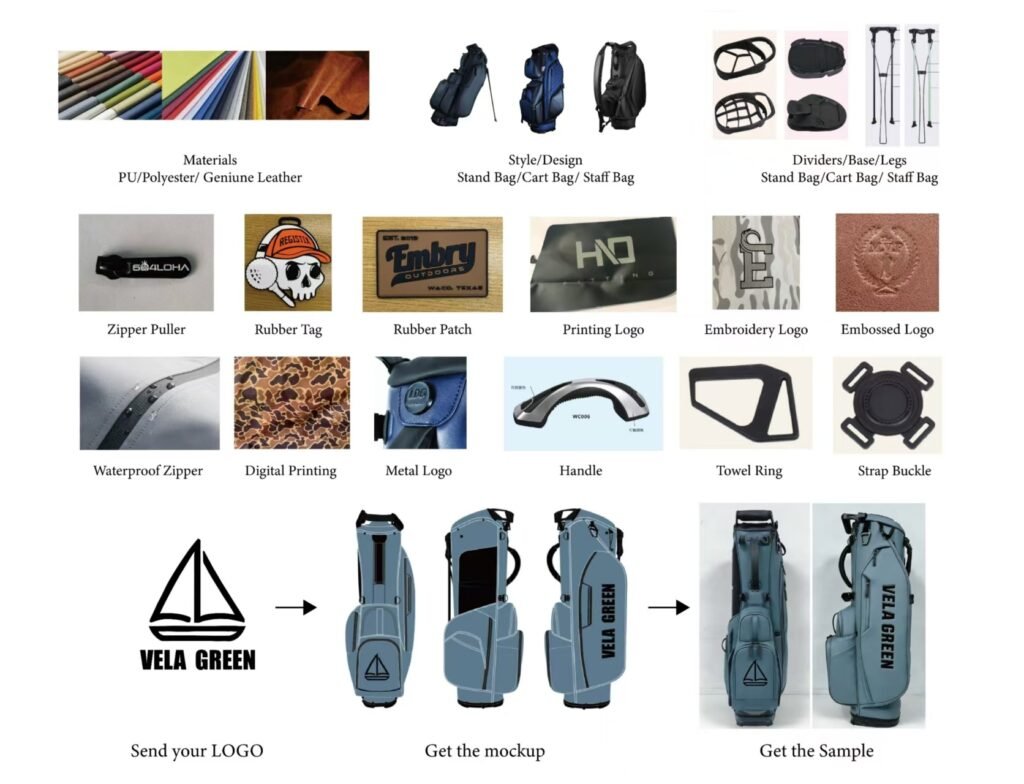
The US and European golf bags B2B market is oversaturated with generic brands, low-cost competitors, and commodity-like products. For B2B golf bag brands, importers, and distributors, standing out from the crowd is no longer optional—it’s essential to secure long-term partnerships with Western retailers, golf clubs, and distributors. In 2026, B2B buyers in US and EU markets are not just purchasing products—they’re seeking brands with clear differentiation, consistent quality, and alignment with market trends. This blog is tailored exclusively for B2B players, breaking down proven strategies to differentiate your golf bag brand, avoid同质化 (homogenization), and capture market share in the competitive Western golf gear industry.
Why B2B Golf Bag Brand Differentiation Matters in 2026
In a crowded B2B market, generic golf bags with no unique value proposition are forced to compete on price alone—leading to thin profit margins, lost market share, and unsustainable growth. For B2B buyers (retailers, golf clubs), brand differentiation reduces their risk: they prefer partnering with brands that offer unique features, consistent quality, and a clear brand identity, as these products are easier to sell to end consumers. Differentiation also builds brand loyalty—B2B partners are more likely to stick with a brand that stands out, rather than switching to a generic competitor. For B2B golf bag brands, differentiation is the key to escaping the price war and building a sustainable, profitable business in US and European markets.
Key B2B Golf Bag Brand Differentiation Strategies (2026 Updated)
Differentiation for B2B golf bag brands is not just about design—it’s about creating unique value that resonates with Western B2B buyers. Below are actionable strategies tailored to US/EU market demands:
1. Focus on Niche Market Segmentation
Instead of trying to cater to all B2B buyers, focus on a specific niche that aligns with your strengths. For example: specialize in sustainable golf bags (GRS-certified, recycled materials) for eco-conscious retailers; focus on premium leather golf bags for luxury private clubs; or target compact, travel-friendly golf bags for resort distributors. Niche segmentation allows you to tailor your products, marketing, and service to a specific audience, making your brand more memorable and relevant. For US and EU markets, niches like “sustainable golf gear” and “premium custom golf bags” are growing rapidly—lean into these to stand out.
2. Build Customization as a Core Competence
B2B buyers in US and EU markets value customization—they want golf bags that align with their brand identity (retailers) or member preferences (golf clubs). Differentiate your brand by offering flexible, B2B-focused customization: custom logo embroidery/printing, Pantone color matching, personalized pocket layouts, and even custom material selections. Unlike generic OEM suppliers, position your brand as a “custom solutions provider” rather than just a product seller. Offer small MOQs for custom orders, allowing B2B buyers to test personalized products without overcommitting.
3. Prioritize Compliance & Transparency
Compliance is a non-negotiable for US/EU B2B buyers—and it can be a powerful differentiation tool. Differentiate your brand by going beyond basic compliance: obtain GRS (Global Recycled Standard) for sustainable products, provide full CPSC (US) and REACH (EU) test reports, and offer transparent supply chain documentation. Highlight compliance in your marketing and sales materials—this builds trust with B2B buyers, who need to ensure products meet regional standards to avoid customs delays or legal penalties. Transparency (e.g., material sourcing, production processes) also sets you apart from generic brands that hide their supply chain.
4. Integrate Value-Added Services for B2B Partners
B2B buyers in US and EU markets want more than just products—they want partners that support their business growth. Differentiate your brand by offering value-added services: free product samples, custom packaging (branded with the retailer’s logo), on-time delivery guarantees, post-sales support (defect resolution, replacement), and even marketing materials (product photos, descriptions) for their retail channels. These services reduce the workload for B2B partners and make your brand more valuable than competitors who only offer products.
5. Align with Western Market Trends
Differentiate your brand by staying ahead of US/EU golf market trends and integrating them into your products. In 2026, key trends include: sustainable materials (RPET, recycled nylon), smart storage features (magnetic pockets, insulated coolers), lightweight yet durable designs, and minimalistic, premium aesthetics. For example, launch a line of “smart golf bags” with built-in USB ports for rangefinders—this caters to tech-savvy Western golfers and gives B2B buyers a unique selling point. By aligning with trends, you position your brand as innovative and in touch with market demands.
How to Communicate Differentiation to B2B Buyers
Differentiation means nothing if B2B buyers don’t know about it. Use these tactics to communicate your unique value proposition to US/EU B2B buyers:
- Optimize Your B2B Website: Highlight your niche, customization capabilities, compliance certifications, and value-added services on your homepage and product pages. Use clear, B2B-focused language (avoid consumer-facing jargon).
- Leverage B2B Content Marketing: Publish case studies (e.g., “How We Helped a US Retailer Increase Golf Bag Sales by 40% with Customization”), whitepapers on market trends, and blog posts (like this one) to showcase your expertise.
- Engage in B2B Trade Shows: Attend US/EU golf trade shows (e.g., PGA Show, Golf Europe) to showcase your differentiated products and connect with buyers face-to-face. Use custom displays to highlight your unique features.
- Tailor Your Sales Pitch: For each B2B buyer, emphasize the differentiation points that matter most to them (e.g., compliance for a European retailer, customization for a private club).
Avoid These Common Differentiation Mistakes for B2B Golf Bags
Many B2B golf bag brands fail to differentiate effectively—avoid these pitfalls:
- Focusing on Price Over Value: Differentiating on price alone is unsustainable—competing as the “cheapest” leads to thin margins and no brand loyalty.
- Generic Branding: Using vague language like “high-quality golf bags” doesn’t differentiate you—be specific about your niche, customization, or compliance.
- Ignoring B2B Buyer Needs: Differentiation should be based on what B2B buyers want, not just what you want to sell. Conduct market research to understand their pain points.
Final Thoughts for B2B Golf Bag Brands
In 2026, the US and European B2B golf bags market will reward brands that prioritize differentiation. By focusing on niche segmentation, customization, compliance, value-added services, and trend alignment, you can escape the price war, build trust with B2B partners, and capture sustainable market share. Remember: B2B buyers don’t just buy golf bags—they buy solutions that help them grow their business. Your job is to show them how your brand is different, better, and more valuable than the competition. With the right differentiation strategy, your B2B golf bag brand can stand out and thrive in the global market.
OEM & ODM Service
Whether you’re planning to build your own brand, develop new products, or find a stable manufacturing partner for the US and European markets, working with a professional OEM & ODM factory can significantly improve your product quality and market competitiveness.
At Vela Green, we provide full-range OEM & ODM services for golf bags, golf headcovers, gloves, towels and other golf accessories. We support custom design, material selection, logo branding, color matching and mass production, strictly complying with CPSC, REACH and other international standards. With mature production experience, reliable quality control and professional export support, we help brands and importers develop market-oriented products with efficient lead times and flexible order quantities.