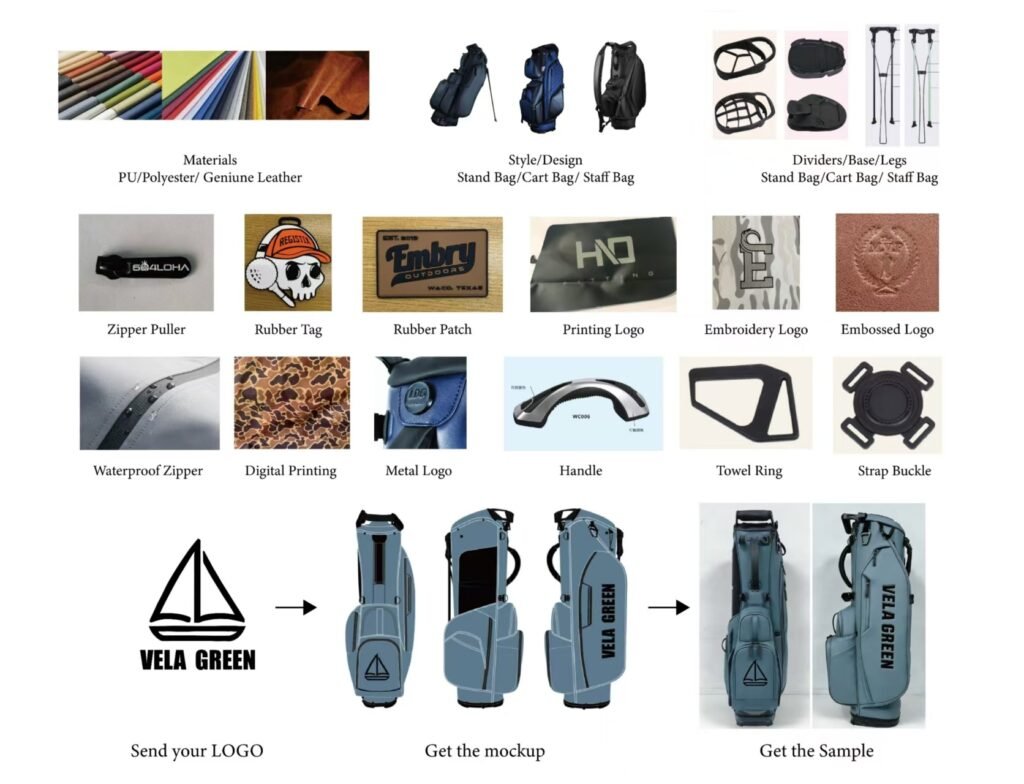
For B2B golf bag brands, importers, and distributors targeting US and European markets, compliance is the single most critical factor for successful market entry and long-term growth. In 2026, Western regulatory standards for golf gear have become stricter than ever—non-compliant products face customs detention, fines, product recalls, and permanent damage to brand reputation. This blog is tailored exclusively for B2B players, breaking down the key compliance requirements for golf bags in US and EU markets, common compliance pitfalls to avoid, and actionable strategies to ensure seamless market access, build trust with B2B partners, and mitigate regulatory risks.
Why B2B Golf Bag Compliance Is Non-Negotiable in 2026
The US and EU have robust regulatory frameworks for consumer products, including golf bags, to protect consumer safety, environmental sustainability, and fair trade. For B2B buyers (retailers, golf clubs, distributors) in these markets, partnering with compliant suppliers is a risk-mitigation strategy—they cannot afford to stock non-compliant products, as it exposes them to legal penalties and reputational damage. For B2B golf bag brands, compliance is not just a legal requirement—it’s a competitive advantage. Compliant brands can secure long-term partnerships with Western B2B buyers, avoid costly delays, and differentiate themselves from non-compliant, low-cost competitors. In 2026, non-compliance is not an option for B2B golf bag brands looking to succeed in global markets.
Key Compliance Requirements for Golf Bags in US & EU Markets
US and EU markets have distinct compliance standards for golf bags—B2B brands must understand and meet both to access these high-value markets. Below is a breakdown of the most critical requirements:
1. US Market Compliance Requirements
The US market enforces strict standards for consumer product safety and labeling, overseen by the Consumer Product Safety Commission (CPSC) and other regulatory bodies. Key requirements for B2B golf bags include:
- CPSC Compliance: Golf bags must meet CPSC safety standards, including restrictions on lead content (≤100 ppm for children’s products, applicable to junior golf bags) and other toxic substances. All materials (fabric, zippers, hardware) must be tested and certified to be free of harmful chemicals.
- Prop 65 Compliance: For California (the largest US golf market), golf bags must include Prop 65 warnings if they contain any of the 900+ chemicals listed as carcinogenic or reproductive toxins (e.g., certain dyes, plastics). This applies to all B2B products sold in California, regardless of origin.
- Labeling Requirements: Golf bags must have clear, permanent labels with product origin (e.g., “Made in China”), brand name, and safety information (if applicable). For junior golf bags, additional safety labels (e.g., age recommendations) are required.
2. EU Market Compliance Requirements
The EU market’s regulatory framework is centered on safety, sustainability, and consumer protection, with key standards overseen by the European Commission. Key requirements for B2B golf bags include:
- REACH Compliance: Registration, Evaluation, Authorization and Restriction of Chemicals (REACH) restricts the use of harmful substances in golf bags (e.g., certain flame retardants, heavy metals). All materials must be tested to ensure compliance with REACH Annex XVII restrictions.
- GRS Certification (For Sustainable Products): If your B2B golf bags use recycled materials (e.g., RPET, recycled nylon), you must obtain Global Recycled Standard (GRS) certification to market them as sustainable in the EU. GRS certification verifies the recycled content and sustainable production processes.
- CE Marking: Golf bags intended for sale in the EU must bear the CE mark, indicating compliance with all applicable EU directives (e.g., REACH, Toy Safety Directive for junior bags). B2B brands must maintain technical documentation to support the CE mark.
- Packaging Compliance: EU Packaging and Packaging Waste Directive requires that golf bag packaging is recyclable, reusable, or compostable. B2B brands must ensure packaging meets these requirements to avoid penalties.
Common B2B Golf Bag Compliance Pitfalls (And How to Avoid Them)
Many B2B golf bag brands fail to meet US/EU compliance requirements due to common mistakes—avoid these to ensure seamless market access:
1. Assuming “One-Size-Fits-All” Compliance
Mistake: Treating US and EU compliance as identical. Solution: Understand the distinct requirements of each market (e.g., Prop 65 for US, REACH for EU) and tailor your compliance strategy accordingly. Work with a compliance consultant to ensure you meet all region-specific standards.
2. Skipping Pre-Production Compliance Testing
Mistake: Waiting until mass production to test materials for compliance, leading to costly rework or product rejection. Solution: Conduct pre-production testing of all materials (fabric, zippers, hardware) to ensure they meet CPSC, REACH, and other standards before starting production.
3. Neglecting Documentation
Mistake: Failing to maintain compliance documentation (test reports, certifications, technical files) required for customs clearance and B2B partner audits. Solution: Keep detailed records of all compliance testing, certifications (GRS, CE), and material sourcing. Make these documents easily accessible for B2B buyers and regulatory authorities.
4. Overlooking Junior Golf Bag Compliance
Mistake: Applying the same compliance standards to adult and junior golf bags. Solution: Junior golf bags are classified as children’s products in the US and EU, requiring stricter lead limits, safety labels, and testing. Ensure junior bags meet all children’s product safety standards.
Actionable Strategies for B2B Golf Bag Compliance in 2026
1. Partner with Compliant Suppliers
Your OEM/ODM suppliers play a critical role in compliance. Choose suppliers that have experience with US/EU compliance, can provide material test reports, and are willing to sign compliance agreements. Conduct regular audits to ensure suppliers maintain compliance standards.
2. Invest in Compliance Testing & Certification
Work with accredited third-party testing labs to test your golf bags for CPSC, REACH, and other standards. Obtain necessary certifications (GRS, CE) and renew them regularly. Display these certifications prominently on your B2B website and marketing materials to build trust with buyers.
3. Train Your Team on Compliance
Ensure your sales, product development, and logistics teams understand US/EU compliance requirements. Train them to answer B2B buyer questions about compliance, provide documentation, and identify potential compliance risks.
4. Stay Updated on Regulatory Changes
US and EU compliance standards are constantly evolving. Subscribe to regulatory updates (e.g., CPSC alerts, EU Commission notices) and work with a compliance consultant to adapt your strategy to new requirements. This ensures your golf bags remain compliant as regulations change.
How Compliance Drives B2B Success in US & EU Markets
For B2B golf bag brands, compliance is more than a legal requirement—it’s a driver of business success. Compliant brands: 1) Gain access to high-value US/EU markets; 2) Build trust with B2B buyers, leading to long-term partnerships; 3) Avoid costly fines, product recalls, and reputational damage; 4) Differentiate themselves from non-compliant competitors. In 2026, B2B buyers will increasingly prioritize compliance when choosing suppliers—brands that invest in compliance will have a clear competitive edge.
Final Thoughts for B2B Golf Bag Brands
Navigating US and EU compliance requirements for golf bags is complex, but it’s essential for B2B brands looking to succeed in global markets. By understanding region-specific standards, avoiding common pitfalls, and implementing proactive compliance strategies, you can ensure seamless market access, build trust with B2B partners, and mitigate regulatory risks. Remember: compliance is an investment, not a cost. It protects your brand, opens doors to high-value markets, and positions you as a reliable, trustworthy B2B partner. In 2026, compliance will be the foundation of B2B golf bag brand success in the US and EU.
OEM & ODM Service
Whether you’re planning to build your own brand, develop new products, or find a stable manufacturing partner for the US and European markets, working with a professional OEM & ODM factory can significantly improve your product quality and market competitiveness.
At Vela Green, we provide full-range OEM & ODM services for golf bags, golf headcovers, gloves, towels and other golf accessories. We support custom design, material selection, logo branding, color matching and mass production, strictly complying with CPSC, REACH and other international standards. With mature production experience, reliable quality control and professional export support, we help brands and importers develop market-oriented products with efficient lead times and flexible order quantities.