For B2B golf bag brands, importers, and distributors targeting US and European markets, efficient cross-border logistics and strategic warehousing are make-or-break factors for success. In 2026, global supply chain volatility, rising shipping costs, and strict delivery timelines have made logistics a critical competitive differentiator for B2B players. Western B2B buyers (retailers, golf clubs, distributors) prioritize timely, cost-effective delivery and reliable inventory availability—non-optimized logistics lead to lost partnerships, increased costs, and missed market opportunities. This blog is tailored exclusively for B2B golf bag businesses, breaking down actionable strategies to optimize cross-border shipping, select the right海外仓储 (overseas warehousing) solutions, and mitigate logistics risks, ensuring seamless delivery to US and EU markets.
Why B2B Golf Bag Cross-Border Logistics Matters in 2026
Cross-border logistics is more than just shipping products—it’s a core component of B2B customer satisfaction and business scalability. For B2B golf bag brands, inefficient logistics result in: delayed deliveries that disrupt retail inventory cycles, high shipping costs that eat into profit margins, customs clearance issues that cause product detention, and inventory stockouts that damage partner trust. In the US and EU, where B2B buyers expect fast, reliable delivery (typically 3–7 days for in-stock items), optimizing logistics is essential to compete. For B2B players, a streamlined logistics strategy reduces costs, improves delivery speed, and strengthens partnerships—turning logistics from a pain point into a competitive advantage.
Key B2B Golf Bag Cross-Border Logistics Challenges (2026 Updated)
B2B golf bag cross-border logistics faces unique challenges, especially for shipments to US and EU markets. Below are the most common pain points and their root causes:
- Rising Shipping Costs: Ocean freight and air freight rates remain volatile, with peak season surcharges (e.g., spring golf season) increasing costs by 20–30%. Golf bags, though lightweight, can be bulky, leading to higher dimensional weight charges.
- Customs Clearance Delays: Complex customs procedures, incomplete documentation, and non-compliant labeling often lead to detention of golf bag shipments, delaying delivery by weeks.
- Long Lead Times: Traditional sea shipping from manufacturing hubs (e.g., Asia) to US/EU takes 25–45 days, making it hard to respond to sudden spikes in demand.
- Warehousing Inefficiencies: Lack of strategic overseas warehousing leads to high storage costs, slow order fulfillment, and difficulty managing returns from B2B partners.
- Damage During Transit: Golf bags (especially premium or custom models) are prone to damage during long cross-border shipments, leading to returns and additional costs.
Proven Strategies to Optimize B2B Golf Bag Cross-Border Shipping
1. Choose the Right Shipping Method for Your Needs
B2B golf bag brands should balance cost, speed, and shipment volume when selecting a shipping method: – Ocean Freight: Ideal for large bulk shipments (FCL/LCL) with longer lead times (25–45 days). Best for non-peak seasons or large inventory restocks, as it’s the most cost-effective option for bulky golf bags. – Air Freight: Suitable for small shipments, urgent orders, or peak season replenishments (3–7 days). While more expensive, it ensures timely delivery to avoid stockouts. – Express Shipping (DHL, FedEx): For small, high-value orders (e.g., custom sample shipments) that require fast delivery (1–3 days). Partner with a logistics provider specializing in B2B golf gear to negotiate better rates and ensure proper handling of bulky items.
2. Streamline Customs Clearance Processes
Customs delays are a top logistics pain point—avoid them with these steps: – Prepare Complete Documentation: Ensure all shipping documents (commercial invoice, packing list, compliance certificates, origin certificate) are accurate and complete. Include detailed product descriptions (e.g., “golf stand bag, 600D nylon, 14-way dividers”) to avoid confusion. – Leverage Customs Brokers: Partner with a local customs broker in the US/EU who understands regional regulations and can expedite clearance. They can help navigate complex procedures (e.g., US Harmonized Tariff Schedule, EU customs codes for golf gear). – Ensure Compliance: As covered in prior B2B guides, compliant products (CPSC, REACH) face fewer customs delays—ensure your golf bags meet all regional standards before shipping.
3. Optimize Packaging for Cross-Border Transit
Golf bags are bulky and prone to damage—optimize packaging to reduce risk and costs: – Use Lightweight, Durable Packaging: Choose lightweight yet sturdy materials (e.g., corrugated cardboard, bubble wrap) to protect golf bags without increasing dimensional weight. – Compact Folding: For stand bags or travel bags, design packaging that allows folding to reduce volume, lowering shipping costs. – Label Clearly: Include shipping labels, customs labels, and handling instructions (e.g., “Fragile,” “Do Not Stack”) to ensure proper handling during transit.
Strategic Overseas Warehousing for B2B Golf Bags in US & EU
Overseas warehousing is a game-changer for B2B golf bag brands targeting US and EU markets—it reduces delivery times, lowers shipping costs, and improves order fulfillment efficiency. Below are key strategies to leverage overseas warehousing:
1. Choose the Right Warehousing Location
Select warehouse locations that are strategically positioned to serve your B2B partners: – US Markets: Prioritize warehouses in major golf hubs (e.g., Florida, California, Texas) to reduce domestic shipping times to retailers and golf clubs. – EU Markets: Opt for warehouses in central locations (e.g., Germany, Netherlands) to serve multiple EU countries with fast cross-border delivery (1–3 days). Partner with 3PL (Third-Party Logistics) providers that offer B2B-focused warehousing services, including inventory management, order fulfillment, and returns processing.
2. Implement Inventory Allocation Strategies
Allocate inventory across overseas warehouses based on demand: – Stock high-demand SKUs (e.g., weather-resistant cart bags, sustainable golf bags) in US/EU warehouses to ensure fast fulfillment. – Use historical sales data to predict demand for each region (e.g., more lightweight stand bags in walkable US public courses) and adjust inventory levels accordingly. – Maintain safety stock (5–10% of monthly demand) in overseas warehouses to buffer against sudden demand spikes or supply chain delays.
3. Integrate Warehousing with Inventory Management
Sync your overseas warehouse inventory with your B2B inventory management system to ensure real-time visibility. This allows you to: – Track stock levels across all warehouses from a single dashboard. – Automate order fulfillment (e.g., when a US retailer places an order, the system routes it to the nearest warehouse). – Monitor inventory turnover and adjust stock levels to avoid overstocking or stockouts.
How to Choose a B2B Golf Bag Logistics Partner
Selecting the right logistics partner is critical for B2B golf bag brands. Look for providers with these key capabilities: – Experience with Golf Gear: Choose a partner that has experience shipping and warehousing golf bags, understanding their unique packaging and handling needs. – US/EU Local Expertise: Ensure the partner has a presence in US/EU markets, with knowledge of local customs, shipping regulations, and warehousing best practices. – Flexible Services: Look for providers that offer customizable services (e.g., FCL/LCL shipping, 3PL warehousing, returns processing) to adapt to your business needs. – Transparent Pricing: Avoid hidden fees—choose a partner with clear, B2B-focused pricing (e.g., volume discounts for bulk shipments). – Reliable Tracking: Ensure the partner offers real-time shipment tracking and inventory visibility, so you and your B2B partners can monitor deliveries.
Final Thoughts for B2B Golf Bag Brands
In 2026, efficient cross-border logistics and strategic overseas warehousing are essential for B2B golf bag brands looking to succeed in US and EU markets. By optimizing shipping methods, streamlining customs clearance, investing in proper packaging, and leveraging overseas warehousing, you can reduce costs, improve delivery speed, and build trust with B2B partners. Remember: logistics is not just a back-end operation—it’s a customer-facing service that directly impacts your brand’s reputation and growth. With the right logistics strategy, you can overcome supply chain challenges, meet Western B2B buyer expectations, and gain a competitive edge in the global golf bag market.
OEM & ODM Service
Whether you’re planning to build your own brand, develop new products, or find a stable manufacturing partner for the US and European markets, working with a professional OEM & ODM factory can significantly improve your product quality and market competitiveness.
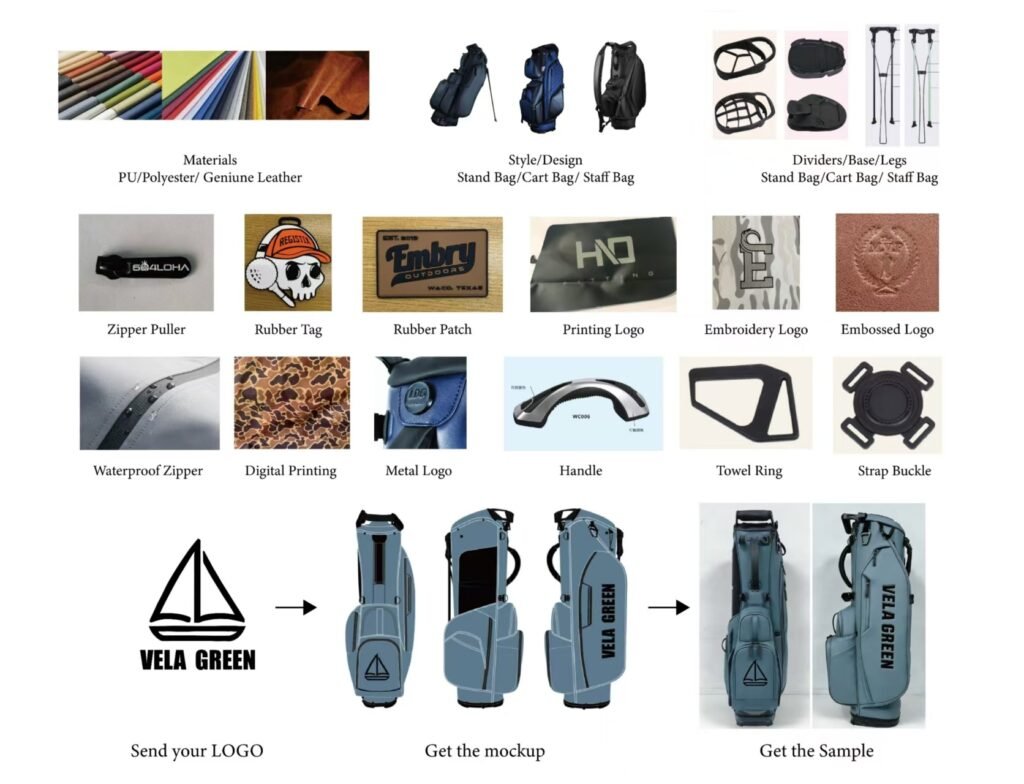
At Vela Green, we provide full-range OEM & ODM services for golf bags, golf headcovers, gloves, towels and other golf accessories. We support custom design, material selection, logo branding, color matching and mass production, strictly complying with CPSC, REACH and other international standards. With mature production experience, reliable quality control and professional export support, we help brands and importers develop market-oriented products with efficient lead times and flexible order quantities.