Ultimate Golf Bags Sourcing Guide: Boost Your 2026 B2B Wholesale Profits is a game-changing resource for global golf equipment distributors, private label brand owners, and B2B wholesale buyers targeting US and European markets. In 2026, the global golf bag wholesale industry faces fierce homogeneous competition, fluctuating logistics costs, and upgraded consumer quality demands. Many B2B sellers struggle with low-margin orders, high return rates, and outdated product lines that fail to match Western market preferences. This professional golf bags sourcing guide breaks down practical product selection, supplier screening, trend layout, and risk control strategies, helping businesses maximize wholesale profits and build irreplaceable market competitiveness.
Most new golf B2B buyers focus merely on unit prices while ignoring core factors including material durability, regional trend adaptability, and cross-border compliance. Poor sourcing decisions lead to inventory backlogs, customer complaints, and profit losses. This in-depth golf bags sourcing guide tailors actionable solutions for 2026 global wholesale scenarios, covering every key link from product selection and supplier verification to order delivery, perfectly fitting the procurement needs of sustainable and casual golf brand operators.
Why This Ultimate Golf Bags Sourcing Guide Matters for 2026 B2B Growth
The 2026 international golf bag market has undergone obvious structural changes. Casual golf, travel golf, and eco-friendly green consumption have become mainstream trends, replacing traditional professional equipment demands. US and European consumers no longer only pursue basic storage functions but prioritize lightweight comfort, minimalist aesthetics, outdoor durability, and environmental compliance. For B2B wholesalers, following outdated sourcing logic will inevitably eliminate them from the high-value retail market.
This professional golf bags sourcing guide focuses on solving real B2B pain points: how to select cost-effective best-selling styles, how to screen reliable OEM factories, how to avoid compliance risks, and how to build a differentiated product matrix. By implementing the strategies in this guide, sellers can effectively reduce operational risks, raise retail premium space, and achieve steady annual sales growth in competitive overseas markets.
Key Sourcing Standards Covered in This Golf Bags Sourcing Guide
High-quality golf bag wholesale sourcing relies on standardized and systematic judgment criteria. This golf bags sourcing guide summarizes four core dimensions that determine product market performance, suitable for all B2B private label customization and bulk inventory procurement.
First, verified high-performance fabric selection. Fabric quality directly decides golf bag durability, waterproof performance, and service life. For 2026 US and European markets, mainstream bulk wholesale styles adopt 600D/1680D high-density Oxford cloth and ripstop polyester, while high-end customized orders prefer GRS-certified recycled fabrics. Qualified fabrics must pass UV resistance, color fastness, and tensile tests to avoid fading, tearing, and water leakage during long-term outdoor use, greatly cutting after-sales return rates.
Second, regional trend matching design. European markets favor minimalist matte neutral color schemes and eco-friendly designs, while US markets prefer multi-functional, wear-resistant, and large-capacity golf bags. B2B buyers must match product styles according to target regions instead of blind bulk procurement. Lightweight travel golf bags and ergonomic stand bags remain the hottest bestsellers in 2026, suitable for full-channel retail sales.
Third, complete cross-border compliance certification. All export golf bags must meet US CPSIA, California Prop 65, and EU REACH standards. Reliable suppliers provide complete test reports and qualification certificates to ensure smooth customs clearance and avoid platform delisting or cargo detention. Compliance capability is the basic threshold for long-term stable wholesale cooperation.
Fourth, stable batch quality consistency. A common B2B sourcing pitfall is inconsistent quality between samples and bulk goods. Professional golf bag manufacturers implement strict QC processes for fabric cutting, stitching, accessory assembly, and finished product inspection, ensuring every batch of products maintains unified quality and appearance standards.
Actionable Tips to Maximize Profits From Golf Bag Wholesale
Combined with this golf bags sourcing guide, B2B sellers can optimize their business layout to seize 2026 market dividends. First, build a layered product line: take cost-effective lightweight stand bags as mainstream inventory, deploy eco-friendly recycled golf bags for high-end green brand customers, and supplement multi-functional travel golf bags to cover segmented markets.
Second, prioritize long-term cooperative professional golf bag factories instead of low-price small workshops. Professional manufacturers have mature production lines, stable delivery cycles, and complete compliance qualifications, effectively avoiding batch quality problems and delivery delays that damage brand reputation.
Third, embrace private label subtle customization. Simple personalized upgrades such as embossed logos, customized color matching, and refined stitching details can greatly improve product differentiation, support 20%-40% retail premiums, and avoid vicious price competition in the low-end wholesale market.
Common Sourcing Mistakes to Avoid in 2026
Many B2B sellers lose profits due to avoidable sourcing errors. Blindly pursuing ultra-low prices will lead to inferior fabric and accessory quality, resulting in high return rates. Ignoring regional compliance standards causes customs clearance failures and order losses. Neglecting trending product iteration leads to outdated inventory and slow sales. Following the standards in this golf bags sourcing guide can help businesses completely eliminate these common risks.
Final Thoughts
This comprehensive golf bags sourcing guide provides 2026 B2B wholesalers and brand owners with systematic product selection, supplier screening, risk avoidance, and profit improvement strategies. As the global golf equipment market becomes more standardized and competitive, professional and compliant sourcing capabilities have become core competitive advantages. By adhering to scientific sourcing standards, keeping up with market trends, and optimizing product structures, B2B businesses can steadily expand overseas market share, reduce operational risks, and achieve sustainable high-profit development.
OEM & ODM Service
Whether you’re planning to build your own brand, develop new products, or find a stable manufacturing partner for the US and European markets, working with a professional OEM & ODM factory can significantly improve your product quality and market competitiveness.
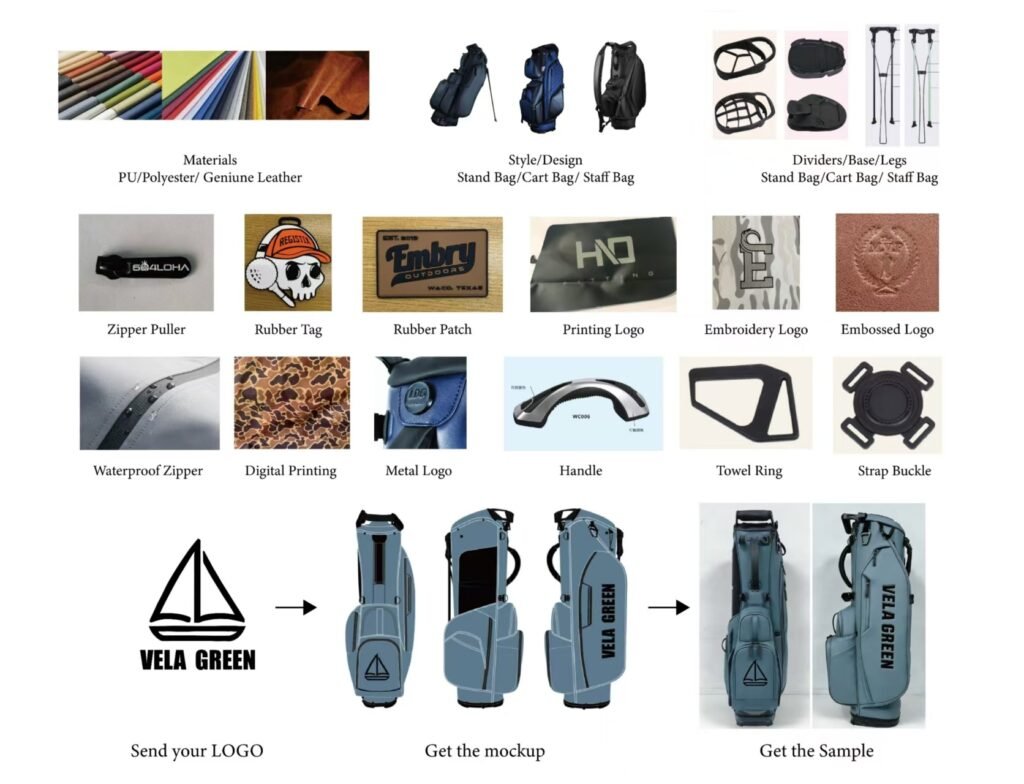
At Vela Green, we provide full-range OEM & ODM services for golf bags, golf headcovers, gloves, towels and other golf accessories. We support custom design, material selection, logo branding, color matching and mass production, strictly complying with CPSC, REACH and other international standards. With mature production experience, reliable quality control and professional export support, we help brands and importers develop market-oriented products with efficient lead times and flexible order quantities.