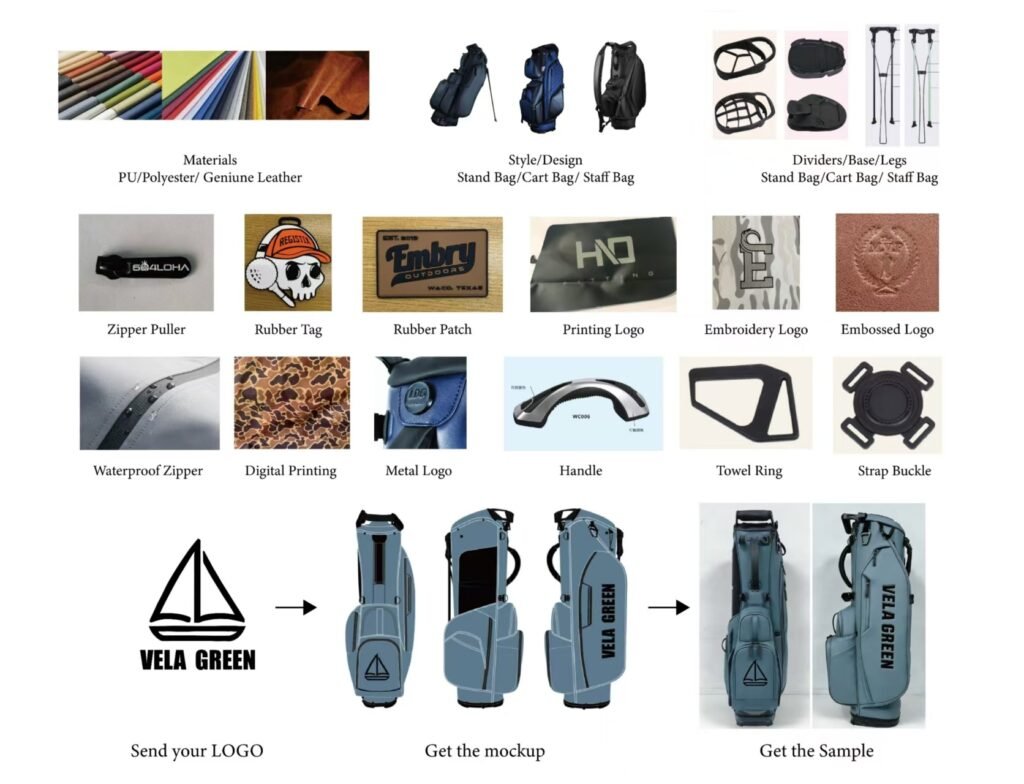
A thorough golf bag factory audit is the most important step in protecting your brand from defective products, delayed shipments, and compliance failures. The global golf bags market is projected to reach USD 1.75 billion by 2031, yet many B2B buyers skip or rush the golf bag factory audit process, trusting supplier brochures instead of verifying actual capabilities. A proper golf bag factory audit reveals whether a factory can consistently deliver quality products at scale.
This guide presents six critical areas to verify during your golf bag factory audit—from production capacity to quality control systems.
Why Golf Bag Factory Audit Matters in 2026
The importance of golf bag factory audit has grown significantly in 2026. China accounts for over 70% of global golf bag production, concentrated in Guangdong and Fujian provinces. Each region offers distinct advantages—Guangdong for scale and integration, Fujian for agility and faster sampling . However, not all factories meet the same standards.
A rigorous golf bag factory audit protects your brand from:
- Inconsistent quality between sample and bulk production
- Undisclosed material substitutions
- Unrealistic production timelines
- Compliance failures that trigger customs holds
- Labor practices that damage brand reputation
For some brands, golf bag factory audit expenses are reimbursable against production orders, making the cost negligible compared to the risk of a failed shipment.
Area #1: Production Capacity Assessment in Golf Bag Factory Audit
Production capacity is the foundation of any golf bag factory audit. A factory that cannot meet your volume requirements will create bottlenecks that ripple through your entire supply chain.
What to Verify During Golf Bag Factory Audit
- Facility size and layout: Request exact measurements in square meters and assess floor plan organization
- Workforce composition: Number of full-time skilled workers versus temporary hires. Guangdong’s Pearl River Delta region offers world-class manufacturing infrastructure but higher labor and rent costs drive up factory prices
- Equipment inventory: Older machines produce inconsistent stitching. Ask about preventive maintenance schedules and when equipment was last upgraded
- Monthly output records: Request documentation of past production volumes for similar orders
Regional Capacity Considerations for Golf Bag Factory Audit
- Guangdong Province: Home to over 60% of China‘s golf bag manufacturing capacity. Large-scale facilities offer vertically integrated supply chains—from fabric dyeing to final stitching
- Fujian Province: Xiamen-based suppliers offer strong value for mid-tier brands seeking faster delivery. Proximity to Xiamen Port streamlines export logistics to Europe and North America
A thorough golf bag factory audit verifies that the factory has sufficient equipment, staff, and space to handle your order without compromising quality.
Area #2: Quality Control Systems Audit
Quality control is the most critical component of any golf bag factory audit. A supplier with weak QC processes will ship defects regardless of material quality. According to industry data, the average rework rate in the golf bag manufacturing industry is 3.8% for general orders and 2.5% for premium brands. Investing in QC systems reduces these rates significantly.
Three-Stage Quality Control Verification
| Stage | Inspection Point | What to Check |
|---|---|---|
| IQC | Incoming materials | Fabric tensile strength, water resistance, UV stability |
| IPQC | In-process production | Stitch length (±0.5mm tolerance), seam alignment, hardware attachment |
| PSI | Pre-shipment | 100% visual inspection, AQL Level II, 2.5/4.0 standards |
QC Documentation to Request
- “What are your inspection processes at each production stage?”
- “Can you share quality reports from previous similar orders?”
- “What defect tracking systems are in place?”
A factory that cannot provide documented QC processes should be flagged during your golf bag factory audit. Headline manufacturers achieving batch pass rates above 99.5% demonstrate that rigorous quality systems deliver consistent results .
Area #3: Material Sourcing and Inventory Verification
Material sourcing directly affects production timelines and product quality. In golf bag factory audit, assess the supplier‘s supply chain resilience.
Material Sourcing Questions for Golf Bag Factory Audit
- “Who are your primary suppliers for fabrics, zippers, hardware, and foam?”
- “Do you maintain safety stock for high-demand materials?”
- “Can you provide material traceability documentation?”
Material Inventory Verification
A physical walkthrough of material storage areas should confirm:
- Fabric rolls stored on racks, off the floor, away from moisture
- Zippers and hardware organized by specification, not mixed together
- Foam padding stored flat to maintain density
For eco-friendly golf bags, verify access to recycled polyester (rPET), organic cotton, or bio-based materials. Request documentation for GRS or OEKO-TEX certifications .
Area #4: Workforce and Labor Practices
Labor practices are an increasingly important component of golf bag factory audit. BSCI (Business Social Compliance Initiative) certification ensures that the factory follows ethical labor practices and meets social compliance standards.
What to Verify in Golf Bag Factory Audit
- Wages and working hours: Are workers paid at least minimum wage? Are working hours within legal limits?
- Health and safety: Are fire exits clear? Is protective equipment available for workers handling chemicals?
- Child labor prohibition: Does the factory have age verification procedures?
- Documentation: Request current BSCI audit reports (valid for two years)
A golf bag factory audit that includes labor practice verification protects your brand from reputational damage and ensures compliance with European and US retail requirements.
Area #5: Compliance and Certification Verification
Certifications provide objective validation in golf bag factory audit. They demonstrate that the factory has documented systems and meets international standards.
Key Certifications to Verify
| Certification | What It Validates |
|---|---|
| ISO 9001 | Quality management systems |
| BSCI | Ethical labor practices and social compliance |
| REACH | Chemical safety for European market |
| OEKO-TEX Standard 100 | Textile safety testing for harmful substances |
| GRS | Global Recycled Standard for eco-friendly materials |
Verification Steps
- Request current PDFs of all relevant certifications. Check issue and expiry dates—ISO 9001 expires after three years; BSCI audits are valid for two years
- Cross-reference certificate numbers against issuer databases
- For eco-friendly claims, ask for GRS or OEKO-TEX certification rather than accepting generic “sustainable” statements
Factories without current certifications should be deprioritized during golf bag factory audit .
Area #6: Lead Time and Delivery Track Record
Lead time reliability is a non-negotiable factor in golf bag factory audit. A supplier with excellent quality but chronic delays will disrupt your inventory planning.
Lead Time Evaluation Questions
- “What is your standard lead time for custom golf bag orders?”
- “What is your on-time delivery rate over the past 12 months?”
- “How do you handle delivery schedules during peak demand periods?”
Industry Benchmarks for Golf Bag Factory Audit
Top suppliers maintain on-time delivery rates of 95–100%. For example, some Fujian suppliers achieve 100% . Add 2–3 weeks contingency to your timeline for unforeseen delays.
Golf Bag Factory Audit Checklist Summary
| Area | Verification Items | Status |
|---|---|---|
| Production capacity | Facility size, workforce, equipment, monthly output | ☐ |
| Quality control | IQC, IPQC, PSI processes; AQL standards | ☐ |
| Material sourcing | Supplier relationships, safety stock, traceability | ☐ |
| Workforce & labor | Wages, hours, safety, BSCI certification | ☐ |
| Certifications | ISO 9001, BSCI, REACH, OEKO-TEX, GRS | ☐ |
| Lead time reliability | On-time delivery rate (95%+ target) | ☐ |
Conclusion: Master Golf Bag Factory Audit for 2026 Success
A systematic golf bag factory audit protects your brand from defective products, delayed shipments, and compliance failures. The six areas in this guide—production capacity, quality control, material sourcing, labor practices, certifications, and lead time reliability—provide a complete framework for supplier verification.
Top-performing suppliers demonstrate on-time delivery above 98% and reorder rates exceeding 25%, indicating proven reliability and client satisfaction . Start your next supplier search with this golf bag factory audit checklist. Verify every claim. Walk the production floor. Review the documentation. The factories that welcome scrutiny are the ones that will deliver consistent quality, order after order.
With 20 years of golf bag manufacturing experience and documented ISO 9001 and BSCI certifications, we welcome thorough factory audits. Contact us to schedule your golf bag factory audit and request our supplier due diligence packet.
OEM & ODM Service
Whether you’re planning to build your own brand, develop new products, or find a stable manufacturing partner for the US and European markets, working with a professional OEM & ODM factory can significantly improve your product quality and market competitiveness.
At Vela Green, we provide full-range OEM & ODM services for golf bags, golf headcovers, gloves, towels and other golf accessories. We support custom design, material selection, logo branding, color matching and mass production, strictly complying with CPSC, REACH and other international standards. With mature production experience, reliable quality control and professional export support, we help brands and importers develop market-oriented products with efficient lead times and flexible order quantities.