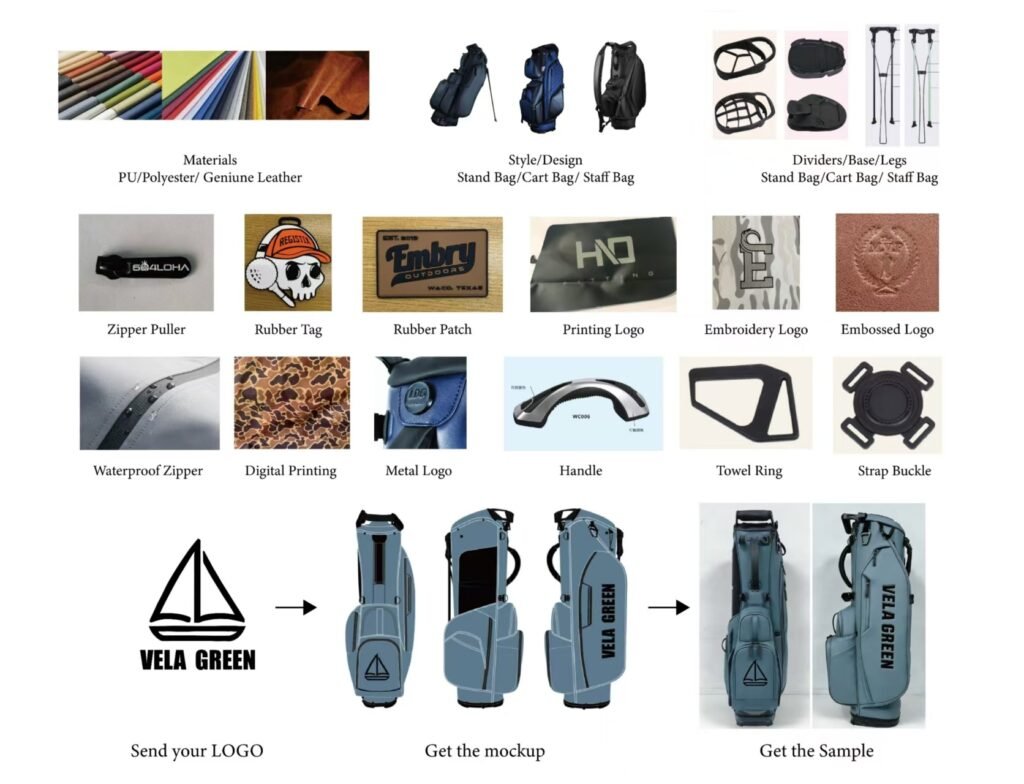
The golf bag sampling process is the single most critical phase in B2B procurement. A well-executed golf bag sampling process catches design flaws, validates material choices, and confirms manufacturability before thousands of units enter production. Yet many buyers rush through sampling—or skip it entirely—only to discover defects after receiving full containers. The global golf bags market is projected to reach USD 1.75 billion by 2031, but no amount of market growth can save a brand from defective product.
This guide presents a five-step golf bag sampling process that ensures your custom golf bags meet quality standards before bulk production begins.
Why the Golf Bag Sampling Process Matters
The golf bag sampling process serves multiple essential functions:
- Design validation: Confirms that your specifications translate correctly into a physical product
- Material verification: Validates fabric quality, color accuracy, and hardware performance
- Functionality testing: Identifies issues with dividers, zippers, straps, and stand mechanisms
- Manufacturing validation: Confirms that the factory can produce your design consistently
- Risk reduction: Catches problems before expensive tooling and production begin
Top manufacturers now compress the golf bag sampling process to 7-10 days through independent R&D workshops and flexible production lines. This speed allows brands to test and iterate designs without delaying production schedules.
Step 1: Initial Design Brief and Concept Review
The golf bag sampling process begins with a comprehensive design brief. Clear communication at this stage prevents costly misunderstandings later.
What to Include in Your Design Brief
- Bag type: Stand, cart, tour, travel, or junior
- Dimensions: Height, width, depth, and divider configuration (4-way, 6-way, 14-way)
- Material specifications: Fabric type (nylon, polyester, PU leather), denier rating, color codes (Pantone)
- Hardware requirements: Zipper brand (YKK preferred), buckle type, feet, stand mechanism
- Branding: Logo placement, embroidery or printing method, color match
- Special features: Cooler pocket, rain hood, USB port, magnetic closures
- Target price point: Helps supplier suggest appropriate materials
Initial Review
The supplier reviews your brief and provides:
- Technical feasibility assessment
- Material recommendations and sourcing timeline
- Initial cost estimate
- Sample production timeline
A professional golf bag sampling process includes a design review meeting where both teams align on specifications before production begins.
Step 2: Digital Prototyping and 3D Mockups
Modern golf bag sampling process increasingly includes digital prototyping before physical samples. This step saves time and reduces physical iteration rounds.
What Digital Prototyping Delivers
- 3D visualizations: See your bag from all angles before cutting any fabric
- Color accuracy: Validate Pantone color matches digitally
- Dimension verification: Confirm pocket placement, divider layout, and overall proportions
- Cost estimation: Digital models help refine cost estimates before sampling
Time Savings
Digital prototyping can reduce physical sampling rounds from 2-3 to 1-2. Companies now offer 7-14 day sample production integrating 3D prototypes and rigorous quality checks to ensure high standards.
For the golf bag sampling process, starting with digital validation means fewer revisions on physical samples—and faster overall timelines.
Step 3: Physical Pre-Production Sample (PPS)
The physical pre-production sample (PPS) is the heart of the golf bag sampling process. This is your first opportunity to hold, test, and refine your design before bulk production.
What to Expect in the PPS
- Lead time: Standard PPS production takes 10-15 days; expedited services can deliver in 7 days
- Cost: Initial samples typically range from $50 to $200, which is often credited toward bulk orders
- Inclusions: One complete bag with your specifications—materials, colors, logo, and features
What to Inspect in Your PPS
- Material quality: Fabric feel, color accuracy, denier verification
- Stitching: Consistent stitch length (±0.5mm tolerance), no loose threads, bar-tacked stress points
- Zipper function: Smooth operation, self-healing teeth, corrosion-resistant sliders
- Stand mechanism (if applicable): Smooth deployment, secure locking, full retraction
- Logo placement: Centered, aligned, correct thread colors
- Overall fit and finish: No crooked panels, loose padding, or sharp hardware
The golf bag sampling process requires thorough testing of the PPS. Load it with clubs. Walk with it. Open every zipper at least 20 times. Test the stand mechanism 10-15 times. This investment in testing pays dividends in product quality.
Step 4: Sample Revisions and Refinement
Almost no design is perfect on the first sample. Revisions are a normal part of the golf bag sampling process.
Common Revision Rounds
| Revision Type | Typical Lead Time | Description |
|---|---|---|
| Minor revisions | 3-5 days | Adjustments to logo placement, color, or small hardware changes |
| Moderate revisions | 5-7 days | Pocket relocation, strap adjustment, material change |
| Major revisions | 7-10 days | Significant structural changes or new materials |
How to Reduce Revision Rounds
- Provide clear feedback: Include photos with annotations, precise measurements, and specific instructions
- Consolidate changes: List all requested changes in one communication
- Approval process: Designate a single decision-maker to avoid conflicting feedback
- Golden sample: Once approved, sign off on a physical sample that serves as the benchmark for bulk production
Top suppliers in the golf bag sampling process can incorporate revisions and deliver updated samples within 3-7 days, depending on the complexity of changes.
Step 5: Sample Approval and Golden Sample Sign-off
The final step in the golf bag sampling process is formal approval and golden sample sign-off.
What Happens at Approval
- Golden sample: One approved physical sample is signed and retained by both parties
- Specification document: Final specifications are documented and attached to the purchase order
- Quality benchmark: The golden sample becomes the reference for bulk production quality
- Tooling release: If any custom molds were required, tooling is now released for production
The Golden Sample Document
A complete golden sample package includes:
- The physical bag (clearly labeled “GOLDEN SAMPLE”)
- Material swatches (fabric, zipper, hardware, foam)
- Color standards (Pantone numbers)
- Detailed specifications sheet (dimensions, stitch count, hardware locations)
- Both parties‘ signatures confirming approval
The golden sample is the most important deliverable in the golf bag sampling process. It protects both buyer and supplier by establishing an objective quality standard for the entire production run.
Golf Bag Sampling Process Summary Checklist
| Step | Key Activity | Timeline |
|---|---|---|
| 1. Design brief | Define specifications, materials, and branding | 2-3 days |
| 2. Digital prototyping | 3D mockups and virtual approval | 2-5 days |
| 3. Pre-production sample | Physical sample production and delivery | 7-15 days |
| 4. Sample revisions | Incorporate feedback, refine design | 3-10 days |
| 5. Golden sample approval | Final sign-off, document retention | 1-2 days |
Common Golf Bag Sampling Process Mistakes to Avoid
| Mistake | Consequence | Solution |
|---|---|---|
| Skipping physical samples | Design defects discovered after bulk production | Always order PPS before bulk |
| Approving without testing | Hidden zipper or strap failures | Test every function thoroughly |
| Vague feedback | Time-wasting revision rounds | Provide clear, annotated feedback |
| No golden sample | Disputes over production quality | Sign and retain a golden sample |
| Ignoring packaging samples | Shipping damage or poor retail presentation | Request packaging samples too |
Conclusion: Master the Golf Bag Sampling Process for Product Excellence
The golf bag sampling process is not a bureaucratic hurdle—it is your best protection against defective products, costly returns, and damaged brand reputation. The five steps in this guide—design brief, digital prototyping, pre-production sample, revisions, and golden sample approval—provide a complete framework for perfecting your custom golf bags before bulk production.
B2B buyers who invest time in the golf bag sampling process consistently achieve higher product quality, fewer returns, and stronger supplier relationships. Start your next sourcing project by allocating adequate time and resources to sampling. The investment pays dividends in product quality and customer satisfaction.
With 20 years of golf bag manufacturing experience and a streamlined sampling process delivering physical samples in 7-10 days, we help B2B clients perfect their designs before bulk production. Contact us to discuss your sampling requirements.
OEM & ODM Service
Whether you’re planning to build your own brand, develop new products, or find a stable manufacturing partner for the US and European markets, working with a professional OEM & ODM factory can significantly improve your product quality and market competitiveness.
At Vela Green, we provide full-range OEM & ODM services for golf bags, golf headcovers, gloves, towels and other golf accessories. We support custom design, material selection, logo branding, color matching and mass production, strictly complying with CPSC, REACH and other international standards. With mature production experience, reliable quality control and professional export support, we help brands and importers develop market-oriented products with efficient lead times and flexible order quantities.