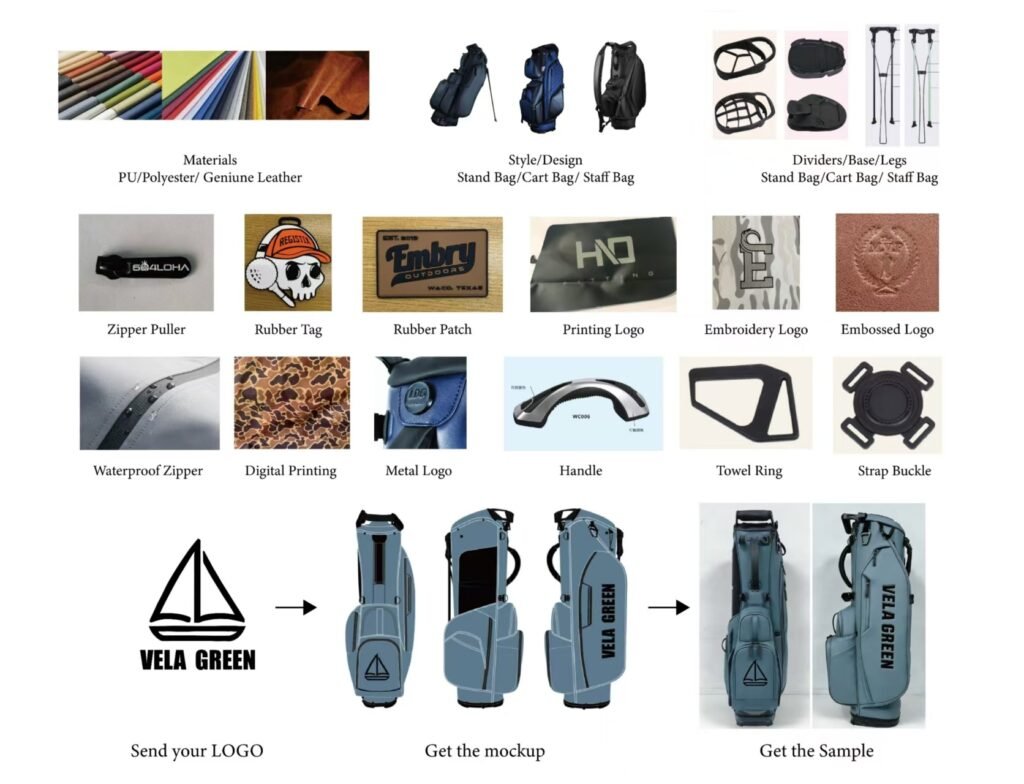
For B2B golf bag buyers, the golf bag rapid prototyping process can make or break a product launch. In 2026, speed is currency. Brands that can move from design concept to physical sample in days—not weeks—gain a decisive advantage over competitors still waiting for traditional 30-day sampling cycles. Yet many buyers accept slow sampling as inevitable, not realizing that golf bag rapid prototyping capabilities have transformed what is possible.
This guide presents five proven strategies for achieving golf bag rapid prototyping—compressing sample lead times from 30 days to just 7.
Why Golf Bag Rapid Prototyping Matters in 2026
The importance of golf bag rapid prototyping has never been greater. The global golf bags market is projected to reach USD 1.75 billion by 2031, with competition intensifying across every price point. Brands that iterate faster capture trends earlier, respond to customer feedback quicker, and launch products ahead of competitors.
Industry leaders have compressed sampling to 7–10 days through independent R&D workshops and flexible production lines. Top agile manufacturers achieve client reorder rates of 70%, demonstrating that speed and quality are not mutually exclusive. For B2B buyers, golf bag rapid prototyping capability is now a primary supplier selection criterion.
Strategy #1: Digital Prototyping Before Physical Sampling
The fastest path to golf bag rapid prototyping starts before cutting any fabric. Digital prototyping—3D mockups and CAD visualizations—allows you to validate design, proportions, and aesthetics without waiting for physical samples.
What Digital Prototyping Delivers
- 3D visualizations: See the bag from every angle before committing to materials
- Color accuracy: Validate Pantone color matches digitally
- Dimension verification: Confirm pocket placement, divider layout, and overall proportions before production
- Material simulation: Preview how different fabrics and finishes will look on the final product
Digital prototyping can reduce physical sample rounds from 2–3 to 1–2. Companies offering golf bag rapid prototyping now integrate 3D prototypes with rigorous quality checks, delivering physical samples in 7–14 days. The upfront investment in digital validation pays dividends in faster physical sample approval.
Strategy #2: Partner with Factories with Dedicated Sampling Teams
The second strategy for golf bag rapid prototyping is choosing suppliers with dedicated sampling teams—not factories where sampling competes with bulk production for machine time and worker attention.
What to Look For
- Separate sampling workshop: Factories with dedicated sample-making teams that don‘t compete with production lines
- Dedicated pattern makers: Full-time staff focused on pattern development and refinement
- In-house digitizing: Embroidery digitizing done in-house, not outsourced
- Sample-only machinery: Equipment reserved exclusively for prototype development
Top-tier golf bag rapid prototyping partners maintain independent R&D workshops with dedicated sampling teams. This ensures sample requests are prioritized, not delayed by production schedules. In 2026, agile suppliers have separate teams for sample-making versus mass production, ensuring your prototype doesn‘t wait behind a container order.
Strategy #3: Standardize Material Library for Faster Sourcing
Material sourcing is one of the biggest time drains in traditional sampling. The third golf bag rapid prototyping strategy is working with suppliers who maintain extensive in-stock material libraries.
How Material Libraries Speed Golf Bag Rapid Prototyping
- Instant fabric availability: No waiting 2–3 weeks for custom-dyed fabrics
- Pre-sampled materials: Factory has already tested and validated material performance
- Standardized color matching: Pantone-matched colors available from stock
- Hardware ready: Zippers, buckles, and feet already in inventory
For golf bag rapid prototyping, lead times are measured in days. Choosing from a factory‘s in-stock material library eliminates sourcing delays. Many agile manufacturers offer material swatch books with 50+ standard options—fabric types, colors, hardware finishes—ready for immediate sampling. Custom-dyed materials add 2–3 weeks; standard materials ship within days.
Strategy #4: Streamline Sample Approval with Digital Tools
The fourth golf bag rapid prototyping strategy is optimizing the approval workflow. Slow communication and unclear feedback often add more days than the actual sample production.
How to Accelerate Sample Approval
- Digital proofing: Use online tools for visual approval before physical samples ship
- Clear feedback templates: Provide standardized forms for sample comments
- Consolidated feedback: One consolidated feedback package, not scattered emails
- Dedicated project manager: A single point of contact on the factory side
For golf bag rapid prototyping, approval speed matters as much as production speed. A sample that takes 7 days to produce can still take 14 days to approve. Effective approval reduces total cycle time dramatically. Some suppliers now offer digital proofing where you review high-resolution photos and video walkthroughs before physical samples are shipped—saving 3–5 days of international shipping time.
Strategy #5: Reduce Revision Rounds Through First-Time Quality
The final golf bag rapid prototyping strategy is getting the first sample right. Every revision round adds 3–7 days to your timeline.
How to Reduce Golf Bag Rapid Prototyping Revisions
- Comprehensive design brief: Include every specification upfront—dimensions, materials, hardware, branding, features
- Golden sample reference: Provide a benchmark product or detailed photos
- Technical drawings: Use CAD files with exact measurements and callouts
- Pre-production meeting: Discuss the design in detail before sampling begins
For golf bag rapid prototyping, the goal is one revision round or fewer. Brands that provide detailed tech packs achieve 80% first-sample approval rates. Those with vague briefs often require 2–3 rounds, adding 10–21 days. Invest the extra hour upfront to save weeks later.
Golf Bag Rapid Prototyping Summary Checklist
| Strategy | Key Action | Time Saved |
|---|---|---|
| Digital prototyping | Validate design before physical sampling | 7–10 days |
| Dedicated sampling teams | Choose suppliers with separate sample workshops | 10–15 days |
| Standard material library | Use in-stock materials for sampling | 10–14 days |
| Digital approval workflow | Streamline feedback and communication | 5–7 days |
| First-time quality | Invest in comprehensive design brief | 10–21 days |
Common Golf Bag Rapid Prototyping Mistakes to Avoid
| Mistake | Consequence | Solution |
|---|---|---|
| Vague design brief | Multiple revision rounds, 2–3 weeks added | Provide comprehensive tech pack upfront |
| Choosing suppliers without sample teams | Samples delayed by production schedules | Verify dedicated sampling capabilities |
| Custom materials for first sample | 2–3 week sourcing delay | Use in-stock materials for initial sampling |
| Slow internal approval | Sample sits while your team reviews | Set internal SLAs for sample review |
| No digital proofing | Shipping delays add 3–5 days | Request photos/videos before physical shipment |
Conclusion: Master Golf Bag Rapid Prototyping for Faster Product Development
Golf bag rapid prototyping is not a luxury—it is a competitive necessity in 2026. The five strategies in this guide—digital prototyping, dedicated sampling teams, standard material libraries, digital approval workflows, and first-time quality—provide a complete framework for compressing sample lead times from 30 days to just 7.
B2B buyers who master golf bag rapid prototyping launch products faster, respond to trends quicker, and capture market share ahead of competitors. Start by evaluating your current sampling process against these five strategies. Identify where bottlenecks occur, then work with your supplier to implement improvements. The brands that invest in golf bag rapid prototyping today will be the ones winning the race to market tomorrow.
With 20 years of golf bag manufacturing experience and a dedicated rapid prototyping capability—7-day sampling, in-house design support, extensive material library, and digital proofing—we help B2B clients accelerate their product development. Contact us to discuss your sampling requirements.
OEM & ODM Service
Whether you’re planning to build your own brand, develop new products, or find a stable manufacturing partner for the US and European markets, working with a professional OEM & ODM factory can significantly improve your product quality and market competitiveness.
At Vela Green, we provide full-range OEM & ODM services for golf bags, golf headcovers, gloves, towels and other golf accessories. We support custom design, material selection, logo branding, color matching and mass production, strictly complying with CPSC, REACH and other international standards. With mature production experience, reliable quality control and professional export support, we help brands and importers develop market-oriented products with efficient lead times and flexible order quantities.