The global golf bag market is experiencing a remarkable transformation. Valued at approximately USD 1.1 billion in 2025, the market is projected to reach USD 1.9 billion by 2032, growing at a CAGR of 8.4%. This golf bag market expansion is driven by surging participation, technological innovation, and shifting consumer preferences. For B2B buyers, understanding these bag market dynamics is essential for making informed sourcing decisions that protect margins and capture growth.
This guide explores five key trends reshaping the golf bag market and what they mean for your sourcing strategy.
The Golf Bag Market Is Booming – Here’s Why
The primary catalyst for golf bag market growth is the consistent increase in global participation. Data from The R&A indicates that participation in its affiliated markets reached 108 million active golfers in 2024. The U.S. alone is projected to surpass 50 million players, and globally, more than 160 million people played some form of golf in 2025-.
This participation surge has created unprecedented demand across all golf bag market segments—from entry-level carry bags to premium tour bags and specialized travel bags. For B2B buyers, this means the golf bag market offers substantial opportunities for brands that can deliver the right products at the right price points.
Trend #1: Lightweight Materials Are Dominating the Golf Bag Market
One of the most significant shifts in the golf market is the acceleration of lightweight material technologies. Manufacturers are increasingly using high-tensile fabrics and carbon fiber to decrease bag weight without sacrificing durability-. Modern golf bags can weigh as little as 3-4 pounds while still offering all the features and durability of traditional bags weighing 6-8 pounds.
What This Means for the Golf Bag Market
The lightweight trend is fueling both replacement demand and premiumization in the golf bag market. Walking golfers, who represent a growing segment, prioritize reduced strain over 18 holes. Travel-focused consumers need bags that are easy to transport without compromising club protection.
Brands like Vessel have already demonstrated the impact of this trend, reducing bag weight by 20% through lighter materials like CORDURA® Naturalle fabric-. For B2B buyers, this golf bag market trend means evaluating suppliers based on their access to advanced lightweight materials and their ability to balance weight reduction with durability.
Trend #2: Smart Features Are Reshaping the Golf Bag Market
The golf bag market is being transformed by smart technology integration. Industry forecasts suggest the smart golf equipment market will grow by 15% annually through 2027, with over 35% of golfers expressing interest in features like GPS tracking and mobile connectivity.
Smart Features Driving the Golf Bag Market
- Club tracking systems using RFID technology keep track of clubs and alert golfers if any are left behind
- Built-in GPS units provide course maps and yardages without needing a separate device
- Mobile app integration connects golf bags to smartphones for personalized statistics
- Biometric locking systems with fingerprint recognition secure valuable equipment
- Solar-powered charging ports for smart devices during the round
These innovations are turning golf bags from simple club carriers into high-tech companions. For B2B buyers, this golf bag market trend means sourcing suppliers with electronics integration capabilities. Smart bags command premium pricing and appeal to the growing segment of tech-savvy golfers.
Trend #3: Sustainability Is Reshaping the Golf Bag Market
Sustainability has become a defining force in the market. Eco-friendly materials are no longer a niche—they are becoming mainstream expectations. Switching to sustainable materials can slash a golf bag‘s carbon footprint by up to 85%, while advanced manufacturing processes can cut CO₂ emissions by 75%.
Sustainable Innovations in the Golf Bag Market
- Recycled polyester (rPET) from plastic bottles is a standout material—many bags now incorporate fabric made from 25–30 recycled plastic bottles
- Sugarcane-based polyethylene removes CO₂ from the atmosphere during production
- Algae-based polymers offer renewable, sturdy components
- Recycled ocean plastics deliver 95% of the durability and 92% of the water resistance of new materials
- Modular designs and repairable components are extending the life of golf bags
For B2B buyers, this golf bag market trend means prioritizing suppliers with access to certified sustainable materials. Consumers are increasingly willing to pay a premium for eco-friendly gear, making sustainability a margin opportunity.
Trend #4: Female and Junior Golfers Are Expanding the Golf Bag Market
The market is being fundamentally reshaped by a surge in female and junior golfer demographics. According to the National Golf Foundation, the number of women and girls playing on-course has increased by 23% since 2018. In 2025, there were more than 8 million female on-course golfers over the age of six.
Impact on the Golf Bag Market
- Heightened demand for lighter, ergonomically tailored bags designed for smaller statures
- Increased need for aesthetically diverse designs that appeal to a broader demographic
- Growing demand for junior-specific bags as the next generation enters the sport
For B2B buyers, this golf bag market trend means developing product lines specifically designed for female and junior golfers—lighter materials, adjusted strap ergonomics, shorter bag heights, and fresh color palettes. Brands that can offer differentiated designs for these growing segments will capture market share that generalist competitors miss.
Trend #5: Customization Is Driving the Golf Bag Market
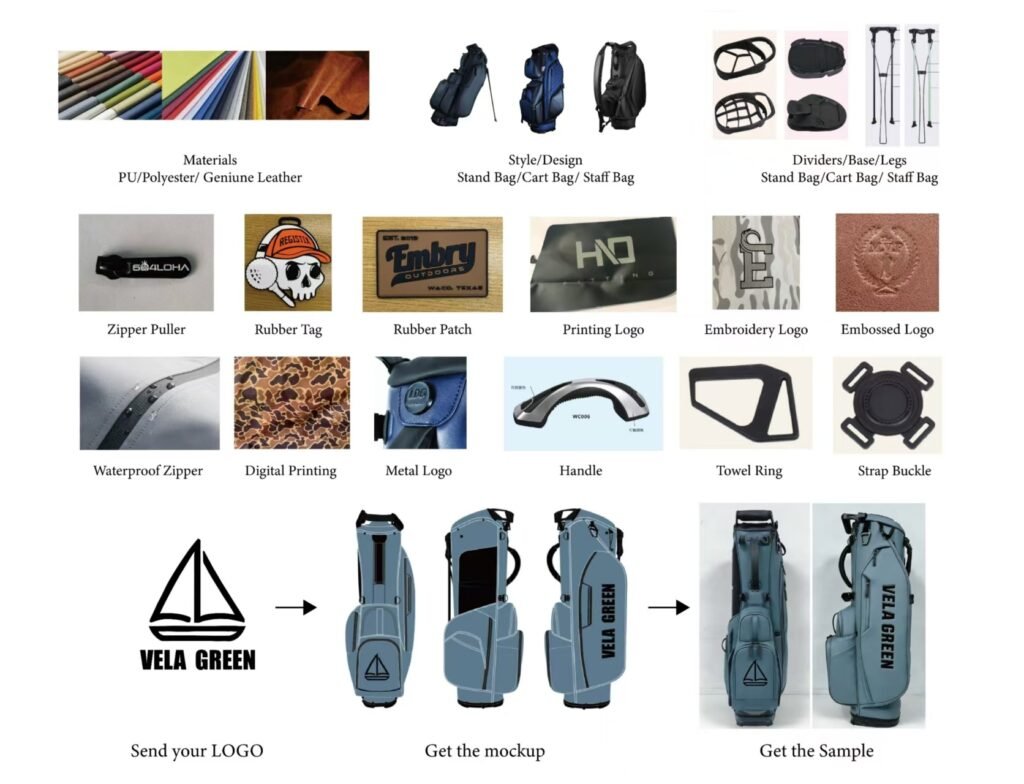
Personalization and customization have become significant drivers of the market. Modern golfers increasingly view their bag as an extension of their personal style. This demand extends beyond simple monogramming to include unique color combinations, custom pocket configurations, and distinctive material textures.
Customization Trends in the Golf Bag Market
- Color customization with Pantone matching capabilities
- Logo and branding placement options across multiple locations
- Modular designs that allow golfers to add or remove features
- Material selection from a range of fabric types and finishes
For B2B buyers, this golf bag market trend means partnering with suppliers who offer flexible customization options—in-house embroidery, color matching services, and modular design capabilities. Brands that treat customization as a core capability, not an add-on service, will capture the premium segment of the market.
What These Golf Bag Market Trends Mean for B2B Buyers
The five golf bag market trends outlined above point to a clear conclusion: the industry is becoming more lightweight, more technologically advanced, more sustainable, more inclusive, and more customizable.
Actionable Takeaways
| Trend | Sourcing Implication |
|---|---|
| Lightweight materials | Prioritize suppliers with access to carbon fiber, high-tenacity nylon, and lightweight composites |
| Smart features | Evaluate suppliers with electronics integration capabilities |
| Sustainability | Require GRS certification and access to rPET and bio-based materials |
| Demographic expansion | Develop product lines for female and junior golfers |
| Customization | Partner with suppliers offering in-house customization services |
Sourcing Priorities
- Agile manufacturing: Leading manufacturers now offer 7–10 day sampling and 30-day delivery for smaller orders, enabling rapid market testing
- Quality certification: ISO9001, BSCI, and REACH compliance are essential for market access
- Cost competitiveness: Chinese OEM manufacturing delivers 15–30% cost savings while meeting USGA, R&A, and CE standards
- Supply chain transparency: Top-tier manufacturers now offer real-time quality monitoring and production visibility
Conclusion: Capitalize on Golf Bag Market Growth in 2026
The golf bag market is projected to expand from USD 1.1 billion to USD 1.9 billion by 2032. B2B buyers who align their sourcing strategies with the five trends in this guide—lightweight materials, smart features, sustainability, demographic expansion, and customization—will capture disproportionate share of this growth.
The brands that master these market trends today will be the ones leading the market tomorrow. Whether you are launching a new product line, expanding into new demographics, or upgrading your existing offerings, the opportunity in the golf bag market has never been greater.
With 20 years of golf bag manufacturing experience, ISO9001 and BSCI certifications, and capabilities spanning lightweight materials, smart features, sustainable sourcing, and full customization, we help B2B clients capture golf bag market growth. Contact us to discuss how our capabilities align with your 2026 sourcing strategy.
OEM & ODM Service
Whether you’re planning to build your own brand, develop new products, or find a stable manufacturing partner for the US and European markets, working with a professional OEM & ODM factory can significantly improve your product quality and market competitiveness.
At Vela Green, we provide full-range OEM & ODM services for golf bags, golf headcovers, gloves, towels and other golf accessories. We support custom design, material selection, logo branding, color matching and mass production, strictly complying with CPSC, REACH and other international standards. With mature production experience, reliable quality control and professional export support, we help brands and importers develop market-oriented products with efficient lead times and flexible order quantities.