Golf bag pocket design is one of the most overlooked yet powerful drivers of B2B sales in the golf industry. The global golf bag market is projected to reach USD 1.66 billion by 2031, and in a crowded marketplace, golf bag pocket design is what separates a bag that sells from one that sits on the shelf. Retail buyers and pro shop managers know that golfers don’t just buy a bag—they buy a solution to their on-course problems. And those problems often come down to pockets: not enough of them, poorly placed, or sized wrong for modern gear. Mastering golf bag pocket design is therefore a competitive advantage for any manufacturer serving the B2B market.
This guide explores five smart golf bag pocket design features that are driving sales and customer loyalty in 2026.
Why Golf Bag Pocket Design Matters for B2B Buyers
Golf bag pocket design directly impacts a golfer‘s experience. A bag with well-designed pockets keeps essentials accessible, protects valuables, and keeps gear organized. Poor golf bag pocket design, by contrast, leads to frustration: rangefinders scratched by loose tees, water bottles that leak inside the main compartment, and phones that fall out because there’s no secure valuables pocket.
For B2B buyers, golf bag pocket design translates into measurable business outcomes. Bags with thoughtful pocket layouts earn higher customer ratings, fewer returns, and stronger reorder rates. Retailers prefer stocking bags with features that sell themselves—and pocket design is one of the first things customers test in the store. Investing in superior golf bag pocket design is not a cost—it’s a sales strategy.
Feature #1: The Dedicated Rangefinder Pocket
Modern golfers carry rangefinders, and they need a safe, accessible place to store them. A dedicated rangefinder pocket is one of the most valued golf bag pocket design features in 2026.
What Makes This Pocket Design Work
- Soft lining: Fleece or microsuede interior prevents scratches on lenses
- Magnetic closure: Silent, quick access without fumbling with zippers
- Elevated position: Keeps the device within arm’s reach when the bag is on a cart or stand
- Water-resistant exterior: Protects against light rain and condensation
B2B buyers should prioritize golf bag pocket design that includes a rangefinder pocket sized for popular device dimensions—typically 4.5 x 3 x 2 inches. This feature alone can increase perceived value by 15–20% and drive retail sell-through.
Feature #2: The Insulated Cooler Pocket
Hydration is essential on the course, and golfers want a cooler pocket that actually keeps drinks cold. Effective golf bag pocket design for cooler pockets includes:
- Closed-cell foam insulation: At least 5–8mm thickness to maintain temperature for 4–6 hours
- Waterproof liner: Seam-sealed to prevent leakage into the main compartment
- Drainage grommet: Allows melted ice to escape without soaking the bag
- Size: Fits at least two 20oz bottles or one large water bottle
A well-designed insulated cooler pocket is a top-three purchase driver for cart bags. For golf bag pocket design, this feature is non-negotiable in the mid-to-premium segment.
Feature #3: The Lined Valuables Pocket
Golfers carry phones, wallets, keys, and watches. They need a secure, soft-lined pocket to protect these items. Golf bag pocket design for valuables should include:
- Soft, scratch-free lining: Velour, fleece, or microfiber
- Water-resistant zipper: YKK AquaGuard or equivalent
- Interior organization: Small mesh pockets or elastic loops for keys and cards
- Discreet placement: Hidden from casual view, ideally with a lockable zipper
In 2026, RFID-blocking pockets are an emerging golf bag pocket design trend, protecting digital car keys and credit cards from electronic theft. This feature appeals to premium buyers and tournament players.
Feature #4: The Quick-Access Ball Pocket
Golfers reach for balls multiple times per round. The ball pocket must be large, easy to open, and positioned for one-handed access. Smart golf bag pocket design includes:
- Wide mouth opening: Allows a hand to scoop multiple balls at once
- Magnetic or quick-release closure: No fumbling with zippers
- Divided interior: Keeps new balls separate from used ones
- Reinforced base: Prevents sagging when full
For golf bag pocket design, the ball pocket is a high-use feature that shapes daily satisfaction. A poorly designed ball pocket is a constant annoyance; a great one is invisible—it just works.
Feature #5: The Modular and Expandable Pocket System
The most innovative golf bag pocket design trend in 2026 is modularity. Instead of fixed pockets, bags feature detachable or expandable pocket systems that adapt to different rounds.
Modular Pocket Design Options
- Detachable cooler pocket: Clip on for summer rounds, remove for winter
- Expandable side pockets: Zip open to increase capacity for travel or tournament play
- Swappable accessory panels: Change pocket configuration for different user preferences
Modular golf bag pocket design allows one bag to serve multiple use cases—walking, riding, travel—without compromising organization. For B2B buyers, modularity increases average order value because retailers can stock one base bag plus add-on pocket accessories.
Common Golf Bag Pocket Design Mistakes to Avoid
| Mistake | Consequence | Solution |
|---|---|---|
| Too many small pockets | Clutter, hard to find items | Balance pocket count with usable sizes |
| Poor zipper quality | Failure, customer complaints | Specify YKK or equivalent zippers |
| No drainage in cooler pocket | Water damage, mold | Include drainage grommet |
| Valuables pocket not lined | Scratched phones and lenses | Use soft lining materials |
| Fixed pocket layout | Limited appeal across segments | Offer modular options |
How to Evaluate Golf Bag Pocket Design in Supplier Samples
When reviewing golf bag pocket design samples, test these details:
- Open and close every zipper 20+ times—check smoothness
- Load pockets with typical items—balls, bottles, rangefinder, phone
- Check pocket placement while the bag is on a cart and on a stand
- Verify lining quality—soft, no scratchy seams
- Test insulation—fill cooler pocket with ice, check after 2 hours
- Inspect stitching—bar-tacked at stress points
Professional golf bag pocket design holds up to these tests. Suppliers who welcome scrutiny are the ones who deliver consistent quality.
Conclusion: Make Golf Bag Pocket Design a Sales Advantage
Golf bag pocket design is not a minor detail—it is a primary driver of customer satisfaction and B2B sales. The five features in this guide—rangefinder pocket, insulated cooler pocket, lined valuables pocket, quick-access ball pocket, and modular systems—represent the smartest golf bag pocket design strategies for 2026.
Retailers and pro shops want bags that sell. Golfers want bags that work. When golf bag pocket design delivers on both, everyone wins. The brands that invest in thoughtful golf bag pocket design will command premium pricing and build lasting customer loyalty.
With 20 years of golf bag manufacturing experience and in-house design capabilities, we help B2B clients create golf bag pocket designs that drive sales and customer satisfaction. Contact us to discuss your pocket design requirements and request a sample.
OEM & ODM Service
Whether you’re planning to build your own brand, develop new products, or find a stable manufacturing partner for the US and European markets, working with a professional OEM & ODM factory can significantly improve your product quality and market competitiveness.
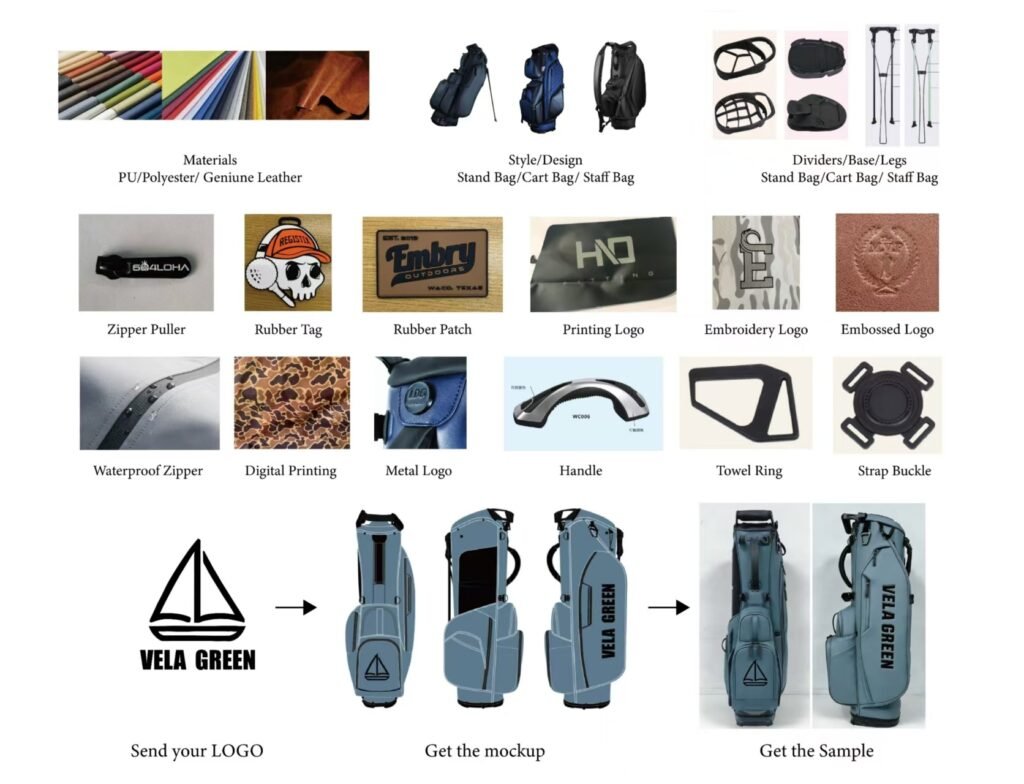
At Vela Green, we provide full-range OEM & ODM services for golf bags, golf headcovers, gloves, towels and other golf accessories. We support custom design, material selection, logo branding, color matching and mass production, strictly complying with CPSC, REACH and other international standards. With mature production experience, reliable quality control and professional export support, we help brands and importers develop market-oriented products with efficient lead times and flexible order quantities.