Buying a golf bag is more than just picking a style you like—it’s an investment in your on-course experience. Yet many US and European golfers make costly mistakes when choosing a golf bag, ending up with a product that doesn’t fit their needs, lacks durability, or wastes money. In 2026, with so many golf bag options on the market (stand, cart, hybrid, eco-friendly), avoiding these common pitfalls is key to finding the perfect bag. For brands, understanding these mistakes helps you design golf bags that solve real consumer pain points, stand out in Western markets, and build trust with buyers. This guide breaks down the top golf bag buying mistakes to avoid and how to choose the right bag for your game.
Why Avoiding Golf Bag Buying Mistakes Matters
A poorly chosen golf bag can ruin your round—whether it’s too heavy to carry, lacks storage for your gear, or falls apart after a few months. For US and European golfers, who value quality and value, wasting money on a bag that doesn’t meet their needs is frustrating. For brands, designing bags that address these common mistakes positions you as customer-centric, helping you attract and retain buyers in a competitive market. By avoiding these pitfalls, golfers get a bag that enhances their game, and brands get loyal customers who recommend their products.
Top 7 Golf Bag Buying Mistakes to Avoid (2026 Updated)
1. Choosing Style Over Function
One of the most common mistakes is picking a golf bag based solely on looks—ignoring how it fits your playing style. A sleek, stylish bag might look great, but if it’s too heavy for walking rounds or lacks pockets for your gear, it will quickly become a hassle. Western golfers prioritize functionality first—choose a bag that matches how you play (e.g., stand bag for walkers, cart bag for riders) before worrying about style.
2. Underestimating Weight
Many golfers underestimate how much bag weight matters, especially if they walk the course. A heavy bag (over 5 lbs) can cause shoulder strain and fatigue, ruining your round. In 2026, lightweight bags (3–4 lbs) are popular for walkers, while cart bags can be slightly heavier but should still be easy to lift into a cart. Always check the weight before buying—don’t assume “lightweight” on the label means it’s easy to carry.
3. Ignoring Pocket Layout & Storage
Pocket layout is often an afterthought, but it’s critical for organization. A bag with too few pockets or poorly placed pockets will leave you fumbling for gear mid-round. Look for bags with dedicated pockets for valuables, tees, water, and wet gear—avoid bags with large, unorganized pockets that make it hard to find what you need.
4. Overlooking Durability for Price
It’s tempting to buy a cheap golf bag to save money, but low-quality bags fray, tear, and break quickly—costing you more in the long run. US and European golfers understand that a durable bag is a better investment: look for high-denier fabrics, reinforced seams, and quality zippers. Don’t sacrifice durability for a lower price tag.
5. Not Considering Weather Resistance
Rain, dew, and humidity are common on golf courses across the US and Europe, but many golfers forget to prioritize weather resistance. A bag without water-repellent fabric or a rain cover will leave your clubs and gear wet, leading to damage and frustration. Even if you don’t play in the rain often, a weather-resistant bag protects your investment.
6. Buying the Wrong Size for Your Clubs
Golf bags come in different sizes, and buying one that doesn’t fit your club set is a common mistake. A bag that’s too small will cram your clubs, causing scratches and tangles; a bag that’s too large will be bulky and hard to carry. Ensure the bag’s top divider fits your club count (14 clubs is standard) and that the length accommodates your longest clubs (woods, drivers).
7. Forgetting About Comfort
Comfort is key, especially for walkers. A bag with thin, unpadded straps will dig into your shoulders, while a bag with poor weight distribution will feel heavier than it is. Look for ergonomic, padded straps (dual straps are best for even weight distribution) and a padded hip pad for extra comfort during long rounds.
How to Choose the Right Golf Bag (Step-by-Step Guide)
- Step 1: Determine Your Playing Style – Do you walk or ride? Choose a stand bag (walker) or cart bag (rider).
- Step 2: Set a Budget – Prioritize durability within your budget; don’t buy the cheapest option.
- Step 3: Check Weight & Comfort – Test the bag’s weight and strap comfort before buying.
- Step 4: Evaluate Pocket Layout – Ensure it has enough dedicated pockets for your gear.
- Step 5: Prioritize Weather Resistance – Look for water-repellent fabric and a rain cover.
- Step 6: Match the Size to Your Clubs – Ensure it fits your 14-club set comfortably.
How Brands Can Address These Mistakes (OEM Focus)
For brands targeting US and European markets, designing golf bags that avoid these common pitfalls is key to success. Partner with a trusted OEM to integrate these features:
- Clear Product Descriptions: Highlight weight, pocket count, and durability to help buyers make informed choices.
- Balanced Style & Function: Design bags that look great but prioritize usability (e.g., lightweight, organized pockets).
- Weather-Resistant Features: Add water-repellent fabrics and rain covers as standard, not optional.
- Comfortable Design: Use ergonomic, padded straps and balanced weight distribution.
- Size Options: Offer bags that fit standard 14-club sets, with clear size guidelines.
Final Thoughts
Buying a golf bag doesn’t have to be a stressful process—avoiding these common mistakes will help you find a bag that fits your needs, lasts for years, and enhances your on-course experience. For golfers, taking the time to consider your playing style, comfort, and durability will save you money and frustration. For brands, designing bags that address these pitfalls shows you understand your customers, helping you stand out in the competitive US and European markets. In 2026, the best golf bags aren’t just stylish—they’re functional, durable, and tailored to how golfers actually play.
OEM & ODM Service
Whether you’re planning to build your own brand, develop new products, or find a stable manufacturing partner for the US and European markets, working with a professional OEM & ODM factory can significantly improve your product quality and market competitiveness.
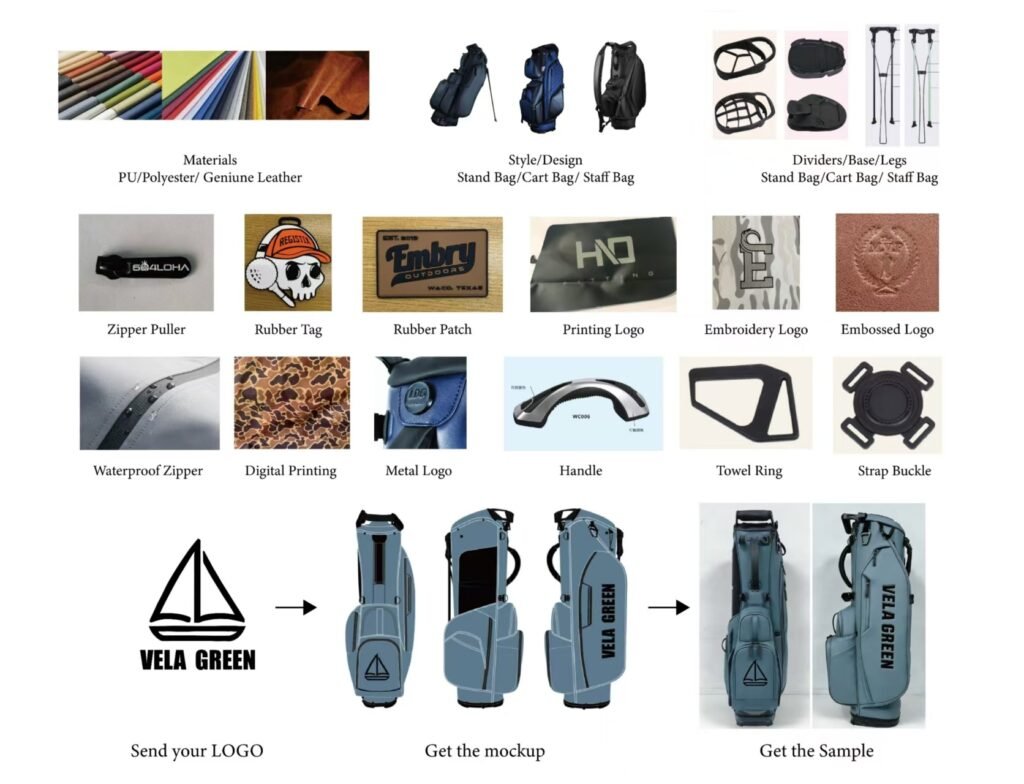
At Vela Green, we provide full-range OEM & ODM services for golf bags, golf headcovers, gloves, towels and other golf accessories. We support custom design, material selection, logo branding, color matching and mass production, strictly complying with CPSC, REACH and other international standards. With mature production experience, reliable quality control and professional export support, we help brands and importers develop market-oriented products with efficient lead times and flexible order quantities.