Common Mistakes to Avoid When Choosing a Golf OEM Factory is a critical sourcing guide for B2B golf bag wholesalers, private label retailers, and brand operators targeting US and European markets. Golf OEM factory selection determines product quality, compliance qualification, delivery stability, and long-term brand reputation. Many B2B buyers suffer massive losses including batch defective products, customs detention, delayed peak-season shipments, and after-sales disputes due to common selection mistakes. In 2026’s standardized cross-border golf market, avoiding typical factory selection errors is the simplest way to reduce sourcing risks and stabilize profit margins. This guide breaks down the most frequent mistakes when partnering with golf OEM manufacturers and shares practical avoidance strategies.
Most new and mid-sized golf B2B buyers prioritize low pricing and fast sampling while ignoring core factory strengths like production standardization, compliance capabilities, and quality control systems. These careless judgments lead to unstable long-term cooperation and repeated sourcing problems. Learning to steer clear of common mistakes when choosing a golf OEM factory helps you screen high-quality suppliers, build a reliable supply chain, and gain lasting competitive advantages in the global golf equipment wholesale industry.
Why OEM Factory Selection Errors Hurt Your Golf B2B Business
Golf bags are functional customized sporting goods with strict requirements for fabric craftsmanship, hardware matching, waterproof technology, and cross-border compliance. Unlike universal daily bags, golf OEM production involves personalized customization, batch quality consistency, and market certification standards. A wrong factory choice will trigger a series of chain losses: unqualified products cause retail returns and negative reviews, non-compliant goods face customs seizure, and unstable delivery disrupts your seasonal sales plans. For B2B brands focusing on long-term operation, unreliable OEM partners are the biggest hidden danger for market expansion.
Top Common Mistakes When Choosing a Golf OEM Factory
Based on 2026 cross-border golf sourcing data, the following mistakes are the most prevalent among B2B buyers, which directly affect order quality and cooperative stability.
1. Choosing Factories Solely Based on Low Prices This is the most common and harmful mistake in golf OEM sourcing. Many small workshops and unprofessional manufacturers offer ultra-low quotations to attract orders, cutting costs by using inferior fabrics, recycled hardware, simplified waterproof processes, and omitted quality inspections. Low-price orders always come with hidden risks such as fabric fading, zipper damage, water leakage, and poor durability. In the long run, the cost of returns, replacements, and brand reputation losses far exceeds the savings from low procurement prices.
2. Ignoring Golf-Specific Production Experience Many general bag factories claim to support golf bag OEM customization but lack professional industry experience. They are unfamiliar with golf bag structural design, club divider standards, outdoor functional requirements, and Western market trending specifications. These factories often produce products with unreasonable internal layouts, unqualified load-bearing performance, and non-compliant functional designs, which cannot meet end-user usage habits and retail market standards.
3. Neglecting Cross-Border Compliance Certification Verification Most B2B buyers only check sample quality but ignore factory compliance qualifications. Ordinary bag factories do not have US CPSIA, California Prop 65, or EU REACH test reports. Custom golf bags produced by these factories fail cross-border compliance inspections, resulting in customs detention, platform delisting, and order rejection. Compliance capability is a non-negotiable threshold for formal golf OEM export factories, not an optional advantage.
4. Confusing Sample Quality with Batch Production Quality Many unregulated factories provide high-quality customized samples to confirm orders, but cut corners on materials and craftsmanship during mass production. They replace high-density fabrics with thin materials, reduce stitching density, and use inferior accessories for bulk goods. Buyers who fail to lock batch standards in contracts will face serious quality inconsistency, leading to large-scale after-sales disputes.
5. Overlooking Production Capacity & Delivery Stability Some small-scale golf OEM workshops have excellent sample craftsmanship but insufficient mass production capacity. When facing peak-season bulk orders, they cannot guarantee on-time delivery, resulting in delayed stocking and missed sales windows. Additionally, factories without standardized production management are prone to chaotic scheduling, causing frequent order delays and batch delivery errors.
6. Skipping Formal Contract & Standardized Terms Many long-term cooperative buyers rely on oral communication instead of formal written contracts. Without clear clauses on quality standards, batch consistency, delivery cycle, defective product compensation, and after-sales service, buyers have no basis for rights protection once quality problems or delivery delays occur, bearing all losses independently.
Practical Tips to Avoid Golf OEM Factory Selection Mistakes
To effectively avoid the above common mistakes when choosing a golf OEM factory, B2B buyers need to establish standardized supplier audit and cooperation processes.
First, prioritize professional golf-specific manufacturers with years of export experience. Verify their golf bag production cases, long-term brand cooperative resources, and market adaptability to ensure they master professional production standards and trending design requirements.
Second, strictly audit compliance qualifications and factory strength. Check valid third-party test reports, export customs data, and real factory production videos to eliminate small workshops and unqualified middlemen.
Third, lock all production standards in formal contracts. Clearly specify fabric density, accessory brands, craftsmanship details, batch color difference standards, and compensation mechanisms for inconsistent sample and bulk quality to restrict factory production behaviors.
Fourth, conduct pre-shipment sampling inspection for all bulk orders. Arrange professional QC inspections before delivery to ensure batch quality consistency and avoid defective products flowing into the market.
Finally, evaluate factory production capacity and delivery credibility in advance to ensure stable order output during peak seasons and maintain smooth supply chain operation.
Final Thoughts
Common Mistakes to Avoid When Choosing a Golf OEM Factory systematically summarizes the core pitfalls and solutions for golf bag OEM supplier selection. In the competitive 2026 global golf wholesale market, stable high-quality OEM suppliers are the core foundation of B2B business growth. By abandoning low-price-only selection logic, verifying factory professionalism and compliance, and standardizing cooperative processes, buyers can completely avoid mainstream sourcing mistakes, reduce operational risks, and build long-term profitable golf bag OEM supply chain advantages.
OEM & ODM Service
Whether you’re planning to build your own brand, develop new products, or find a stable manufacturing partner for the US and European markets, working with a professional OEM & ODM factory can significantly improve your product quality and market competitiveness.
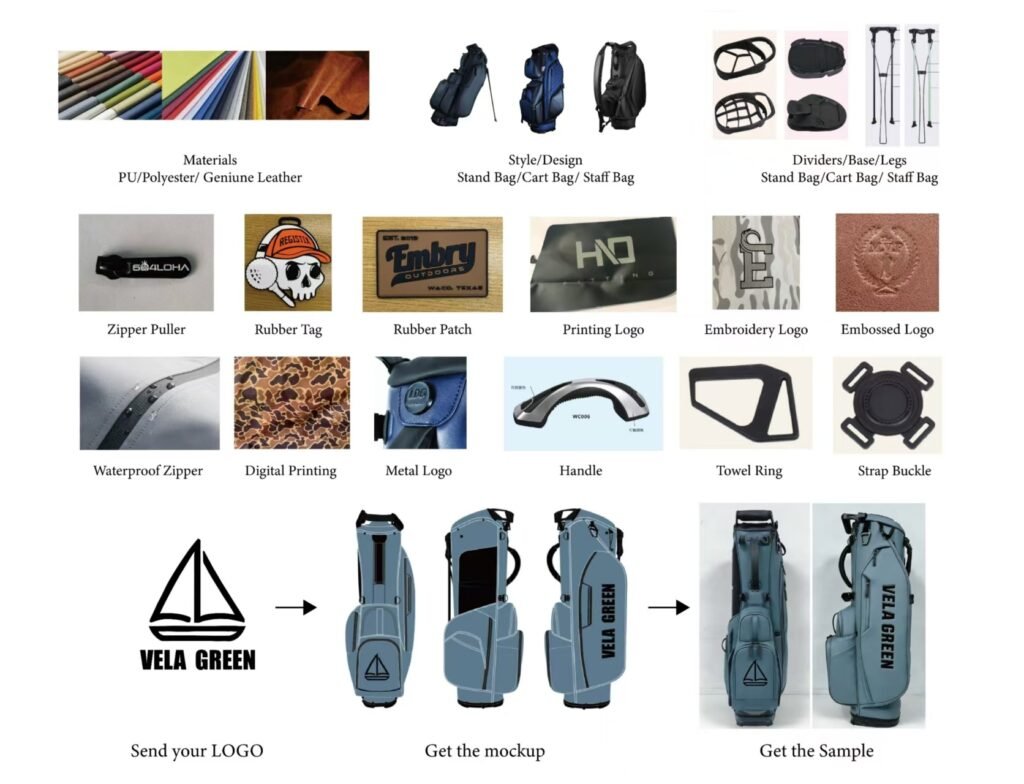
At Vela Green, we provide full-range OEM & ODM services for golf bags, golf headcovers, gloves, towels and other golf accessories. We support custom design, material selection, logo branding, color matching and mass production, strictly complying with CPSC, REACH and other international standards. With mature production experience, reliable quality control and professional export support, we help brands and importers develop market-oriented products with efficient lead times and flexible order quantities.