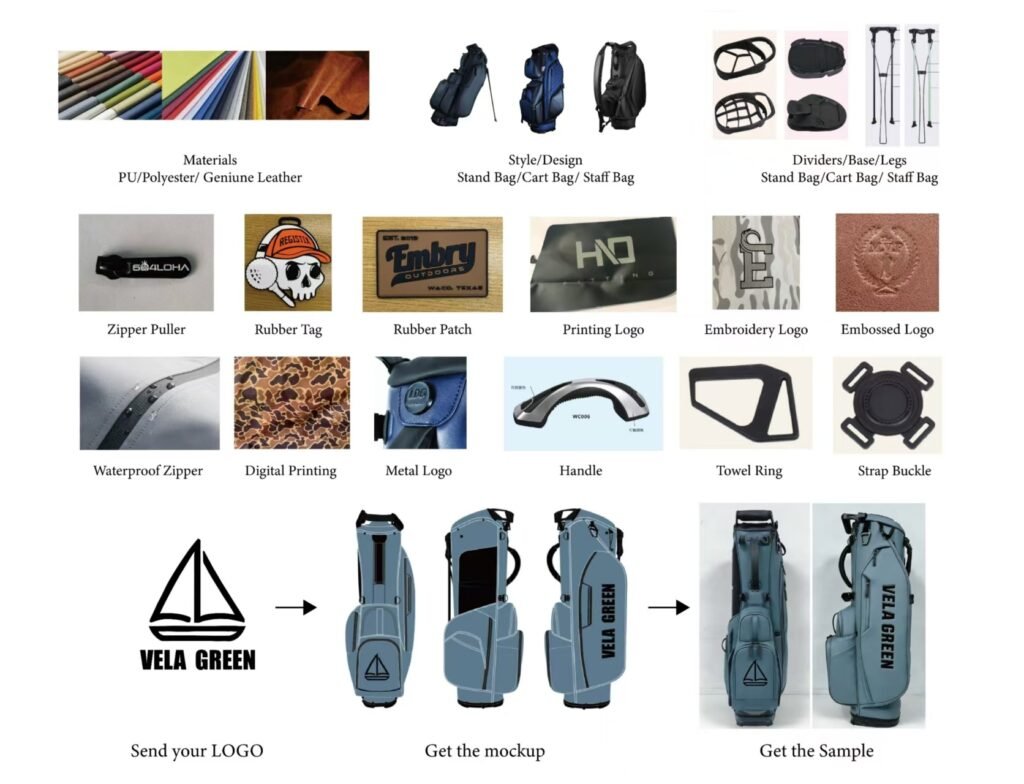
Sourcing custom golf bags for your brand, pro shop, or tournament should be an exciting investment. Yet every year, buyers lose thousands of dollars on subpar products because they overlook a few critical details. The difference between a successful custom bag program and a costly disaster comes down to avoiding five common mistakes.
Whether you need wholesale golf bags for retail, OEM production for a new brand, or personalized bags for corporate gifts, understanding what goes wrong—and how to prevent it—will save you time, money, and reputation. Here are the most expensive errors buyers make when ordering custom golf bags in 2026, and exactly how to avoid them.
Mistake #1: Choosing a Custom Golf Bag Supplier Based Solely on Price
It happens all the time: a buyer finds a custom golf bag quote that is 30% lower than everyone else, assumes it’s a great deal, and places a large order. Then the bags arrive with crooked stitching, zippers that jam after a week, or dividers that tear at the seams.
Low price nearly always means low-cost materials and minimal quality control. Reputable OEM golf bag manufacturers invest in better fabrics, stronger thread, rust-proof zippers, and experienced labor. They also conduct in-line inspections and final quality checks. The cheaper supplier skips all of that.
How to avoid it: Request material certifications (denier rating for nylon, PU leather thickness, thread strength). Ask for photos of the factory’s quality control process. Never base a decision on price alone—calculate total cost of ownership including returns, replacements, and brand damage from bad product.
Mistake #2: Ignoring Custom Golf Bag Material Specifications
Many buyers simply say “make it like this sample” without specifying exact materials. This leaves room for the factory to substitute cheaper components. Your custom golf bag might look fine on day one but fail after a few months because the fabric was 420D instead of 1680D, or the zippers were unbranded plastic instead of YKK metal.
Material substitution is the most common hidden trap in custom golf bag sourcing. Without clear written specifications, you have no recourse when the product underperforms.
How to avoid it: Create a detailed material specification sheet for your custom golf bags. Include fabric type and denier, zipper brand and model, thread type (bonded nylon vs. polyester), foam density for padding, and base material (rubber, plastic, or reinforced leather). Attach this spec to your purchase order and require factory sign-off.
Mistake #3: Not Testing Custom Golf Bags Before Full Production
Skipping the pre-production sample or prototyping phase is a recipe for disaster. Some buyers trust factory photos or a single sample bag and approve a container-sized order. If that sample had hidden flaws—or worse, if the production batch deviates from the sample—you are stuck with hundreds or thousands of unusable bags.
Industry data shows that brands who invest in a formal pre-production sample and third-party inspection reduce product defect rates by over 60%. Yet many buyers skip these steps to save a few weeks or a few hundred dollars.
How to avoid it: Always order at least two pre-production samples from your custom golf bag manufacturer—one to test and one to keep as a reference. Test the sample under real conditions: load it with clubs, walk 18 holes, expose it to sun and light rain. Then require a “golden sample” signed by both parties before mass production begins.
Mistake #4: Overlooking Custom Golf Bag Storage and Logistics Requirements
You have designed the perfect custom golf bag and the factory delivers on time. But now you have 2,000 bags sitting in a warehouse that is too humid, or you discover that the folded bags were stacked too high and the bottom layer is permanently creased.
Poor storage conditions between production and distribution ruin otherwise excellent custom golf bags. Heat softens adhesives, humidity corrodes zippers, and improper stacking deforms bag structures.
How to avoid it: Discuss packaging and storage with your custom golf bag supplier before production. Specify how bags should be packed (individual poly bags or cartons?), what stacking height is safe, and what climate conditions are required. If you use a third-party warehouse, provide clear handling instructions.
Mistake #5: Failing to Secure Intellectual Property for Custom Golf Bag Designs
You invest in unique colors, custom embroidery, proprietary pocket layouts, and a distinctive silhouette. Then, six months later, a competitor launches an almost identical bag at a lower price. How? Their factory was the same as yours, and your design was not protected.
Many custom golf bag buyers assume that factory will keep their designs confidential. But without a signed non-disclosure agreement (NDA) or non-compete clause, nothing prevents the manufacturer from selling your design to another customer.
How to avoid it: Have a lawyer draft a simple manufacturing agreement that includes confidentiality, exclusivity, and ownership of molds or patterns. For truly unique designs, consider registering a design patent or industrial design right in your target markets.
What to Look for in a Reliable Custom Golf Bag Manufacturer Instead
Avoiding the mistakes above is only half the battle. You also need to know what a good OEM golf bag manufacturer looks like. Here are four green flags:
- Transparent communication about lead times, material sourcing, and quality control checkpoints.
- Third-party certifications such as BSCI (social compliance), ISO 9001 (quality management), or recycled material certifications if relevant.
- Willingness to provide references from other wholesale golf bag buyers in your industry.
- In-house design support—not just order-taking, but active suggestions to improve durability or reduce costs without cutting quality.
The Real Cost of Choosing the Wrong Custom Golf Bag Partner
When custom golf bags fail, the costs go far beyond replacement. You lose customer trust, spend hours on returns and refunds, and miss sales opportunities because your inventory is tied up in defective product. One bad batch can set a brand back an entire season.
Conversely, working with an experienced manufacturer who prioritizes golf bag quality from material selection to final packing gives you a competitive advantage. Your customers receive products that last, recommend, and reorder.
Conclusion: Invest in Quality Custom Golf Bags the Right Way
By avoiding price-only decisions, specifying materials, testing samples, planning logistics, and protecting your designs, you transform custom golf bags from a potential liability into a reliable asset. Take the time to vet your custom golf bag supplier thoroughly—your brand’s reputation depends on it.
*With 20 years of expertise in custom golf bag manufacturing and OEM/ODM services, we help global brands avoid these costly mistakes. From material selection to quality control and design protection, our team supports you at every step. Contact us to discuss your next custom golf bag project.*
OEM & ODM Service
Whether you’re planning to build your own brand, develop new products, or find a stable manufacturing partner for the US and European markets, working with a professional OEM & ODM factory can significantly improve your product quality and market competitiveness.
At Vela Green, we provide full-range OEM & ODM services for golf bags, golf headcovers, gloves, towels and other golf accessories. We support custom design, material selection, logo branding, color matching and mass production, strictly complying with CPSC, REACH and other international standards. With mature production experience, reliable quality control and professional export support, we help brands and importers develop market-oriented products with efficient lead times and flexible order quantities.