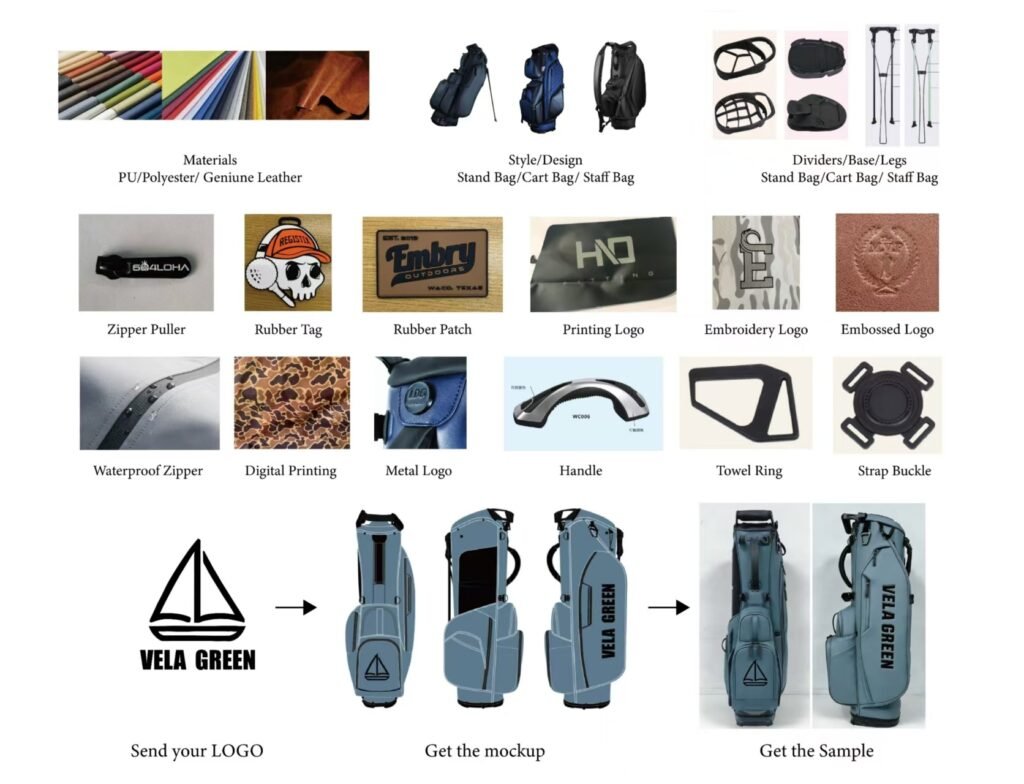
Effective golf bag supplier collaboration is the difference between a product that takes months to launch and one that reaches the market in weeks. The global golf bags market is projected to reach USD 1.75 billion by 2031, yet many B2B buyers treat supplier relationships as purely transactional—sending a design brief and waiting for a quote. This approach misses the transformative potential of true golf bag supplier collaboration, where manufacturers become active partners in design optimization, cost reduction, and speed-to-market.
This guide presents five essential strategies for golf bag supplier collaboration that accelerate product development and deliver better outcomes for both parties.
Why Golf Bag Supplier Collaboration Matters in 2026
The importance of golf bag supplier collaboration grew significantly in 2026. Industry leaders now recognize that specialized manufacturers with “small-batch, fast-turnaround” capabilities are becoming the backbone of the supply chain. Leading companies with end-to-end lean manufacturing capabilities can significantly shorten development cycles through process integration. Industry data shows that leading benchmark factories can reduce prototyping cycles to 7-10 days, achieve 30-day delivery for orders under 2000 pieces, and maintain a 70% repurchase rate from existing customers.
Brands that invest in golf bag supplier collaboration consistently achieve faster time-to-market, lower development costs, and higher product quality. Top-tier suppliers now offer far more than logo embroidery—they provide end-to-end co-creation services including color matching (Pantone standards), material selection, 3D digital mockups, and even packaging design.
Strategy #1: Involve Suppliers Early in the Design Process
The most impactful golf bag supplier collaboration strategy is early supplier involvement. Bringing your manufacturing partner into the design phase—rather than after specifications are finalized—unlocks significant value.
Why Early Involvement Works
When suppliers are engaged early, they can:
- Flag manufacturability issues before they become costly problems
- Suggest material alternatives that reduce cost without sacrificing quality
- Identify design features that complicate production and offer simpler solutions
- Provide realistic cost estimates based on actual production capabilities
How to Implement Early Supplier Involvement
- Share concept sketches with your supplier before finalizing specifications
- Invite supplier input on material selection and construction methods
- Conduct joint design reviews where both teams evaluate feasibility
- Ask “What would you do differently?” —experienced suppliers have insights you won’t find in any catalog
A successful golf bag supplier collaboration example: when a first-time importer brought a patented golf bag design to market, the supplier managed communication between multiple factories, coordinated sample development, and helped navigate the complexity of a product where everything had to fit together precisely.
Strategy #2: Leverage Design-for-Manufacturing (DFM) Expertise
Design-for-Manufacturing (DFM) is a cornerstone of effective golf bag supplier collaboration. Your supplier’s production engineers understand manufacturing constraints that your design team may not anticipate.
DFM Questions to Ask Your Supplier
- “Are there any features in this design that will significantly increase production time or cost?”
- “Could we achieve the same aesthetic with a simpler construction method?”
- “What materials do you recommend for durability and cost-efficiency?”
- “Are there standard components we could use instead of custom parts?”
Common DFM Improvements in Golf Bag Production
- Reducing the number of fabric panels to minimize cutting and sewing time
- Simplifying pocket configurations while maintaining functionality
- Using standard hardware (zippers, buckles, feet) instead of custom molds
- Optimizing stitch patterns for both strength and production speed
Top-tier golf bag supplier collaboration partners provide far more than logo embroidery—they offer end-to-end co-creation services including color matching (Pantone standards), material selection, 3D digital mockups, and even packaging design. This comprehensive approach transforms suppliers from order-takers into true development partners.
Strategy #3: Accelerate Development Through Rapid Prototyping
Rapid prototyping is a game-changer in golf bag supplier collaboration. The ability to test and iterate designs quickly reduces development risk and accelerates time-to-market.
Prototyping Capabilities to Look For
- 3D digital mockups that allow visual validation before physical sampling
- 7-10 day physical sampling for initial prototypes
- In-house pattern-making for faster revision cycles
- Dedicated sampling teams that aren’t competing with production schedules
The Prototyping Process in Golf Bag Supplier Collaboration
- Digital concept — Share sketches and specifications
- 3D mockup — Supplier creates digital visualization for approval
- Initial sample — Physical prototype produced in 7-10 days
- Testing and feedback — Evaluate materials, functionality, and aesthetics
- Revision — Supplier incorporates changes (5-7 days per round)
- Final sample approval — Golden sample signed off before bulk production
A supplier that can deliver samples quickly is a supplier that values your business and has the capacity to support your development timeline.
Strategy #4: Collaborate on Cost Reduction and Value Engineering
Cost reduction is one of the most tangible benefits of golf bag supplier collaboration. Suppliers who understand your cost targets can suggest value engineering opportunities that maintain quality while reducing production expense.
Cost Reduction Opportunities Through Supplier Collaboration
- Material substitution: Using equivalent materials at lower cost
- Process optimization: Streamlining production steps to reduce labor hours
- Volume consolidation: Combining multiple SKUs to achieve better pricing
- Packaging optimization: Reducing packaging costs through smarter design
- Component standardization: Using common hardware across multiple models
How to Approach Cost Collaboration
- Share your target price point openly with the supplier
- Ask for alternative material options at different price tiers
- Review cost breakdowns together to identify savings opportunities
- Consider trade-offs —a slightly higher cost in one area may enable savings elsewhere
Manufacturers maintaining close relationships with local zipper, foam padding, and alloy component suppliers can reduce lead times by up to 25% compared to offshore alternatives. This supply chain integration, achieved through strong golf bag supplier collaboration, directly translates to cost savings and faster delivery.
Strategy #5: Build Long-Term Partnership Infrastructure
The most successful golf bag supplier collaboration relationships are built on infrastructure, not just good intentions. Treating suppliers as strategic partners rather than vendors unlocks sustained value over time.
Partnership Infrastructure Elements
- Regular communication cadence: Weekly check-ins during active development; monthly reviews for ongoing relationships
- Shared forecasting: Provide 3-6 month volume projections so suppliers can reserve capacity
- Performance metrics: Track on-time delivery, quality, and responsiveness
- Joint planning sessions: Annual or semi-annual meetings to align on product roadmaps
- Transparent cost structures: Open book pricing where appropriate
The ROI of Long-Term Collaboration
Suppliers who see you as a long-term partner are more willing to:
- Prioritize your orders during peak seasons
- Invest in new capabilities that benefit your product line
- Share market insights about emerging trends and materials
- Offer flexible terms on payment, MOQ, and sample fees
This reorder rate signals consistent quality and mutual trust—the hallmarks of successful golf bag supplier collaboration.
Golf Bag Supplier Collaboration Checklist
| Strategy | Key Action | Status |
|---|---|---|
| Early supplier involvement | Share concept sketches before finalizing specs | ☐ |
| Design-for-manufacturing | Ask supplier for production optimization suggestions | ☐ |
| Rapid prototyping | Verify 7-10 day sample capability | ☐ |
| Cost collaboration | Review cost breakdowns and identify savings | ☐ |
| Partnership infrastructure | Establish regular communication and forecasting | ☐ |
Common Golf Bag Supplier Collaboration Mistakes to Avoid
| Mistake | Consequence | Solution |
|---|---|---|
| Involving suppliers too late | Missed cost and design optimization opportunities | Engage suppliers at concept stage |
| Withholding cost targets | Supplier can’t suggest value engineering | Share target pricing openly |
| No regular communication | Missed issues, delayed problem-solving | Establish weekly check-ins |
| Switching suppliers frequently | Lost relationship capital, inconsistent quality | Invest in long-term partnerships |
| Ignoring supplier input | Suboptimal designs, higher costs | Actively seek and incorporate feedback |
Conclusion: Make Golf Bag Supplier Collaboration a Strategic Priority
Golf bag supplier collaboration is not a nice-to-have—it is a strategic capability that directly impacts your product quality, development speed, and profit margins. The five strategies in this guide—early supplier involvement, design-for-manufacturing, rapid prototyping, cost collaboration, and partnership infrastructure—provide a complete framework for building collaborative supplier relationships.
B2B buyers who invest in golf bag supplier collaboration consistently outperform those who treat suppliers as interchangeable vendors. They launch products faster, at lower cost, with higher quality. They build supply chains that are resilient, innovative, and ready for market changes.
Start your next product development project by bringing your supplier into the conversation early. Share your vision. Ask for their input. Build a partnership that delivers value beyond the current order.
With 20 years of golf bag manufacturing experience and a proven track record of collaborative product development, we help B2B clients accelerate their time-to-market through early supplier involvement, rapid prototyping, and design-for-manufacturing expertise. Contact us to discuss how we can support your next product development project.
OEM & ODM Service
Whether you’re planning to build your own brand, develop new products, or find a stable manufacturing partner for the US and European markets, working with a professional OEM & ODM factory can significantly improve your product quality and market competitiveness.
At Vela Green, we provide full-range OEM & ODM services for golf bags, golf headcovers, gloves, towels and other golf accessories. We support custom design, material selection, logo branding, color matching and mass production, strictly complying with CPSC, REACH and other international standards. With mature production experience, reliable quality control and professional export support, we help brands and importers develop market-oriented products with efficient lead times and flexible order quantities.