Golf bag base construction is the last thing most buyers look at. It‘s also the first thing that fails. I’ve been manufacturing golf bags for over 20 years, and I can tell you from experience: a bag with a weak base will come back. Every time. The base takes more abuse than any other part of the bag—it gets set down on concrete, dragged across parking lots, dropped on cart paths, and left sitting in puddles. If your golf bag base construction isn’t up to the job, nothing else matters.
This guide breaks down the five most common base failures I‘ve seen, how to test for them, and what to put in your purchase order to protect your brand.
Why Golf Bag Base Construction Matters More Than You Think
A golfer sets their bag down dozens of times per round. On the tee box. On the fairway. On the green. On the cart path. Each time, the base hits the ground. Over a season, that‘s thousands of impacts. If the golf bag base construction is thin, weak, or poorly reinforced, it will wear through. Once the base fails, the bag is done. The internal frame collapses. Clubs sit crooked. The bag looks old before its time.
For B2B buyers, golf bag base construction directly affects return rates and brand reputation. A bag that lasts three seasons earns repeat orders. A bag that fails after three months generates warranty claims and bad reviews. The base is not a place to save a dollar.
Failure #1: Thin or Missing Base Padding
The base pad protects club heads from impact. Without adequate padding, club heads hit the ground when the bag is set down. Graphite shafts develop stress fractures. Iron heads get scuffed. The golf bag base construction must include a dense foam pad at least 5mm thick.
How to Test for Base Padding
Open the bag and press your hand into the bottom of the club compartment. You should feel firm, resilient foam. Not a thin layer of fabric. Not nothing. If you can feel the hard base material through the padding, the golf bag base construction is too thin.
Failure #2: Weak Seams at the Base
The seams that attach the base to the bag body take enormous stress. Every time the bag is set down, the seams stretch and compress. If they‘re not reinforced, they split. Water pours in. The bag falls apart.
How to Test for Seam Strength
Grab the base and pull it away from the bag body. Then push it back. Do this 20 times. If you see stitching pulling apart or fabric distorting, the golf bag base construction is not strong enough. Look for bar-tacked seams with high-tenacity thread.
Failure #3: No Waterproof Base Material
Water pools at the bottom of the bag. Rain runs down the sides and collects at the base. If the golf bag base construction uses standard fabric, water wicks through. The inside gets wet. Clubs rust. Mold grows.
How to Test for Waterproof Base
Stand the bag in one inch of water for 30 minutes. Then check inside the base. If it‘s wet, the base material is not waterproof. A proper golf bag base construction uses TPU-coated fabric, rubberized material, or a molded plastic shell.
Failure #4: Poor Abrasion Resistance
The base rubs against concrete, asphalt, gravel, and cart paths. If the material isn‘t abrasion-resistant, it wears through. Once the outer layer is gone, the internal structure is exposed and fails quickly.
How to Test for Abrasion Resistance
Rub the base material with sandpaper 100 times. If you see significant thinning or holes, it‘s not durable enough. The best golf bag base construction uses 1680D ballistic nylon, reinforced rubber, or molded plastic with a textured surface.
Failure #5: Unreinforced Corners and Edges
Corners and edges take the most impact. When a golfer sets the bag down, it often lands on a corner. If those areas aren‘t reinforced, they split or wear through. The golf bag base construction should include reinforced corner patches or a molded base shell that wraps around the edges.
How to Test for Corner Reinforcement
Inspect the corners of the base. Look for extra layers of fabric, plastic caps, or rubber bumpers. Then drop the bag from waist height onto a concrete corner. Check for damage. A quality golf bag base construction will handle this without deformation.
How to Test Golf Bag Base Construction Before You Order
Order a pre-production sample and run these tests:
- Load test: Fill the bag with clubs. Set it down on concrete 50 times.
- Water test: Stand the bag in 1 inch of water for 30 minutes.
- Abrasion test: Rub the base with sandpaper 100 times.
- Drop test: Drop the loaded bag from waist height onto a hard surface.
- Seam test: Pull the base away from the body 20 times.
If the sample passes, you have a golf bag base construction worth scaling. If it fails, you just saved yourself a container of returns.
What to Specify in Your Golf Bag Base Construction
Put these specs in your purchase order:
Base Material
Specify 1680D ballistic nylon, TPU-coated fabric, or molded rubber/plastic. For premium bags, a molded base shell is best.
Base Padding
Require 5mm minimum closed-cell EVA foam. Density 45–60 kg/m³.
Seam Construction
Specify bar-tacked seams with high-tenacity nylon thread. No single-stitch seams.
Corner Reinforcement
Require reinforced corners or a molded base shell that wraps around edges.
Waterproofing
Specify waterproof base material and sealed seams. No exposed stitching on the bottom surface.
Common Mistakes Buyers Make with Golf Bag Base Construction
| Mistake | What Happens | Fix |
|---|---|---|
| No base padding | Club heads hit ground, shafts crack | Require 5mm EVA foam |
| Single-stitched seams | Seams split, bag falls apart | Specify bar-tacked seams |
| Standard fabric base | Water wicks in, mold grows | Use TPU or rubber base material |
| No corner reinforcement | Corners wear through quickly | Require reinforced corners |
| Skipping sample testing | Bulk order full of defects | Run load, water, and drop tests |
Conclusion: Golf Bag Base Construction Is Not a Place to Cut Corners
Every B2B buyer wants a lower unit price. But golf bag base construction is the wrong place to save. A bag with a strong base lasts for years. A bag with a weak base generates returns, warranty claims, and lost customers. The five failures in this guide—thin padding, weak seams, no waterproofing, poor abrasion resistance, and unreinforced corners—are all preventable. Test for them. Specify them. And don’t let a factory talk you into a cheap base when your brand depends on durability.
With 20 years of golf bag manufacturing experience, we build every bag with reinforced, waterproof, abrasion-resistant base construction. Contact us to discuss your base specifications and request a sample.
OEM & ODM Service
Whether you’re planning to build your own brand, develop new products, or find a stable manufacturing partner for the US and European markets, working with a professional OEM & ODM factory can significantly improve your product quality and market competitiveness.
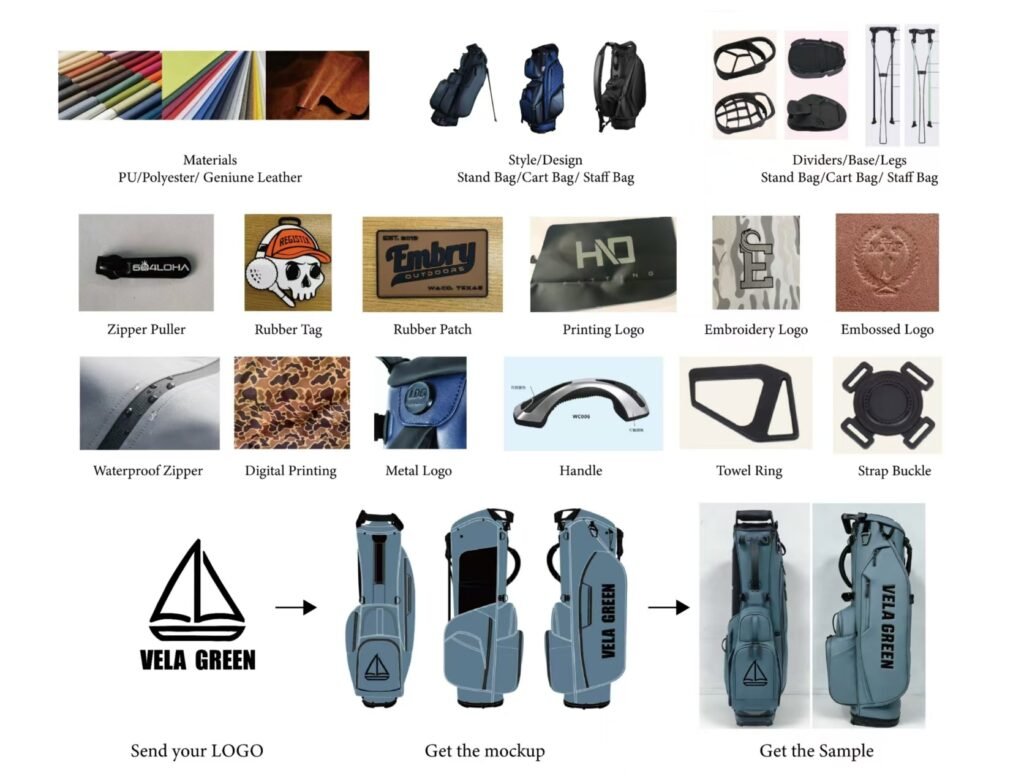
At Vela Green, we provide full-range OEM & ODM services for golf bags, golf headcovers, gloves, towels and other golf accessories. We support custom design, material selection, logo branding, color matching and mass production, strictly complying with CPSC, REACH and other international standards. With mature production experience, reliable quality control and professional export support, we help brands and importers develop market-oriented products with efficient lead times and flexible order quantities.