There’s nothing more frustrating for golfers than fumbling through a messy golf bag mid-round—searching for a tee, digging out a rangefinder, or untangling clubs. In 2026, US and European golfers are prioritizing organization as much as durability or style, seeking golf bags that make gear easy to find and access. For brands, designing golf bags with smart organization features is a surefire way to stand out in Western markets, as it solves a common pain point and enhances the on-course experience. This guide shares actionable organization tips for golfers and key design insights for brands looking to create organized, user-friendly golf bags.
Why Golf Bag Organization Matters (For Golfers & Brands)
For golfers, an organized golf bag saves time, reduces stress, and protects gear from damage. No more bent clubs, lost tees, or missed shots while rummaging through a cluttered bag. For brands targeting US and European markets, organization is a competitive differentiator—golfers are willing to pay more for bags with smart storage solutions that simplify their rounds. In a market where many bags offer similar durability and style, organization features can be the deciding factor for buyers.
Additionally, organized golf bags have a longer lifespan—gear is less likely to get damaged when stored properly, leading to positive reviews and repeat business for brands.
Common Golf Bag Organization Mistakes to Avoid
Most golfers unknowingly make simple mistakes that lead to cluttered, disorganized bags. Avoid these pitfalls to keep your gear neat:
- Overstuffing Pockets: Cramming too many items into pockets makes it hard to find what you need and stretches the bag’s fabric.
- Random Club Placement: Putting clubs in any slot leads to tangling, scratches, and difficulty accessing the right club quickly.
- Ignoring Small Storage: Forgetting to use small pockets for tees, ball markers, and divot tools leads to clutter in main compartments.
- Leaving Wet Gear Inside: Wet towels or rain gear left in the bag not only causes mold but also makes other items damp and hard to find.
8 Pro Golf Bag Organization Tips (2026 Updated)
1. Use Club Dividers Strategically
Most modern golf bags have 4–14 way dividers—use them to group clubs by type (woods, irons, wedges, putter). This keeps clubs from tangling and lets you grab the right one in seconds. For 14-way dividers, assign a specific slot to each club for maximum organization.
2. Organize Pockets by Function
Assign each pocket a purpose to avoid clutter: use one for valuables (phone, wallet, rangefinder), one for tees and ball markers, one for snacks and water, and one for wet gear (towels, rain cover). Many 2026 golf bags come with labeled or specialized pockets—take advantage of them!
3. Use Small Organizers for Tiny Items
Keep tees, ball markers, divot tools, and extra grips in a small pouch or organizer inside your bag. This prevents them from getting lost in large pockets and makes them easy to access when you need them.
4. Store the Putter Separately
Most golf bags have a dedicated putter well—use it! Storing the putter separately prevents it from getting scratched by other clubs and makes it easy to grab between shots.
5. Keep Frequently Used Items Accessible
Store items you use most (balls, tees, towel) in easy-to-reach side pockets. Items you use less often (rain cover, extra socks) can go in the bottom or back pockets.
6. Declutter After Every Round
Take 5 minutes after each round to remove trash, empty wet gear, and put items back in their assigned spots. This keeps your bag organized long-term and prevents clutter from building up.
7. Use a Towel Hook or Ring
Hang your golf towel on the bag’s built-in hook or ring instead of stuffing it in a pocket. This keeps it dry, accessible, and out of the way of other gear.
8. Invest in an Organized Golf Bag
If your current bag lacks organization features, upgrade to a 2026 model with specialized pockets, multiple dividers, and built-in organizers. It’s a small investment that saves time and frustration on the course.
Key Organization Features Brands Should Add to Golf Bags (OEM Focus)
For brands partnering with OEM suppliers to design golf bags for US and European markets, these organization features are a must to attract buyers:
- Multiple Club Dividers: 10–14 way dividers are preferred by Western golfers for maximum organization.
- Specialized Pockets: Magnetic valuables pockets, insulated cooler pockets, and wet gear pockets are high-demand features.
- Built-In Organizers: Integrated tee holders, ball markers, and divot tool slots eliminate the need for extra pouches.
- Labeled Pockets: Clear labels help golfers quickly find what they need, enhancing the user experience.
- Putter Well: A dedicated, padded putter well protects the putter and keeps it accessible.
Final Thoughts
An organized golf bag transforms the on-course experience—saving time, reducing stress, and protecting your gear. For golfers, following these simple tips will keep your bag neat and functional for years. For brands, prioritizing organization features in your golf bag designs is a smart way to stand out in the competitive US and European markets, as it solves a common pain point and shows you understand your customers’ needs. In 2026, organization isn’t just a nice-to-have—it’s a key feature that every golfer and brand should prioritize.
OEM & ODM Service
Whether you’re planning to build your own brand, develop new products, or find a stable manufacturing partner for the US and European markets, working with a professional OEM & ODM factory can significantly improve your product quality and market competitiveness.
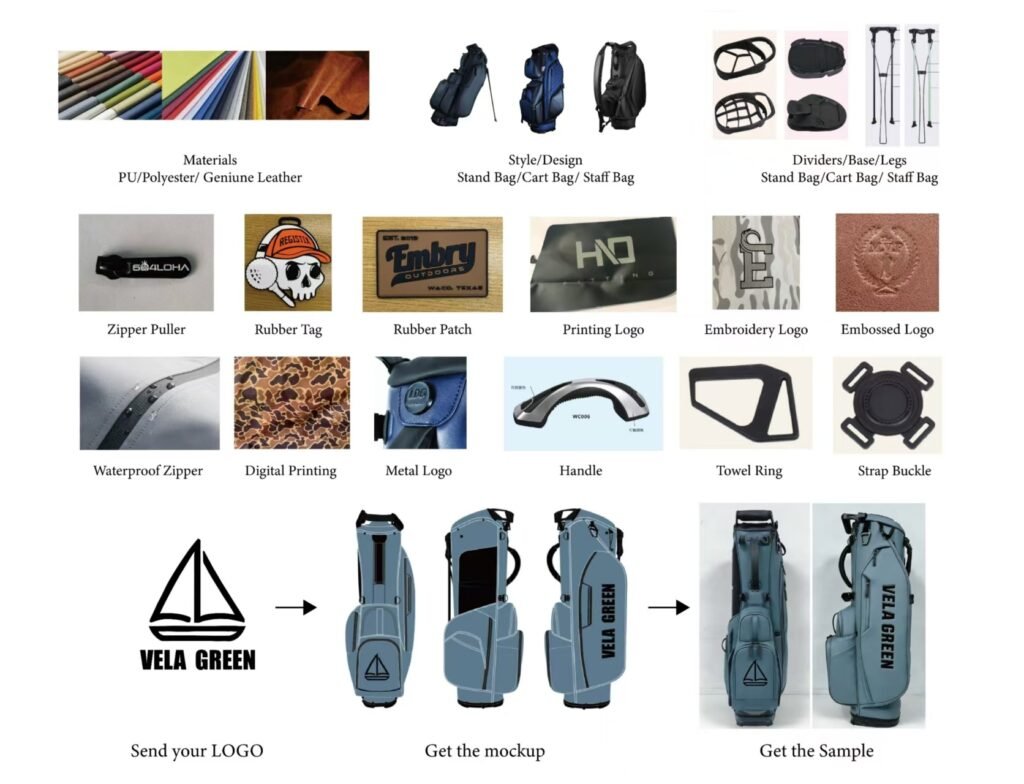
At Vela Green, we provide full-range OEM & ODM services for golf bags, golf headcovers, gloves, towels and other golf accessories. We support custom design, material selection, logo branding, color matching and mass production, strictly complying with CPSC, REACH and other international standards. With mature production experience, reliable quality control and professional export support, we help brands and importers develop market-oriented products with efficient lead times and flexible order quantities.