Golf bag zipper quality is the number one thing I check when a sample arrives at my desk. Not the fabric. Not the embroidery. The zippers. I‘ve been in this business for over 20 years, and I can tell you from experience: a bag with great materials and bad zippers will come back. Every time. Golf bag zipper quality is not a detail you can afford to overlook, especially when you’re sourcing for the US and European markets where customers expect gear to last.
This guide breaks down the five most common zipper failures I‘ve seen, how to test for them, and what to put in your purchase order to protect your brand.
Why Golf Bag Zipper Quality Matters More Than You Think
Walk through any pro shop and you‘ll see bags with beautiful fabrics and impressive features. But open and close the pockets a few times. That’s where the truth comes out. Cheap zippers stick, skip teeth, or break within a month. Customers don‘t blame the zipper—they blame the brand. Golf bag zipper quality directly affects your return rate, your reviews, and your reorder volume.
I‘ve seen brands lose thousands of dollars because they saved 30 cents per bag on zippers. The math never works. A $0.30 saving on 1,000 bags is $300. One container of returns costs more than that in shipping alone. Golf bag zipper quality is not a place to cut corners.
Failure #1: Teeth Separation
This is the most common golf bag zipper quality failure. The zipper closes, but the teeth separate behind the slider. You can see a gap. Water gets in. Small items fall out. It happens because the zipper tape is too weak, the teeth are misaligned, or the slider is the wrong size for the chain.
How to Test for Teeth Separation
Close the zipper completely. Run your fingernail along the closed chain. If you feel a gap or the teeth split apart, the golf bag zipper quality is not acceptable. Do this on every pocket. I‘ve seen bags pass on the main pocket but fail on the valuables pocket. Check them all.
Failure #2: Slider Jamming
A jammed slider makes a bag unusable. The golfer pulls, the zipper sticks, and eventually they force it. That breaks the slider or pulls teeth off the tape. Golf bag zipper quality failures like this are almost always caused by cheap sliders or poor tolerances.
How to Test for Slider Jamming
Open and close each zipper 20 times in a row. Don‘t be gentle. Pull at an angle, like a golfer in a hurry would. If the slider sticks, hesitates, or requires extra force, the golf bag zipper quality is too low. A good zipper should glide smoothly every time.
Failure #3: Corrosion and Rust
Golf bags get wet. Rain, dew, sweat, and morning grass. If the zipper hardware isn‘t corrosion-resistant, it rusts. Rust makes the slider stick. Then it breaks. Golf bag zipper quality means using coated or stainless hardware that won‘t rust after a season.
How to Test for Corrosion
Spray the zipper with salt water. Let it sit for 48 hours. Then try to open and close it. If it‘s stiff or shows rust, the golf bag zipper quality is not suitable for outdoor use. This test is simple but it reveals a lot.
Failure #4: Zipper Pull Breakage
The pull is the part golfers actually touch. If it breaks, the bag is done. Cheap pulls snap off under normal use. Golf bag zipper quality includes a pull that can handle years of opening and closing.
How to Test for Pull Strength
Hang a 5-pound weight from the pull. Wait 10 minutes. If the pull bends, cracks, or detaches, it‘s not strong enough. Then try pulling the zipper with the weight attached. A quality pull should handle this without deformation.
Failure #5: Tape Wear and Fraying
The zipper tape is the fabric strip that holds the teeth. If it frays, the teeth loosen. If it tears, the zipper fails completely. Golf bag zipper quality requires tape that resists abrasion and UV damage.
How to Test for Tape Wear
Rub the tape with sandpaper 50 times. Then inspect it. If you see fraying or thinning, the tape is too weak. Do the same test after leaving the sample in direct sunlight for a week. UV degradation is a real issue for golf bags that live on carts.
What to Specify in Your Golf Bag Zipper Quality
If you want zippers that last, put these specs in your purchase order.
Zipper Brand and Model
Don‘t accept “standard zipper.” Specify a reputable brand and model. The brand name matters because it guarantees consistent quality. I won’t mention specific brands here, but you know the ones that have been trusted in outdoor gear for decades. Ask your supplier which brand they use. If they can‘t tell you, that’s a red flag for golf bag zipper quality.
Teeth Material
Nylon or Delrin teeth are common for golf bags. They don‘t corrode and they‘re smooth. Metal teeth are stronger but heavier and can rust if not coated. For most golf bags, high-quality nylon teeth are the right choice.
Slider Material
Metal sliders last longer than plastic. They also feel more premium. Specify metal sliders with a corrosion-resistant coating.
Tape Material
The tape should be tightly woven and coated for water resistance. Ask for the tape thickness and coating spec. This is a detail many factories skip, and it shows up in golf bag zipper quality failures.
Testing Requirements
Require cycle testing (5,000 open/close cycles minimum), salt spray testing (48 hours), and pull strength testing (10 pounds). Ask for test reports. A serious factory will have them.
How to Test Golf Bag Zipper Quality Before Bulk Order
Order a pre-production sample. Then do this:
- Cycle every zipper 50 times. Check for sticking or separation.
- Pull at an angle. See if the slider jams.
- Spray with salt water. Wait 48 hours. Check for rust.
- Hang a 5-pound weight from each pull. Check for deformation.
- Rub the tape with sandpaper. Check for fraying.
If the sample passes, you have a golf bag zipper quality standard worth scaling. If it fails, you just saved yourself a container of returns.
Common Mistakes Buyers Make with Golf Bag Zipper Quality
| Mistake | What Happens | Fix |
|---|---|---|
| Accepting “standard zipper” | Inconsistent quality, returns | Specify brand, model, and material |
| Not testing samples | Bulk order full of defects | Run cycle, salt spray, and pull tests |
| Skipping the valuables pocket | That zipper fails first | Test every zipper on the bag |
| Choosing plastic sliders to save cost | Sliders break, teeth separate | Use metal sliders with coating |
| No tape spec | Tape frays, zipper fails | Specify tape material and coating |
Conclusion: Golf Bag Zipper Quality Is Not a Place to Save 30 Cents
Every B2B buyer wants a lower unit price. But golf bag zipper quality is the wrong place to cut. A bag with great zippers earns repeat orders. A bag with bad zippers generates returns, bad reviews, and lost customers. The five failures in this guide—teeth separation, slider jamming, corrosion, pull breakage, and tape wear—are all preventable. Test for them. Specify them. And don‘t let a factory talk you into “standard” zippers when your brand depends on quality.
With 20 years of golf bag manufacturing experience, we build every bag with tested, branded zippers that pass cycle, salt spray, and pull strength tests. Contact us to discuss your zipper specifications and request a sample.
OEM & ODM Service
Whether you’re planning to build your own brand, develop new products, or find a stable manufacturing partner for the US and European markets, working with a professional OEM & ODM factory can significantly improve your product quality and market competitiveness.
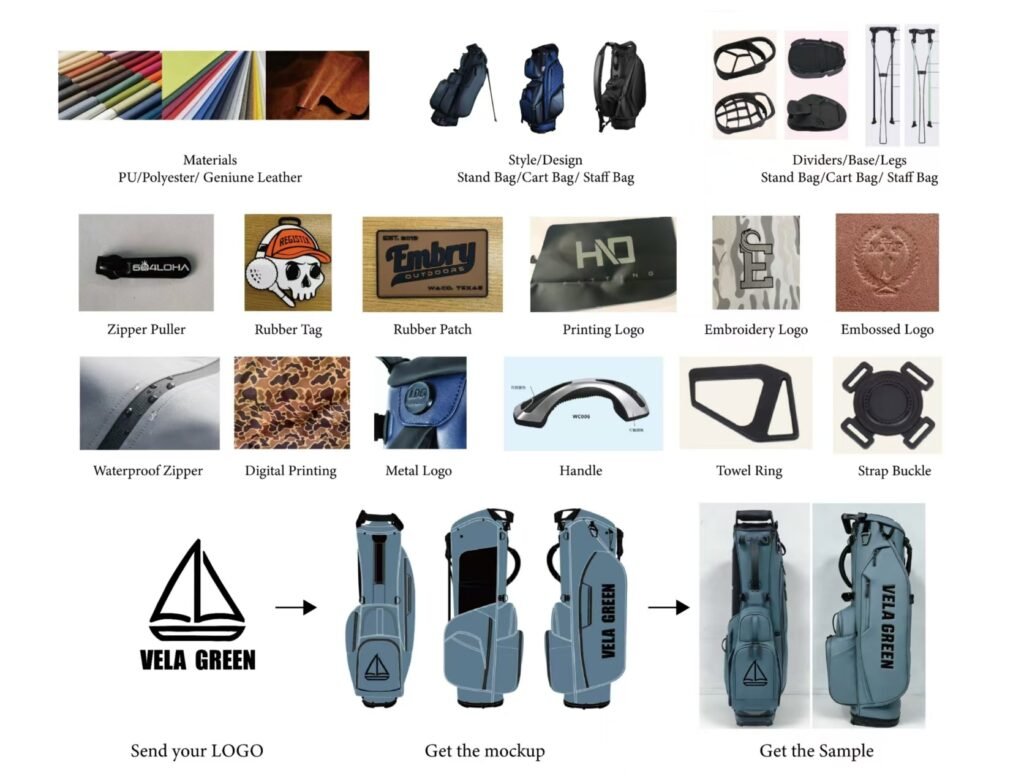
At Vela Green, we provide full-range OEM & ODM services for golf bags, golf headcovers, gloves, towels and other golf accessories. We support custom design, material selection, logo branding, color matching and mass production, strictly complying with CPSC, REACH and other international standards. With mature production experience, reliable quality control and professional export support, we help brands and importers develop market-oriented products with efficient lead times and flexible order quantities.