Golf Bags B2B: Product Testing & Compliance Certification Guide 2026 is an indispensable reference for global golf bag wholesalers, private label brands, and OEM buyers exporting to US and European markets. In 2026, cross-border sporting goods inspection standards have become stricter, with updated chemical safety, physical durability, and textile compliance rules for imported golf bags. Many B2B sellers face costly risks including customs detention, Amazon listing suspension, retail returns, and penalty fees due to unqualified product testing and incomplete certification. Mastering standardized product testing procedures and mandatory compliance certifications helps buyers filter reliable suppliers, eliminate batch quality risks, and build a stable low-risk supply chain for long-term overseas business growth.
Most new B2B buyers only focus on golf bag pricing and appearance while ignoring systematic testing and certification verification. However, golf bags involve complex materials, coatings, hardware accessories, and printing crafts, all of which require professional third-party testing to meet Western market thresholds. Following complete golf bags B2B product testing and compliance certification standards is the core prerequisite for smooth customs clearance, shelf qualification, and reduced after-sales disputes in 2026 cross-border wholesale.
Why Testing & Certification Matter for 2026 Golf Bag B2B Sourcing
US and European golf retail markets have raised stricter entry barriers for imported sporting goods in 2026. Local customs, e-commerce platforms, and offline pro shops conduct random compliance spot checks throughout the year. Golf bags without valid test reports and certifications are deemed unqualified, leading to cargo rejection, store penalties, and brand reputation damage. Unlike ordinary daily bags, golf bags serve high-frequency outdoor scenarios, requiring excellent durability, weather resistance, and material safety. Standard product testing ensures stable physical performance, while formal compliance certifications prove legal market sales qualifications, helping B2B sellers avoid most cross-border operational risks.
In addition, complete testing and certification credentials become strong competitive advantages for B2B transactions. High-end European and American golf brands prioritize suppliers with standardized quality systems and full compliance documents, enabling certified wholesalers to win high-value long-term cooperative orders and avoid low-end price competition.
Mandatory Product Testing Items for 2026 B2B Golf Bags
Professional product testing covers physical performance, material safety, and outdoor adaptability, targeting core usage pain points of end consumers and regulatory requirements.
First, physical durability testing. This includes fabric tensile resistance, stitching firmness, and zipper durability tests to prevent thread breakage, tearing, and component failure during long-term carrying and cart friction. Outdoor UV aging and color fastness tests are also essential, ensuring golf bags resist fading and brittleness under long sunlight exposure, which greatly reduces retail return rates.
Second, waterproof and weather resistance testing. As core functional indicators for golf bags, waterproof spraying and seam leakage tests verify the tightness of waterproof coatings and stitching gaps. Qualified test results ensure stable performance in rainy and humid outdoor environments, meeting daily usage needs of Western golfers.
Third, material safety testing. This focuses on detecting harmful substances in fabrics, printing inks, adhesives, and metal hardware, including heavy metals, formaldehyde, and volatile compounds. It eliminates toxic and irritating materials that fail Western consumer safety standards, protecting end-user health and avoiding regulatory penalties.
Key Compliance Certifications for US & European Golf Bag Exports
To fully comply with 2026 golf bags B2B compliance certification rules, B2B buyers must confirm suppliers hold valid targeted certifications for different regional markets.
US Market Core Certifications: CPSIA certification is mandatory for all imported sporting goods, restricting lead and phthalate content to ensure consumer product safety. California Prop 65 testing is indispensable for California market sales, prohibiting excessive harmful chemicals and avoiding official warning penalties. These two certifications are basic thresholds for golf bags to enter US offline pro shops and online retail platforms.
EU Market Core Certifications: REACH compliance testing restricts hundreds of SVHC harmful substances in textiles and accessories, adapting to EU strict environmental protection rules. OEKO-TEX certification proves non-toxic and harmless textile materials, greatly improving product credibility. For eco-friendly customized orders, GRS recycled material certification supports brand green marketing and meets European sustainable consumption trends.
Standard B2B Testing & Certification Sourcing Process
To avoid certification missing and untested bulk shipments, B2B buyers need to follow standardized procurement procedures. First, verify supplier qualification and existing test reports before placing orders to confirm they match target market standards. Second, lock testing and certification requirements in formal contracts to ensure batch products consistent with sample standards.
Third, arrange third-party sampling testing before shipment for large wholesale orders. Focus on rechecking material safety, color fastness, and waterproof performance to eliminate batch defects. Finally, organize complete certification documents and test reports for customs clearance and platform review, ensuring zero-risk market entry.
Common Testing & Certification Mistakes to Avoid
Many B2B losses stem from simple operational errors. Avoid using expired test reports, as 2026 customs inspections strictly verify document validity. Do not ignore regional differences between US and EU standards; one single certification cannot cover all Western markets. In addition, never skip pre-shipment testing for customized private label orders, as personalized printing and material replacement may cause new compliance risks.
Final Thoughts
Golf Bags B2B: Product Testing & Compliance Certification Guide 2026 summarizes the full set of testing items and compliance certification standards for cross-border golf bag wholesale. In the increasingly standardized 2026 global golf market, qualified product testing and complete certifications are no longer optional advantages but basic market entry thresholds. B2B buyers who strictly implement testing and certification rules can effectively reduce quality and compliance risks, enhance product competitiveness, and achieve stable and profitable long-term development in US and European markets.
OEM & ODM Service
Whether you’re planning to build your own brand, develop new products, or find a stable manufacturing partner for the US and European markets, working with a professional OEM & ODM factory can significantly improve your product quality and market competitiveness.
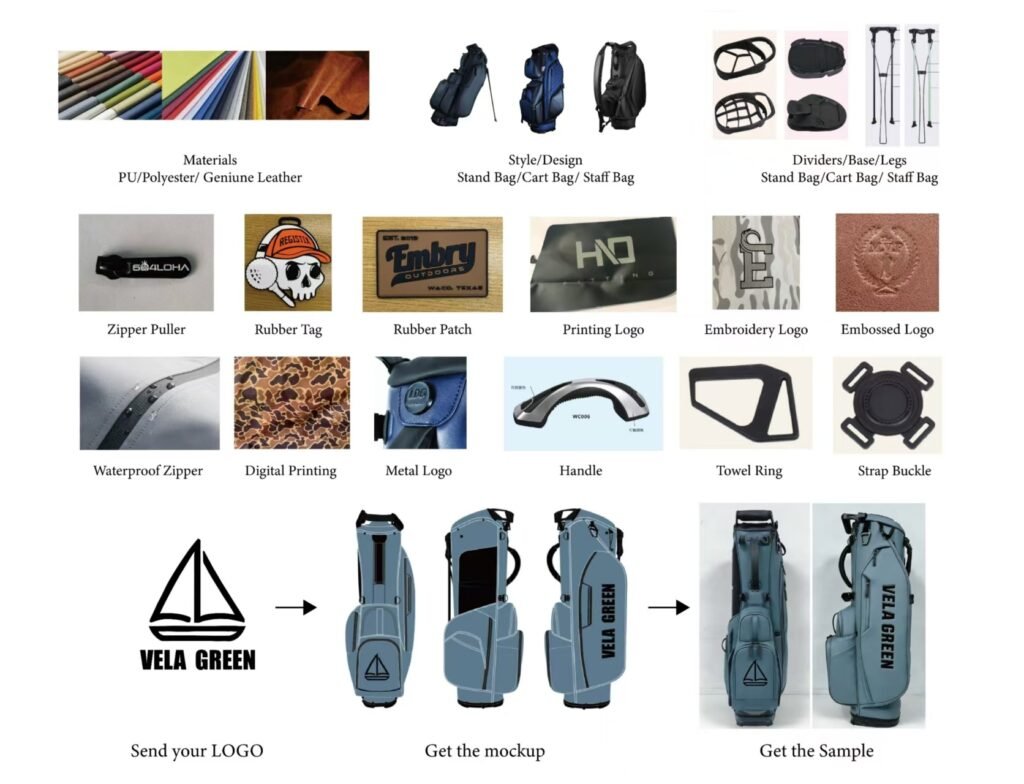
At Vela Green, we provide full-range OEM & ODM services for golf bags, golf headcovers, gloves, towels and other golf accessories. We support custom design, material selection, logo branding, color matching and mass production, strictly complying with CPSC, REACH and other international standards. With mature production experience, reliable quality control and professional export support, we help brands and importers develop market-oriented products with efficient lead times and flexible order quantities.