Golf Bags B2B: Sustainable Trends & Green Sourcing Guide 2026 is essential reading for global wholesalers, golf retail brands, and private label buyers targeting US and European markets. In 2026, sustainable consumption is no longer a niche marketing concept but a mandatory industry standard for sporting goods exports. Western consumers, large golf retail chains, and offline pro shops are prioritizing eco-friendly products, while EU and US import regulations continue to tighten material environmental requirements. Mastering sustainable golf bag trends and standard green sourcing strategies helps B2B businesses comply with market rules, capture high-margin green orders, and stand out from homogeneous low-price competition.
Traditional golf bag wholesale relies on conventional chemical fabrics, non-recycled materials, and high-pollution printing processes, which face increasing customs inspection risks and consumer rejection. To adapt to 2026 cross-border market upgrades, B2B buyers must update their supply chain standards and learn golf bags B2B sustainable trends and green sourcing rules. Green sourcing not only meets regional environmental compliance but also builds brand green IP, greatly improving long-term market competitiveness.
Why Green & Sustainable Golf Bags Dominate 2026 B2B Market
The US and European golf industries are accelerating sustainable transformation in 2026. Many well-known golf brands have launched eco-friendly product lines, and local golf courses are gradually eliminating high-pollution sporting goods. Strict environmental regulations such as EU REACH restrictions and plastic reduction policies have raised the entry threshold for imported golf bags. Conventional non-environmental golf bags easily face customs detention, platform delisting, and retail resistance.
Meanwhile, end consumers’ green awareness continues to rise. Modern golfers prefer products made of recycled materials, low-carbon production, and non-toxic treatments. For B2B wholesalers, green golf bags support higher retail pricing, lower return rates, and more channel cooperation opportunities, becoming the core profit growth point for 2026 golf equipment wholesale.
Top 4 Sustainable Golf Bag B2B Trends in 2026
The global golf bag green supply chain has formed four clear mainstream trends this year, covering materials, craftsmanship, packaging, and certification. These trends directly guide B2B wholesale sourcing direction and product iteration.
1. Recycled Fabric Material Popularization Replacing traditional pure polyester fabrics with recycled fabrics is the most mainstream sustainable trend. High-quality golf bag suppliers adopt GRS-certified recycled Oxford cloth, made from recycled plastic bottles and industrial waste fibers. The material retains the same durability, waterproof performance, and UV resistance as new fabrics, while greatly reducing carbon emissions. This eco-friendly material has become the standard configuration for mid-to-high-end golf bags exported to Europe and the United States.
2. Low-Carbon & Non-Toxic Craftsmanship 2026 green sourcing strictly eliminates high-formaldehyde dyes and strong volatile waterproof coatings. Sustainable golf bags adopt water-based environmental printing, odorless glue bonding, and low-temperature environmental protection coating technology. These processes avoid harmful chemical residues, meet US Prop 65 and EU environmental standards, and adapt to Western health-oriented consumption concepts.
3. Plastic-Reduced & Minimalist Design More Western golf brands abandon excessive decorative accessories and adopt minimalist plastic-reduced designs. Green golf bags reduce redundant plastic parts, replace plastic accessories with recycled metal and biodegradable materials, and simplify complex layered structures. This trend reduces resource waste, conforms to EU plastic reduction policies, and caters to modern minimalist aesthetics.
4. Full-Link Green Packaging & Logistics Sustainable upgrades extend beyond products to export packaging. Qualified suppliers use recycled cartons, degradable dust bags, and paper-based buffer materials instead of non-degradable plastic foam. Abandoning non-environmental packaging materials helps B2B buyers pass EU green customs inspection and support brand sustainable marketing.
Core Green Sourcing Standards for B2B Golf Bags
To follow 2026 golf bags B2B sustainable trends, buyers need to establish standardized green sourcing audit criteria to screen qualified eco-friendly suppliers and avoid false green marketing traps.
First, prioritize valid green certifications. Focus on GRS recycled material certification, OEKO-TEX non-toxic textile certification, and REACH compliance test reports. These third-party authentications are the most credible proof of product sustainability and support retail green label display on cross-border platforms.
Second, verify sustainable production capabilities. Professional green suppliers adopt unified environmental protection production lines, strictly control sewage and exhaust emissions, and have complete environmental protection qualification files. Avoid small workshops that simply replace materials but retain high-pollution processes.
Third, inspect material and craft details. Confirm that fabrics, printing inks, adhesives, and hardware surface treatments all adopt eco-friendly formulas. Check product odor, color fastness, and residual chemical indicators to ensure full compliance with Western market standards.
Fourth, support sustainable packaging solutions. Require suppliers to use recycled export cartons, degradable inner packaging, and plastic-free packaging processes to realize full-link green production and shipment.
B2B Business Benefits of Green Golf Bag Sourcing
Sustainable golf bag sourcing brings long-term commercial value to B2B businesses. Firstly, it breaks price competition barriers. Eco-friendly products have obvious differentiation advantages and can support 20%-40% retail premium. Secondly, it expands high-quality sales channels. Green products are more easily recognized by high-end golf clubs, chain retail brands, and green cross-border platforms.
In addition, green sourcing reduces compliance risks, ensures smooth customs clearance and long-term stable sales, and accumulates sustainable brand reputation for wholesale enterprises, laying a foundation for long-term market expansion.
Final Thoughts
Golf Bags B2B: Sustainable Trends & Green Sourcing Guide 2026 clarifies the latest sustainable development trends and practical sourcing standards for the global golf bag wholesale industry. As US and European environmental policies and consumer green demands continue to upgrade, traditional non-environmental golf bags will gradually be phased out of the market. B2B buyers who actively deploy green sourcing, select certified sustainable suppliers, and launch eco-friendly golf bag product lines can seize 2026 industry dividends, reduce operational risks, and achieve stable profit growth in Western mature markets.
OEM & ODM Service
Whether you’re planning to build your own brand, develop new products, or find a stable manufacturing partner for the US and European markets, working with a professional OEM & ODM factory can significantly improve your product quality and market competitiveness.
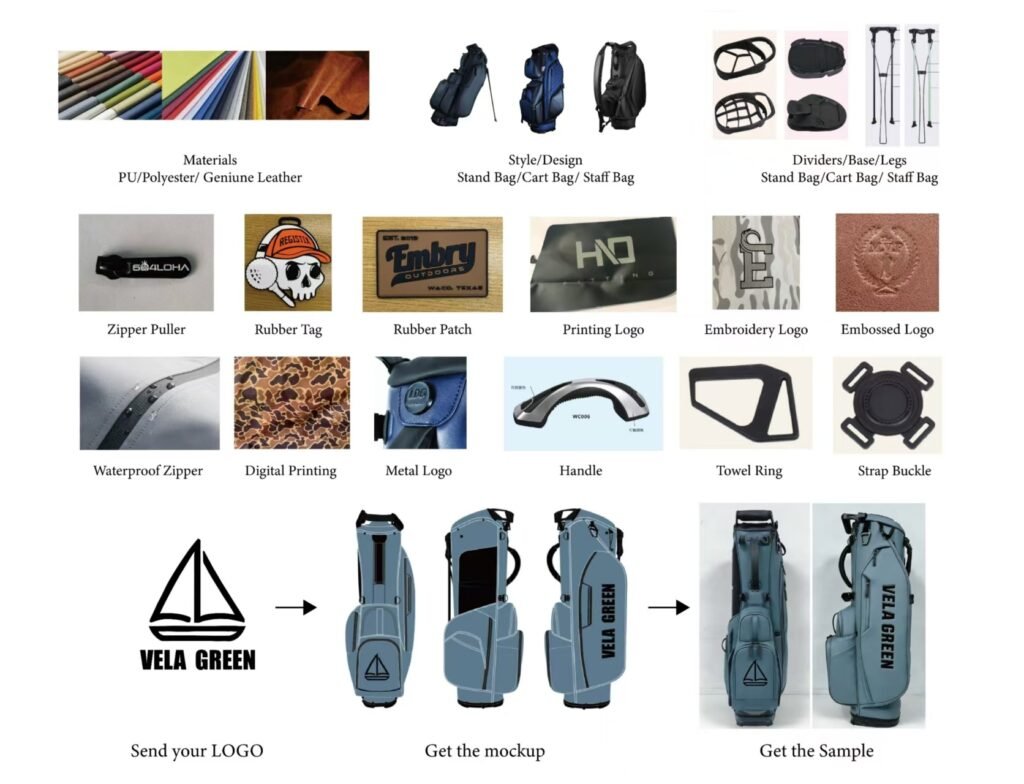
At Vela Green, we provide full-range OEM & ODM services for golf bags, golf headcovers, gloves, towels and other golf accessories. We support custom design, material selection, logo branding, color matching and mass production, strictly complying with CPSC, REACH and other international standards. With mature production experience, reliable quality control and professional export support, we help brands and importers develop market-oriented products with efficient lead times and flexible order quantities.