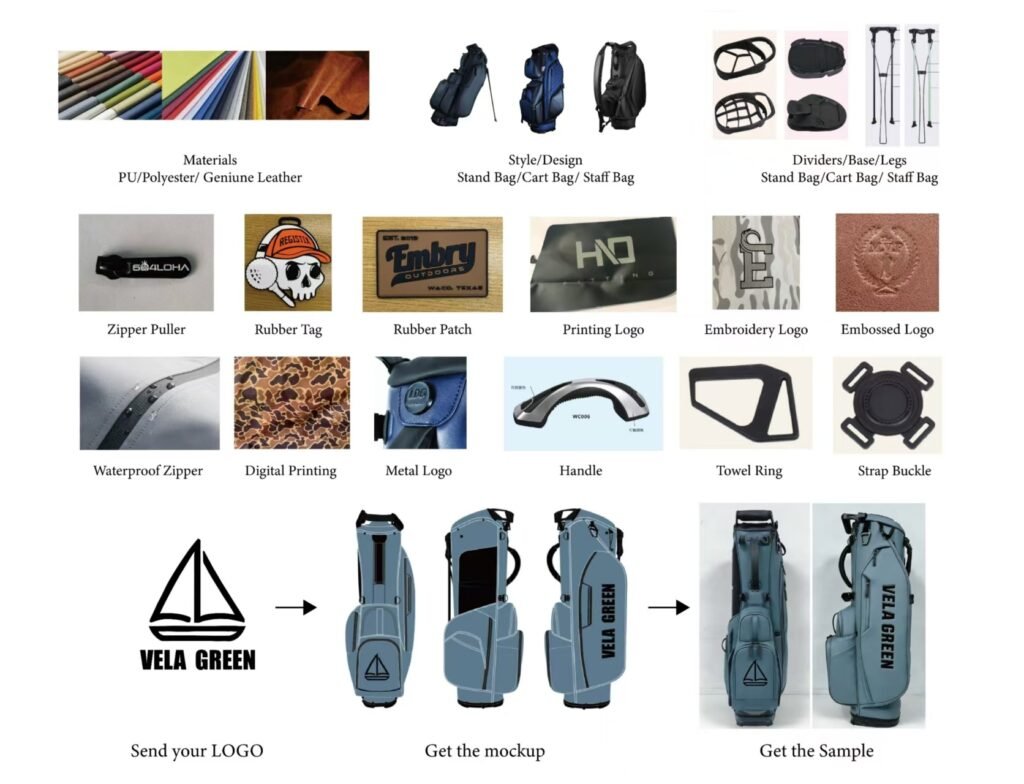
For B2B golf brands targeting US and European markets, sourcing high-quality, compliant golf bags through OEM/ODM partnerships is the key to scaling business and standing out in a competitive industry. In 2026, Western buyers are no longer just looking for cost-effective products—they demand customization, compliance with regional standards, on-time delivery, and alignment with market trends (sustainability, functionality, brand differentiation). This blog is tailored for B2B brands, importers, and retailers, breaking down the critical steps to source golf bags OEM/ODM successfully, avoid common pitfalls, and meet the unique demands of US and European golf markets.
Why OEM/ODM Sourcing Is Critical for B2B Golf Brands in 2026
US and European golf markets are mature and competitive—generic, off-the-shelf golf bags cannot meet the needs of discerning B2B buyers (retailers, golf clubs, brand distributors). OEM/ODM partnerships allow B2B brands to: 1) Customize products to align with their brand identity (logo, color, design, features); 2) Ensure compliance with strict US (CPSC, Prop 65) and EU (REACH, GRS) standards; 3) Control production costs while maintaining quality; 4) Adapt quickly to market trends (e.g., sustainable materials, smart storage) without heavy R&D investment. For B2B brands, OEM/ODM is not just a sourcing method—it’s a strategic tool to build brand loyalty and capture market share.
Key Requirements for Golf Bags OEM/ODM in US & European Markets
Western B2B buyers have non-negotiable requirements for golf bags—ignoring these will lead to import delays, customer complaints, and lost business. When partnering with an OEM/ODM supplier, prioritize these core criteria:
1. Strict Compliance with Regional Standards
Compliance is the foundation of successful B2B golf bag sourcing. US markets require compliance with CPSC (Consumer Product Safety Commission) standards for materials (no toxic chemicals, lead-free), Prop 65 warnings for certain components, and labeling requirements. EU markets mandate REACH (Registration, Evaluation, Authorization and Restriction of Chemicals) compliance, GRS (Global Recycled Standard) for sustainable products, and CE marking. Your OEM partner must provide full compliance documentation (test reports, certificates) to ensure smooth customs clearance and avoid costly penalties.
2. Flexible Customization Capabilities
B2B brands need to differentiate their products—generic designs will not compete with established players. A reliable OEM/ODM supplier should offer flexible customization: logo printing/embroidery, color matching (Pantone standards), material selection (nylon, polyester, recycled blends, leather), and feature customization (pocket layout, dividers, straps). Additionally, they should support small MOQs (Minimum Order Quantities) for trial orders, allowing B2B brands to test new designs in the market without overcommitting.
3. Quality Control & Durability
Western B2B buyers prioritize long-lasting, high-quality golf bags—poor craftsmanship leads to returns, negative reviews, and lost partnerships. Your OEM partner should have a strict quality control (QC) process: pre-production material testing, in-line production inspection, and final product inspection (defect rate ≤1%). Look for suppliers that use high-denier fabrics, reinforced seams, corrosion-resistant zippers, and ergonomic designs—these details reflect product quality and enhance your brand’s reputation.
4. Sustainable Production Capabilities
Sustainability is no longer a niche trend—it’s a requirement for B2B golf brands in 2026. US and European buyers actively seek golf bags made from recycled materials (RPET, recycled nylon), with eco-friendly production processes (waterless dyeing, zero-waste cutting) and GRS certification. Your OEM partner should offer sustainable material options and transparent production practices, allowing you to market your products as eco-friendly and capture the growing green consumer segment.
5. On-Time Delivery & Supply Chain Stability
B2B brands rely on timely delivery to meet retail deadlines and avoid stockouts. A reliable OEM/ODM supplier should have a stable supply chain, clear production timelines (sample delivery within 3–5 days, mass production within 25–35 days), and contingency plans for delays (e.g., alternative material suppliers). Additionally, they should offer flexible shipping options (FCL, LCL) and handle customs documentation to simplify the import process for B2B brands.
Common Pitfalls to Avoid in Golf Bags OEM/ODM Sourcing
Many B2B brands make costly mistakes when sourcing golf bags OEM/ODM—avoid these to ensure a smooth partnership and market success:
- Choosing Price Over Quality: Opting for the cheapest OEM supplier often leads to poor craftsmanship, compliance issues, and costly returns. Prioritize quality and compliance over short-term cost savings.
- Ignoring Compliance Documentation: Failing to verify compliance certificates (REACH, CPSC, GRS) can result in customs detention and legal penalties. Always request and verify all compliance documents before placing orders.
- Overlooking Customization Limitations: Not clarifying customization capabilities upfront (e.g., color matching, logo placement) leads to misaligned products and delays. Confirm all customization details in writing before production.
- Neglecting Sample Testing: Skipping sample testing can result in mass production of defective products. Always test pre-production samples for quality, compliance, and design alignment.
How to Choose the Right Golf Bags OEM/ODM Partner for 2026
Selecting the right OEM/ODM partner is make-or-break for B2B golf brands. Follow these steps to find a reliable supplier:
- Verify Credentials: Check the supplier’s compliance certifications (REACH, CPSC, GRS), production capacity, and QC processes. Ask for references from other B2B brands in the US/EU market.
- Test Samples: Request pre-production samples to evaluate quality, customization accuracy, and compliance. Test the sample’s durability, material quality, and design alignment with your brand.
- Clarify Terms: Clearly outline production timelines, MOQs, customization details, pricing, and delivery terms in a written contract. Include penalty clauses for delays or non-compliance.
- Prioritize Communication: Choose a supplier with responsive communication (24–48 hour response time) and a dedicated account manager—this ensures smooth collaboration and quick resolution of issues.
Final Thoughts for B2B Golf Brands
In 2026, successful B2B golf brands in US and European markets will rely on strategic OEM/ODM partnerships to deliver high-quality, compliant, and customized golf bags. By prioritizing compliance, customization, quality, and sustainability, and avoiding common sourcing pitfalls, you can differentiate your brand, build long-term partnerships with Western buyers, and scale your business. The right OEM/ODM partner is more than a supplier—they’re your strategic ally in navigating the competitive Western golf market.
OEM & ODM Service
Whether you’re planning to build your own brand, develop new products, or find a stable manufacturing partner for the US and European markets, working with a professional OEM & ODM factory can significantly improve your product quality and market competitiveness.
At Vela Green, we provide full-range OEM & ODM services for golf bags, golf headcovers, gloves, towels and other golf accessories. We support custom design, material selection, logo branding, color matching and mass production, strictly complying with CPSC, REACH and other international standards. With mature production experience, reliable quality control and professional export support, we help brands and importers develop market-oriented products with efficient lead times and flexible order quantities.