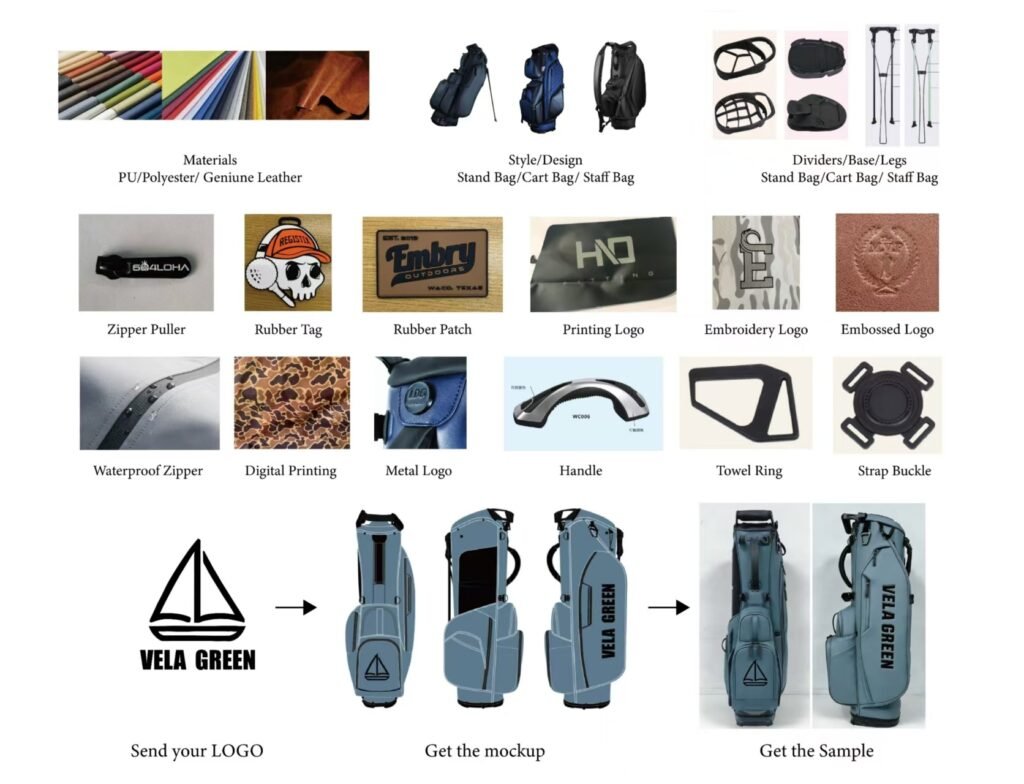
For B2B golf bag importers, retailers, and distributors targeting US and EU markets, private label solutions are a powerful way to build brand equity, stand out from competitors, and boost long-term profitability. In 2026, 68% of US/EU B2B buyers prefer private label golf bags over generic or branded alternatives—they allow businesses to offer unique products under their own brand, strengthen customer loyalty, and capture higher margins. This blog is tailored for B2B players, sharing how to leverage private label golf bag solutions to penetrate US/EU markets, align with buyer needs, and grow your brand.
Why B2B Golf Bag Private Label Matters in 2026
Private label golf bags solve two key pain points for B2B buyers: the need to differentiate from generic competitors and the desire to build brand recognition. Unlike custom logo bags (a common prior focus), private label solutions let you control every aspect—from design and materials to branding and packaging—creating a fully owned product. For US/EU markets, this means you can tailor bags to regional preferences (e.g., lightweight designs for US walkable courses, premium materials for EU pro shops) while building a loyal customer base that associates your brand with quality and value. Private label also offers higher wholesale margins (20–45% more than generic bags) and reduces reliance on third-party brands.
Key B2B Golf Bag Private Label Solutions for US/EU Markets
Private label success depends on aligning solutions with US/EU B2B buyer goals. Focus on these high-impact private label options:
1. Full Design Control & Brand Alignment
With private label, you dictate the bag’s design, materials, and features to match your brand identity. For US retailers, opt for sleek, lightweight stand bags with functional pockets and durable 600D nylon. For EU pro shops, prioritize premium cart bags with leather accents, 14-way dividers, and subtle branding. Ensure all elements—from color schemes to stitching—align with your brand’s aesthetic to build recognition.
2. End-to-End Branding Packaging
Private label isn’t just about the bag—it’s about cohesive branding. Offer custom packaging (e.g., branded boxes, dust bags) with your logo, tagline, and product information. For US/EU markets, include compliance labels (CPSC, REACH) and sustainability claims (e.g., “GRS-certified materials”) on packaging to build trust and meet regional standards.
3. Regionalized Private Label Options
Tailor private label bags to US/EU regional needs: – US Markets: Focus on affordable, durable stand bags and travel covers for casual golfers; add features like RFID pockets and waterproof coatings. – EU Markets: Prioritize sustainable materials (recycled nylon), premium finishes, and compact designs for small storage spaces; emphasize eco-friendly branding. This regionalization ensures your private label bags resonate with local buyers and drive sales.
4. Low MOQ Private Label Programs
Many B2B buyers (small retailers, golf clubs) want private label but avoid high MOQs. Offer flexible programs with MOQs as low as 50 units, allowing clients to test the market without overcommitting. Include support for small-batch adjustments (e.g., color changes, minor design tweaks) to make private label accessible to all B2B segments.
How to Launch B2B Private Label Golf Bags in US/EU Markets
- Define Your Brand Position: Clarify your brand’s value (e.g., “affordable premium,” “sustainable”) to guide design and material choices.
- Partner with a Private Label Manufacturer: Choose a manufacturer with experience in US/EU standards, flexible production, and private label expertise—request samples to verify quality.
- Test with Small Batches: Launch a small private label batch (50–100 units) to gauge market response; adjust design or features based on B2B client feedback.
- Market Your Private Label: Highlight unique selling points (e.g., custom design, regional relevance) on your independent站; share case studies of successful private label launches with US/EU clients.
Common B2B Private Label Pitfalls to Avoid
- Compromising Quality for Cost: Low-quality private label bags damage your brand—invest in materials and craftsmanship that match your brand’s positioning.
- Ignoring Regional Compliance: Ensure private label bags meet US/EU standards (CPSC, REACH) to avoid customs detention and legal risks.
- Overcomplicating Design: Keep designs aligned with your brand but simple enough to scale; overly complex designs increase production costs and delays.
Final Thoughts for B2B Golf Bag Players
In 2026, private label golf bags are a game-changer for B2B buyers looking to build their brand in US/EU markets. By leveraging full design control, regionalization, and low MOQ programs, you can offer unique products that stand out, capture higher margins, and build long-term customer loyalty. Remember: private label is about building your brand’s legacy—focus on quality, alignment with regional needs, and consistent branding to succeed.
OEM & ODM Service
Whether you’re planning to build your own brand, develop new products, or find a stable manufacturing partner for the US and European markets, working with a professional OEM & ODM factory can significantly improve your product quality and market competitiveness.
At Vela Green, we provide full-range OEM & ODM services for golf bags, golf headcovers, gloves, towels and other golf accessories. We support custom design, material selection, logo branding, color matching and mass production, strictly complying with CPSC, REACH and other international standards. With mature production experience, reliable quality control and professional export support, we help brands and importers develop market-oriented products with efficient lead times and flexible order quantities.