For B2B golf bag manufacturers, distributors, and importers targeting US/EU markets, balancing product quality, market competitiveness, and cost control is a core challenge in 2026. With raw material prices rising 12–15% and US/EU buyers demanding both high performance and competitive pricing, leveraging new materials and scientific cost optimization has become a key to B2B success. This blog is tailored for B2B players, sharing the latest golf bag material trends, actionable cost-saving strategies, and how to use new materials to enhance product value while reducing costs—helping you win more US/EU B2B orders.
Why New Materials & Cost Optimization Matter for B2B Golf Bags
In 2026, the global golf bags market is expected to grow at a CAGR of 4.5%, with US and EU markets accounting for the largest share of B2B demand. However, rising costs of traditional materials (such as native nylon) and stricter EU environmental regulations have forced B2B players to seek alternatives. New eco-friendly and high-performance materials not only meet US/EU compliance requirements but also help reduce production costs by 5–15% when used properly. For B2B buyers, cost optimization does not mean compromising quality—it means using scientific strategies to cut unnecessary expenses, improve profit margins, and offer more competitive wholesale prices to US/EU retail partners and pro shops.
Top New Materials for B2B Golf Bags in 2026 (Replace Traditional Nylon)
Traditional nylon is gradually being replaced by new materials that are more eco-friendly, durable, and cost-effective. For B2B players, choosing the right new materials can balance quality and cost. Here are the most popular options for US/EU markets:
1. rPET (Recycled Polyester Fiber) – The Most Practical Choice
As the most mature alternative to traditional nylon, rPET is made from recycled plastic bottles, reducing carbon emissions by 3.8kg per 1kg used. It has physical properties (wear resistance, tensile strength) close to native polyester, and its color fastness is better after optimized dyeing. With non-fluorine DWR waterproof treatment, its waterproof level can reach IPX4+, fully meeting the needs of US/EU golfers. For B2B bulk orders, rPET’s supply chain is mature and cost is moderate, making it suitable for mass-produced stand bags and cart bags targeting mid-range US/EU retailers.
2. TPU Single-Material Fabric – For High-End Waterproof Needs
TPU (thermoplastic polyurethane) is a technical material that is 100% recyclable and waterproof without additional coatings—solving the problem of coating wear and water seepage in traditional nylon bags. It is wear-resistant, tear-resistant, and low-temperature resistant, making it ideal for high-end waterproof golf bags and travel covers in EU markets (where rainy weather is common). Although its production cost is slightly higher, it can help B2B players capture the high-end market and command a 30–50% premium.
3. Bio-Based Nylon – For Premium Brand Positioning
Derived from plant resources such as castor oil, bio-based nylon retains the toughness of traditional nylon but saves 30% energy during production and has better skin-friendliness. It has a luxurious texture and is suitable for high-end staff bags and custom private label products targeting EU pro shops and US premium golf clubs. Although its current production capacity is limited and cost is higher, it can help B2B brands build a “sustainable premium” image and stand out in the competitive market.
Actionable Cost Optimization Strategies for B2B Golf Bag Bulk Orders
Cost optimization for B2B golf bags is not about cutting corners, but about reducing unnecessary expenses through supply chain and production adjustments. Here are practical strategies for 2026:
1. Supply Chain Cost Control
Sign 3–6 month fixed-price long-term contracts with core material suppliers to lock in raw material prices and avoid cost fluctuations. For B2B bulk orders, join industry clusters for joint procurement to increase bargaining power and reduce material costs by 10–20%. In addition, use domestic alternative materials appropriately to reduce dependence on imported materials and lower transportation costs.
2. Production Efficiency Improvement
Adopt flexible production and small-batch quick response models to produce according to sales, reducing inventory backlogs and inventory turnover days from 60 days to 12–15 days. Introduce intelligent cutting machines and automatic sewing equipment to improve production efficiency by 30% and reduce labor costs by 25%. Optimize fabric utilization rate from 70% to over 90%, reducing material waste and single-product costs by 5–8%.
3. Product Design Optimization
Simplify redundant designs and focus on core functional features (such as waterproofing, durability, and storage) to reduce production costs. For example, use integrated stitching instead of multi-layer stitching, and choose detachable components to reduce material usage. At the same time, streamline SKUs, focus on 20% of core best-selling models, and concentrate resources to reduce R&D and production costs.
How to Balance New Materials & Cost for US/EU B2B Markets
- Match Materials to Market Segments: For US mid-range retailers, choose rPET to balance cost and environmental protection; for EU high-end pro shops, use TPU or bio-based nylon to meet premium demands.
- Test Small Batches First: Before large bulk orders, test new materials with small batches (50–100 units) to verify quality and production feasibility, avoiding cost losses caused by material mismatches.
- Highlight Material Advantages in Marketing: Emphasize the environmental protection and performance advantages of new materials in your independent station and B2B marketing materials—this can offset slight price increases and attract eco-conscious US/EU buyers.
Final Thoughts for B2B Golf Bag Players
In 2026, new materials and cost optimization will be the core competitiveness of B2B golf bag brands in US/EU markets. By adopting rPET, TPU, and bio-based nylon, and implementing supply chain, production, and design optimization strategies, you can reduce costs while improving product quality and value. Remember: B2B cost optimization is a long-term strategy—focus on balancing quality and cost, and you will win more US/EU B2B orders and build long-term partnerships.
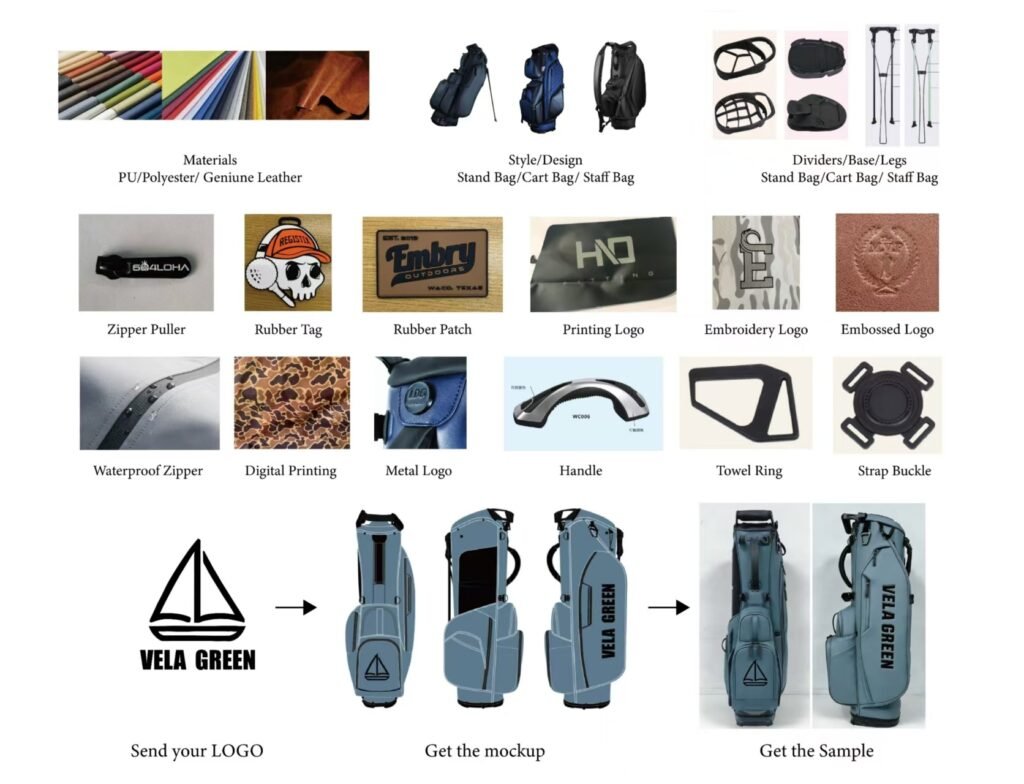
OEM & ODM Service
Whether you’re planning to build your own brand, develop new products, or find a stable manufacturing partner for the US and European markets, working with a professional OEM & ODM factory can significantly improve your product quality and market competitiveness.
At Vela Green, we provide full-range OEM & ODM services for golf bags, golf headcovers, gloves, towels and other golf accessories. We support custom design, material selection, logo branding, color matching and mass production, strictly complying with CPSC, REACH and other international standards. With mature production experience, reliable quality control and professional export support, we help brands and importers develop market-oriented products with efficient lead times and flexible order quantities.