If you have invested hundreds of dollars in a premium golf bag but have never given much thought to golf bag maintenance, you are not alone. Yet here is the reality: a well-maintained golf bag can last over 100 rounds and still look and function like new, while a neglected one often shows major wear after just 30 rounds. The difference comes down to consistent care.
Whether you own a lightweight stand bag for weekend walking rounds, a feature-rich cart bag for tournament play, or a rugged travel bag for flying with your clubs, mastering golf bag maintenance is the single most effective way to protect your equipment investment. This 2026 guide covers everything from daily care to professional storage techniques.
Why Proper Golf Bag Maintenance Matters More Than You Think
A quality golf bag is your mobile command center on the course. It holds your clubs, balls, gloves, headcovers, drinks, rain gear, and valuables. When it fails, your entire round suffers.
Poor golf bag maintenance leads to a cascade of problems: broken zippers that spill your accessories, frayed straps that fail mid-walk, stubborn mold and mildew from trapped moisture, and faded, cracked materials from UV damage. Each of these issues is preventable with just a few minutes of care per week.
As PGA Tour equipment managers often emphasize, the difference between amateur and professional bag care is consistency and attention to detail—small daily habits prevent major problems before they start.
Daily and Weekly Golf Bag Maintenance Routines
The most effective golf bag care tips are also the simplest. A quick post-round cleanup takes only ten minutes but prevents 80% of common damage.
After Every Round (10 Minutes)
- Wipe down the exterior. Use a damp microfiber cloth to clean the bag body, handles, cooler pocket opening, and base. This removes grass clippings, sand, and surface dirt before they get ground into the fabric.
- Check the club dividers. Sand and grass often collect at the bottom of dividers. Shake your bag upside down or use a small brush to dislodge debris.
- Dry thoroughly. If you played in wet conditions, let your bag air dry completely before storing. Moisture trapped inside pockets is the leading cause of mildew, unpleasant odors, and hardware corrosion.
- Inspect straps and zippers. Make sure strap buckles are secure and zippers open and close smoothly. Address small issues before they become big repairs.
Weekly Deep Cleaning (Every 5-7 Rounds)
Once a week, schedule a more thorough golf bag cleaning session:
- Empty every pocket completely. Remove clubs, headcovers, gloves, rain hood, scorecards, and all accessories. Take this opportunity to toss expired snacks and old receipts.
- Vacuum the interior. Use a handheld vacuum with a crevice attachment to reach deep into pockets and along seams where dirt hides.
- Wipe down all surfaces. Mix warm water with a few drops of mild dish soap. Dip a soft brush (an old toothbrush works perfectly) and gently scrub problem areas including zipper tracks, cooler pocket interiors, and the bag bottom.
- Rinse and dry. Wipe off soap residue with a clean damp cloth, then air dry in a well-ventilated area away from direct sunlight.
How to Clean a Golf Bag by Material Type: A Professional Approach
Different bag materials require different cleaning methods. Using the wrong product can ruin your bag’s finish.
Nylon and Polyester Bags
Most stand bags and cart bags are made from high-denier nylon or polyester. These materials are durable and easy to clean. Use warm water with mild dish soap and a soft brush. Avoid bleach, fabric softeners, and harsh degreasers.
PU Leather and Synthetic Leather Bags
Premium cart bags and tour-style bags often feature PU leather accents. Clean these with a dedicated leather cleaner or a slightly damp microfiber cloth—never soak them. After cleaning, apply a leather conditioner designed for synthetic materials to prevent cracking and fading. Avoid petroleum-based products at all costs.
Waterproof Golf Bags
Waterproof bags have heat-welded seams and waterproof zippers that require special attention. After cleaning, check that zippers still seal properly. If your bag’s water repellency has diminished, apply a spray-on DWR (durable water repellent) treatment from brands like Nikwax or Scotchgard-2. Do not machine wash or dry a waterproof golf bag.
Professional Golf Bag Storage: Off-Season and Between Rounds
Proper golf bag storage is just as critical as cleaning, especially during winter months or extended breaks from play.
Optimal Storage Conditions
Golf bag materials degrade fastest under poor storage conditions. The ideal environment is:
- Temperature: 60-70°F (15-21°C)
- Humidity: 45-55% relative humidity
- Ventilation: Good air circulation
- Light: Minimal UV exposure
What to Avoid
- Direct sunlight: UV rays fade colors and degrade synthetic fabrics and leather.
- Hot car trunks: Extreme heat warps bag frames and softens adhesives. Repeated exposure can permanently damage the bag structure.
- Damp basements or garages: Moisture leads to mold, mildew, and rust on zippers and hardware.
- Hanging by straps long-term: This stretches strap webbing and puts stress on attachment points.
Pre-Storage Checklist
Before storing your bag for any extended period:
- Clean thoroughly inside and out
- Remove all moisture completely
- Stuff the bag interior with acid-free tissue or bubble wrap to maintain shape. Soft clothing works well in a pinch.
- Place silica gel packets inside to absorb residual moisture
- Use a breathable storage cover, not plastic bags
Common Golf Bag Maintenance Mistakes to Avoid
Even well-intentioned golf bag repair and care can backfire. Here are the most frequent errors:
| Mistake | Why It Hurts Your Bag | Better Approach |
|---|---|---|
| Leaving wet gear inside | Promotes mold and hardware corrosion | Remove and dry all contents after every round |
| Using dish soap with degreaser | Strips protective coatings and dries out materials | Use mild dish soap (basic formulations) or dedicated fabric cleaner |
| Machine washing or drying | Damages structural foam, zippers, and waterproofing | Hand clean only; air dry only |
| Storing in hot trunk for weeks | Warps frame, melts adhesives, fades colors | Store indoors in climate-controlled space |
| Overloading pockets | Stresses seams and zipper tracks | Distribute weight evenly; follow bag capacity guidelines |
When to Seek Professional Golf Bag Repair
Regular golf bag maintenance prevents most issues, but some problems require professional attention:
- Broken zippers: Many bag manufacturers offer zipper repair services. Attempting DIY zipper replacement often makes the problem worse.
- Frayed or detached straps: This is a safety issue—a strap failing while you carry a loaded bag on a hill can cause injury and club damage.
- Punctured or torn fabric: Large tears compromise weather protection and stability.
- Damaged stand leg mechanism: Retractable leg systems have internal springs and pivot points that require specialized tools and parts.
For OEM customers, working directly with your golf bag manufacturer ensures repairs use original specifications and materials.
Extending Your Golf Bag’s Lifespan: What Industry Data Says
Industry testing from leading golf equipment reviewers indicates that consistent maintenance directly correlates with bag longevity. In 2025 cart bag testing, premium models that received regular care maintained their structural integrity and appearance over hundreds of simulated rounds, while neglected counterparts showed significant wear on zippers, straps, and fabric seams-.
Stand bags that are cleaned weekly and stored properly can last four to five seasons of regular play. Cart bags with proper maintenance often exceed this because they experience less carrying stress. Travel bags used twice per season can easily last a decade with proper storage and occasional cleaning.
2026 Golf Bag Trends Affecting Maintenance Practices
Two major trends are reshaping golf bag care in 2026:
Eco-Friendly Materials
Bags made from recycled ocean plastics and sustainable nylons are becoming mainstream. Minimal Golf’s M-Comp stand bag, for example, uses nylon derived from reclaimed marine waste and features magnetic closures instead of traditional zippers. These materials require gentle cleaning and cannot tolerate harsh chemicals.
Smart Features and Electronics Integration
Some 2026 cart bags now include integrated power connectors, phone filming pockets, and even Mag-Lok magnetic attachment systems for electric trolleys. Golf bag maintenance for these smart bags must include checking electronic contact points and keeping magnetic closures free of metal debris.
The OEM Advantage: Why High-Quality Materials Make Maintenance Easier
As a manufacturer with 20 years of experience producing custom golf bags, we know that the bag’s material quality directly determines how easy it is to maintain. Bags made from premium 1680D ballistic nylon, high-grade PU leather, and fully seam-sealed waterproof fabrics withstand regular cleaning without degrading-. Cheaper materials, by contrast, start showing wear after just a few cleaning sessions.
For businesses sourcing custom golf bags for pro shops, tournament giveaways, or brand merchandise, emphasizing maintenance-friendly construction in your product specifications adds tangible value for your end customers.
🏌️ Summary and Recommended Maintenance Schedule
| Frequency | Task | Time Needed |
|---|---|---|
| After each round | Wipe down exterior; check for wetness; quick debris shake-out | 10 minutes |
| Weekly | Deep clean with mild soap; vacuum interior; inspect hardware | 30-45 minutes |
| Monthly | Condition synthetic leather; check waterproof zippers; treat fabric repellency | 1-2 hours |
| Seasonally | Full overhaul; professional inspection if needed; waterproofing renewal | 2-3 hours |
| Annually | Professional assessment and restoration | Half day |
*With 20 years of expertise in custom golf bag manufacturing and OEM/ODM services, we help golf brands worldwide create durable, maintenance-friendly products backed by professional quality control and responsive customer support. Contact our team to learn more about custom golf bag solutions tailored to your market needs.*
OEM & ODM Service
Whether you’re planning to build your own brand, develop new products, or find a stable manufacturing partner for the US and European markets, working with a professional OEM & ODM factory can significantly improve your product quality and market competitiveness.
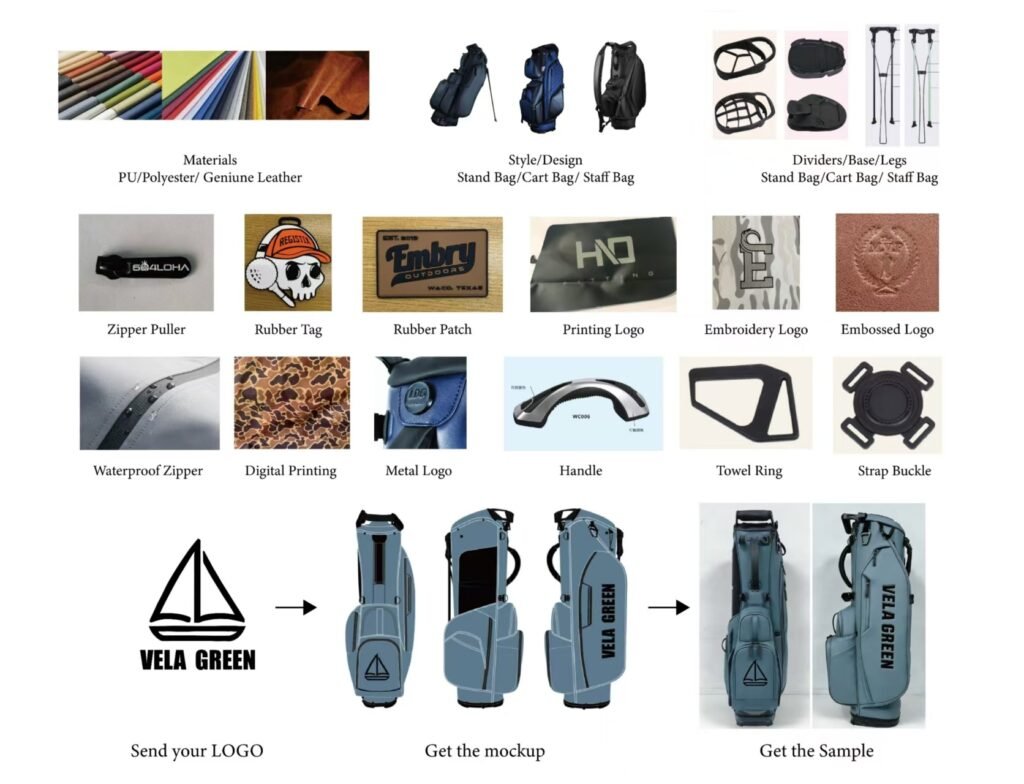
At Vela Green, we provide full-range OEM & ODM services for golf bags, golf headcovers, gloves, towels and other golf accessories. We support custom design, material selection, logo branding, color matching and mass production, strictly complying with CPSC, REACH and other international standards. With mature production experience, reliable quality control and professional export support, we help brands and importers develop market-oriented products with efficient lead times and flexible order quantities.