A well-negotiated golf bag warranty is one of the most valuable assets in B2B procurement. The global golf bag market is projected to reach USD 1.66 billion by 2031, yet many buyers focus exclusively on unit price and delivery schedules, overlooking the warranty terms that protect their margins long after the shipment arrives. A strong warranty transforms a transactional relationship into a partnership built on accountability. A weak one leaves you absorbing the full cost of defects, returns, and customer dissatisfaction.
This guide outlines five essential golf bag warranty terms every B2B buyer must negotiate before placing a bulk order.
Why Golf Bag Warranty Terms Matter More Than Ever
The golf bag warranty landscape has shifted dramatically. Golfers are increasingly vocal about quality issues, and negative reviews spread fast. Zipper failures, seam tears, stand mechanism breakdowns, and color fading are among the most common complaints. Without a clear warranty, you have no recourse when defective products reach your customers.
For B2B buyers, a well-structured warranty delivers three critical benefits: it protects your margins from costly returns, it builds retailer confidence, and it differentiates your brand from competitors who compete solely on price. Leading manufacturers now offer transparent warranty terms backed by documented quality systems.
Term #1: Warranty Duration and Coverage Scope
The first element of any golf bag warranty is duration. How long does the manufacturer stand behind the product?
Industry Standards for Golf Bag Warranty
| Bag Category | Typical Warranty Duration |
|---|---|
| Budget bags ($50–$150 retail) | 6–12 months |
| Mid-range bags ($150–$350 retail) | 1–2 years |
| Premium bags ($350+ retail) | 2–5 years |
What Your Golf Bag Warranty Should Cover
A comprehensive golf bag warranty covers manufacturing defects including zipper failure, strap and seam tears, stand mechanism failure, hardware defects, and material degradation within the warranty period.
What It Should Exclude
A professional golf bag warranty also specifies exclusions: normal wear and tear, damage from misuse or overloading, cosmetic issues like scuffs and scratches, and damage from improper cleaning or storage.
Term #2: Defect Definition and AQL Standards
Without a clear defect definition, your golf bag warranty is open to interpretation—and suppliers will interpret it in their favor.
AQL Standards in Warranty
The industry standard for quality acceptance is AQL (Acceptable Quality Level) Level II, 2.5/4.0:
- Critical defects (0% tolerance): Safety hazards, product unusable
- Major defects (under 2.5% tolerance): Functional failure, severe cosmetic issues
- Minor defects (under 4.0% tolerance): Cosmetic issues not affecting function
Questions to Ask About Warranty
- “What specific defects does your golf bag warranty cover?”
- “How do you classify major versus minor defects?”
- “Who determines whether a defect is manufacturing-related or user-caused?”
A strong warranty specifies that defect classification follows AQL standards and that third-party inspection may be used to verify claims.
Term #3: Return Shipping and Remedy Options
Return shipping is the hidden trap in most golf bag warranty agreements. A supplier may agree to replace defective bags but require you to pay return freight—which can cost $15–$30 per bag for international returns.
Remedy Options to Negotiate in Your Golf Bag Warranty
- Replacement: Defective units replaced at no cost, shipped within an agreed timeframe
- Repair: Supplier repairs minor defects and returns at supplier‘s expense
- Refund: Full refund if replacement or repair is not feasible
- Credit: Credit against future orders for the value of defective units
Return Shipping Terms for Golf Bag Warranty
A well-negotiated golf bag warranty includes supplier-paid return shipping for defects that fall within agreed AQL limits. For international orders, this can save thousands of dollars annually.
Term #4: Warranty Claim Process and Timeline
A golf bag warranty is only as good as its claim process. If the process is slow or complex, you may abandon valid claims simply because they take too much time.
What a Professional Golf Bag Warranty Claim Process Looks Like
- Step 1: Notification — Buyer notifies supplier of defect within an agreed timeframe (typically 30 days of discovery)
- Step 2: Acknowledgment — Supplier acknowledges within 2 business days
- Step 3: Documentation — Buyer provides photos and description of the defect
- Step 4: Resolution — Supplier provides remedy within 7–14 business days
- Step 5: Escalation — If unresolved after 30 days, third-party inspection or arbitration applies
Timeline Expectations for Golf Bag Warranty
Industry-leading golf bag warranty programs resolve claims within 14 days. Factories with documented quality systems and responsive after-sales teams consistently outperform on this metric.
Term #5: Exclusions and Limitations
Every golf bag warranty has exclusions. The question is whether they are reasonable or overly restrictive.
Common Exclusions in Golf Bag Warranty
- Normal wear and tear (scuffs, scratches, fade from UV exposure)
- Damage from misuse (dropping, overloading, improper storage)
- Damage from cleaning with inappropriate products
- Cosmetic issues not affecting function
- Products purchased from unauthorized resellers
What to Watch For
Overly restrictive warranty terms can make coverage meaningless. If almost every defect falls under an exclusion, the warranty provides no real protection. Negotiate to ensure exclusions are specific and reasonable.
Golf Bag Warranty Negotiation Checklist
| Term | Key Requirement | Status |
|---|---|---|
| Duration and coverage | 6–24 months minimum; clear defect coverage | ☐ |
| Defect definition | AQL Level II, 2.5/4.0 standards specified | ☐ |
| Return shipping | Supplier pays return freight for defects | ☐ |
| Claim process | Clear steps with 14-day resolution target | ☐ |
| Exclusions | Specific and reasonable, not overly restrictive | ☐ |
Common Golf Bag Warranty Mistakes to Avoid
| Mistake | Consequence | Solution |
|---|---|---|
| No written warranty terms | Supplier denies responsibility for defects | Put all terms in writing before order |
| Ambiguous defect definition | Supplier rejects valid claims | Use AQL standards with clear examples |
| Buyer pays return shipping | Returns cost 200–300% of unit value | Negotiate supplier-paid return freight |
| No claim timeline | Suppliers delay resolutions indefinitely | Specify 14–30 day resolution window |
| Overly broad exclusions | Warranty provides no real protection | Negotiate specific, reasonable exclusions |
Conclusion: Make Warranty a Strategic Priority
A strong golf bag warranty is not a cost—it is an investment in brand protection and supplier accountability. The five terms in this guide—duration and coverage, defect definition, return shipping, claim process, and exclusions—provide a complete framework for negotiating warranty terms that protect your B2B investment.
In 2026, the most successful buyers treat warranty negotiation as a core competency. They document every term, verify every claim process, and build supplier relationships based on mutual accountability. Start your next supplier negotiation by putting these five terms on the table. The protection they provide is worth far more than the time invested.
With 20 years of golf bag manufacturing experience and a comprehensive golf bag warranty program—including clear defect coverage, supplier-paid return shipping, and 14-day claim resolution—we protect B2B buyers at every stage. Contact us to discuss our standard golf bag warranty terms.
OEM & ODM Service
Whether you’re planning to build your own brand, develop new products, or find a stable manufacturing partner for the US and European markets, working with a professional OEM & ODM factory can significantly improve your product quality and market competitiveness.
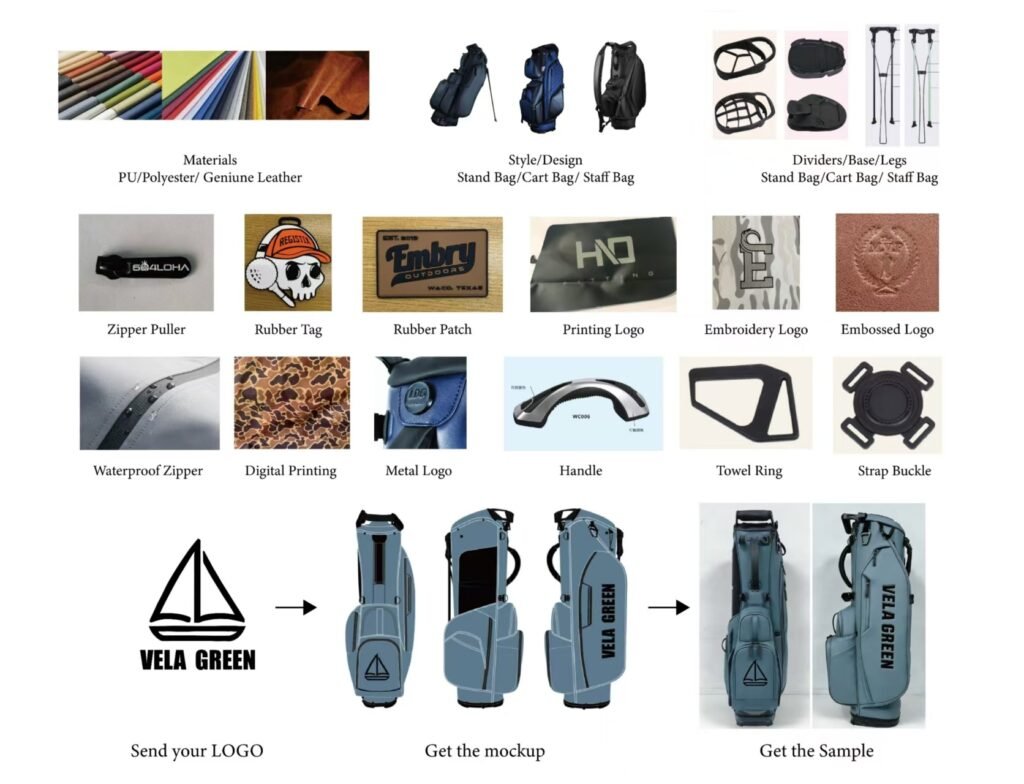
At Vela Green, we provide full-range OEM & ODM services for golf bags, golf headcovers, gloves, towels and other golf accessories. We support custom design, material selection, logo branding, color matching and mass production, strictly complying with CPSC, REACH and other international standards. With mature production experience, reliable quality control and professional export support, we help brands and importers develop market-oriented products with efficient lead times and flexible order quantities.