
Common Quality Issues of Golf Bags and How to Avoid Them is an essential sourcing and quality control guide for B2B golf bag wholesalers, private label brands, and retailers targeting US and European markets. Golf bags are high-frequency outdoor sporting goods with strict requirements for fabric durability, structural stability, and functional performance. Batch quality defects are the leading cause of cross-border returns, negative customer reviews, after-sales compensation, and lost long-term cooperative orders in 2026. Understanding the most common quality issues of golf bags and mastering practical prevention methods helps B2B buyers conduct effective factory audits, pre-shipment inspections, and standardized quality control, drastically cutting defect rates and stabilizing overseas market profitability.
Most golf bag quality problems are not random accidents but result from unregulated production processes, low-grade raw materials, and incomplete QC systems. Many new B2B buyers only verify sample quality while ignoring bulk production consistency, leading to large-scale defective shipments. This guide systematically sorts out the most frequent quality complaints in cross-border golf bag wholesale and shares actionable solutions to avoid common golf bag quality issues for both new and experienced golf equipment sourcing professionals.
Top Common Quality Issues of Wholesale Golf Bags
Based on recent cross-border wholesale data, six quality problems dominate golf bag after-sales disputes in US and European markets. These defects cover materials, craftsmanship, functionality, and appearance, directly affecting end-user experience and retail reputation.
First, fabric fading, yellowing and UV aging. This is the most prevalent quality issue for outdoor golf bags. Low-quality dye formulas and missing UV-resistant coatings cause obvious color fading after weeks of sunlight exposure. Dark-colored bags are prone to fading, while white and light-colored fabrics easily turn yellow. Such defects greatly reduce product aesthetics and trigger bulk returns for retail sellers.
Second, waterproof layer failure and seam leakage. Many budget wholesale golf bags adopt inferior waterproof coatings and untreated stitching seams. After rainy golf sessions or humid storage, the waterproof film peels off, and water penetrates stitch gaps, wetting golf clubs and accessories. European customers who frequently play in rainy weather rank this as one of the most unacceptable functional defects.
Third, loose stitching and structural damage. Stress points including bag handles, shoulder straps, and bottom edges often suffer from sparse stitching, missing stitches, and loose threads due to rushed production. After repeated carrying and cart friction, threads break and structures deform, shortening the golf bag’s service life significantly.
Fourth, hardware rust and zipper jamming. Low-cost iron zippers, buckles, and rivets lack anti-rust treatment. Under outdoor humid conditions, hardware oxidizes and rusts quickly. Unpolished zipper teeth also cause frequent jamming, slipping, and complete failure, seriously affecting daily usability.
Fifth, logo peeling and printing defects. For private label OEM orders, unqualified printing technology and low-adhesion ink lead to logo cracking, peeling, and offset after friction and cleaning. Uneven embroidery threads and loose edges also downgrade product quality and fail high-end retail standards.
Sixth, mildew and odor problems. Un-dried fabrics, poor factory ventilation, and non-mold-proof packaging cause golf bags to develop mildew spots and pungent chemical odors during long sea freight, resulting in wholesale order rejection.
Root Causes of Repeating Golf Bag Quality Defects
Most common quality issues stem from three core factory problems. First, cost-cutting raw materials: unqualified fabrics, recycled inferior accessories, and cheap coatings reduce production costs but sacrifice durability. Second, non-standard production processes: simplified stitching steps, skipped waterproof hot-press treatment, and no pre-production color calibration cause batch inconsistency. Third, missing pre-shipment QC: factories skip sampling tests and full inspections, allowing defective products to enter bulk shipments.
Practical Solutions to Avoid Common Golf Bag Quality Issues
To completely resolve common quality issues of golf bags and stabilize bulk order quality, B2B buyers need to build full-link quality control standards covering pre-production, in-production, and pre-shipment stages.
Material standardization. Require factories to use high-density Oxford fabric with qualified UV and waterproof coatings. Uniformly adopt stainless steel anti-rust hardware and high-quality smooth zippers. For customized printing, use eco-friendly high-adhesion ink to avoid logo peeling and fading problems.
Strict production process supervision. Enforce double dense stitching and triangular reinforcement for all stress points. Implement full seam hot-press sealing or waterproof tape pasting to eliminate water leakage risks. Unify color matching parameters to ensure zero batch color difference for bulk orders.
Complete pre-shipment testing. Conduct professional sampling tests including UV aging simulation, waterproof spraying, zipper durability testing, and stitching tensile testing. Check every batch for mildew, odor, and appearance defects before packaging and shipment.
Standard export packaging. Adopt moisture-proof, dust-proof packaging and place desiccants in cartons. Use qualified export cartons to avoid extrusion deformation during transportation and prevent secondary quality damage.
B2B Buyer Tips for Long-Term Quality Stability
For long-term wholesale cooperation, buyers should lock quality standards in formal contracts, clarifying defect compensation clauses for fading, water leakage, and stitching failure. Conduct regular factory audits and random spot checks for repeated orders. Keep updated with 2026 Western retail quality requirements to adjust QC standards timely, ensuring products always meet US and European market thresholds.
Final Thoughts
Common Quality Issues of Golf Bags and How to Avoid Them helps B2B golf wholesale buyers identify typical product defects and adopt targeted prevention strategies. Most golf bag quality problems are avoidable through standardized material selection, regulated production processes, and strict pre-shipment inspection. By mastering these quality control methods, brands and distributors can effectively reduce after-sales risks, improve product competitiveness, and achieve stable profit growth in the global golf equipment wholesale market.
Whether you’re planning to launch your own golf product line, upgrade existing designs, or find a stable manufacturing partner for the US and European markets, working with a professional OEM & ODM factory can greatly improve your product quality and brand competitiveness.
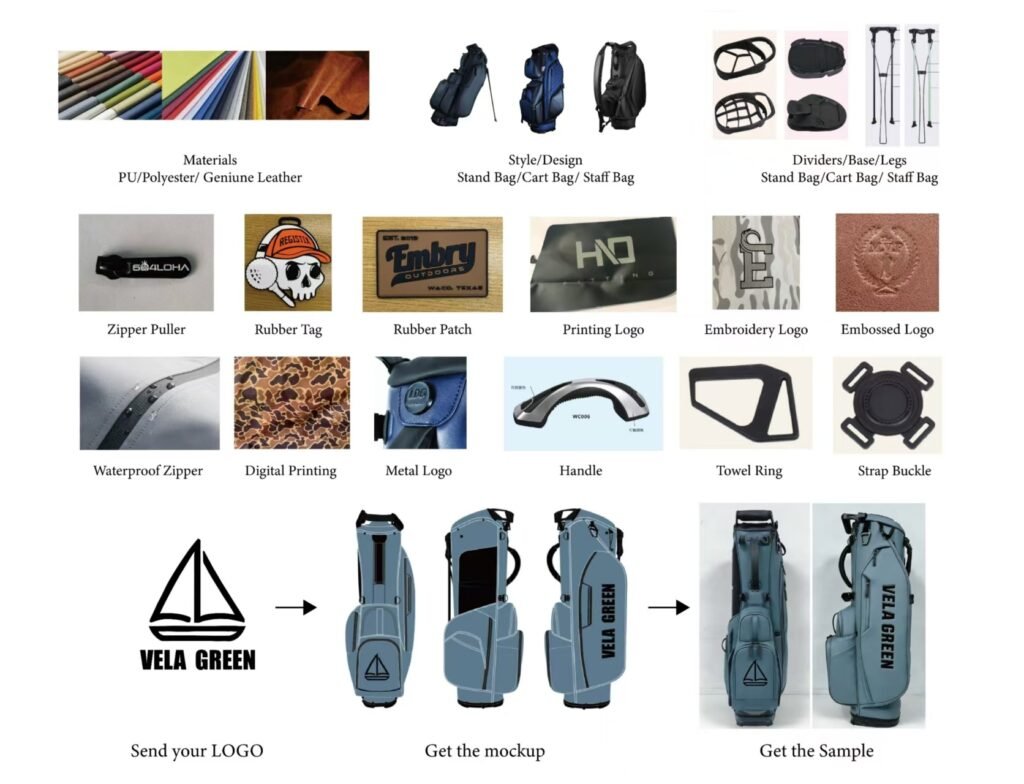
At Vela Green, we specialize in full-range OEM & ODM services for golf bags, golf headcovers, gloves, towels and other golf accessories. We support custom design, material selection, logo branding, color matching and mass production, strictly following CPSC, REACH and other international compliance standards. With mature production experience, stable quality control and professional export support, we help brands and importers develop reliable, market-oriented golf products with efficient lead times and flexible order quantities.
Feel free to contact us today for a custom solution or detailed quotation.