Eco-Friendly Golf Bags: B2B Wholesale Sourcing Guide for Sustainable Brands 2026 is a must-have resource for global golf wholesalers, private label retailers, and sustainable-focused brands targeting US and European markets. In 2026, environmental compliance and green product positioning are no longer optional marketing highlights but essential entry thresholds for Western golf retail channels. More EU and US golf chains, pro shops, and e-commerce platforms prioritize eco-friendly sporting goods, phasing out products made with high-pollution fabrics and toxic coatings. For B2B buyers, mastering professional eco-friendly golf bag sourcing standards helps filter qualified green manufacturers, reduce customs compliance risks, and build high-margin sustainable product lines that fit modern green consumption trends.
Traditional golf bag wholesale relies on ordinary polyester fabrics, non-recycled accessories, and chemical printing processes, which easily trigger REACH regulation violations, platform delisting, and consumer complaints. As global low-carbon consumption continues to upgrade, sustainable golf bags with certified green materials and clean craftsmanship have become the fastest-growing segmented category in the 2026 golf equipment industry. This practical B2B guide elaborates on core sourcing standards, mainstream material options, and risk avoidance tips to help brands accurately source eco-friendly golf bags and seize sustainable market dividends.
Why Sustainable Eco-Friendly Golf Bags Dominate 2026 B2B Markets
The US and European golf industries are undergoing comprehensive green transformation in 2026. Strict environmental policies including EU REACH updated restrictions, California Prop 65 chemical control rules, and global plastic reduction initiatives have raised higher barriers for imported golf bags. Conventional non-eco-friendly products face frequent customs detention, inspection failures, and retail channel rejection. Meanwhile, end consumers actively support sustainable brands, willing to pay premium prices for low-carbon, non-toxic, and recycled golf products.
For B2B wholesale businesses, eco-friendly golf bags bring dual advantages of policy compliance and market differentiation. They effectively avoid homogeneous price competition, improve brand green image, and qualify for high-end retail channel cooperation, becoming the core profit growth point for long-term business expansion in Western markets.
Core Eco-Friendly Materials for 2026 Sustainable Golf Bags
Professional green golf bag sourcing starts with standardized material selection. Reliable 2026 B2B suppliers mainly adopt three mainstream sustainable materials with stable certification and market recognition.
GRS-Certified Recycled Polyester Fabric This is the most widely used eco-friendly material for modern golf bags. Repurposed from waste plastic bottles and textile scraps, recycled polyester features the same wear resistance, UV protection, and waterproof performance as virgin fabrics. Complete GRS certification ensures traceable green production processes, fully meeting EU and US sustainable procurement requirements. It is the best cost-effective choice for bulk wholesale and private label customization.
OEKO-TEX Certified Non-Toxic Textiles For high-end sustainable golf bags, OEKO-TEX standard certification guarantees zero harmful chemical residues, no formaldehyde, and no heavy metals. The non-toxic material adapts to strict European health and safety standards, suitable for premium club sales and high-end customized orders, greatly reducing after-sales health-related disputes.
Biodegradable & Plastic-Reduced Auxiliary Materials 2026 updated sustainable trends focus on full-product green optimization. Leading manufacturers replace pure plastic zippers, buckles, and decorative parts with biodegradable materials and recycled metal accessories. Plastic-reduced design minimizes environmental pollution while maintaining product durability, perfectly matching global low-carbon development concepts.
Key B2B Sourcing Standards for Eco-Friendly Golf Bags
To source qualified eco-friendly golf bags for sustainable brands, B2B buyers need to establish complete pre-order audit standards to avoid fake green products and compliance risks.
First, verify valid third-party green certifications. Require suppliers to provide real-time GRS, OEKO-TEX, REACH, and Prop 65 test reports instead of self-claimed green descriptions. Expired certificates and incomplete test items are common traps in green sourcing.
Second, confirm standardized eco-friendly craftsmanship. Formal sustainable manufacturers adopt water-based non-toxic printing, odorless environmental glue bonding, and low-temperature coating technology, abandoning high-pollution industrial processes. Buyers should check sample texture, odor, and surface treatment to eliminate unqualified products with chemical residues.
Third, inspect full-link green packaging and shipping. Qualified suppliers use recycled cartons, degradable dust bags, and plastic-free packaging materials to achieve full-cycle environmental protection, meeting Western brand sustainable evaluation systems.
Common Green Sourcing Mistakes to Avoid
Many B2B buyers encounter fake green products and certification mismatch issues. The most typical mistake is recognizing material certification without verifying batch consistency. Some suppliers use certified materials for samples but replace them with ordinary fabrics in bulk production. It is essential to lock material standards and certification requirements in formal contracts with clear compensation clauses for non-compliance.
In addition, avoid over-reliance on a single certification. EU markets prioritize REACH and GRS standards, while US markets require Prop 65 and CPSIA compliance. Targeted certification matching according to sales regions can effectively avoid customs clearance failures.
Business Benefits of Sustainable Golf Bag Wholesale
Sustainable eco-friendly golf bags bring long-term commercial value for B2B brands. They support 20%–40% retail premium pricing, expand high-quality green retail channels, reduce return rates and compliance risks, and accumulate excellent brand reputation. In the 2026 competitive golf wholesale market, green product layout has become a necessary strategy for brand upgrading and market share expansion.
Final Thoughts
Eco-Friendly Golf Bags: B2B Wholesale Sourcing Guide for Sustainable Brands 2026 covers core materials, certification standards, sourcing rules, and risk avoidance strategies for green golf bag procurement. As global environmental regulations become stricter and sustainable consumption becomes mainstream, eco-friendly golf bags will become the mainstream of the industry. B2B brands that deploy green product lines in advance can effectively break homogeneous competition, stabilize cross-border supply chains, and achieve sustainable profitable growth in US and European markets.
OEM & ODM Service
Whether you’re planning to build your own brand, develop new products, or find a stable manufacturing partner for the US and European markets, working with a professional OEM & ODM factory can significantly improve your product quality and market competitiveness.
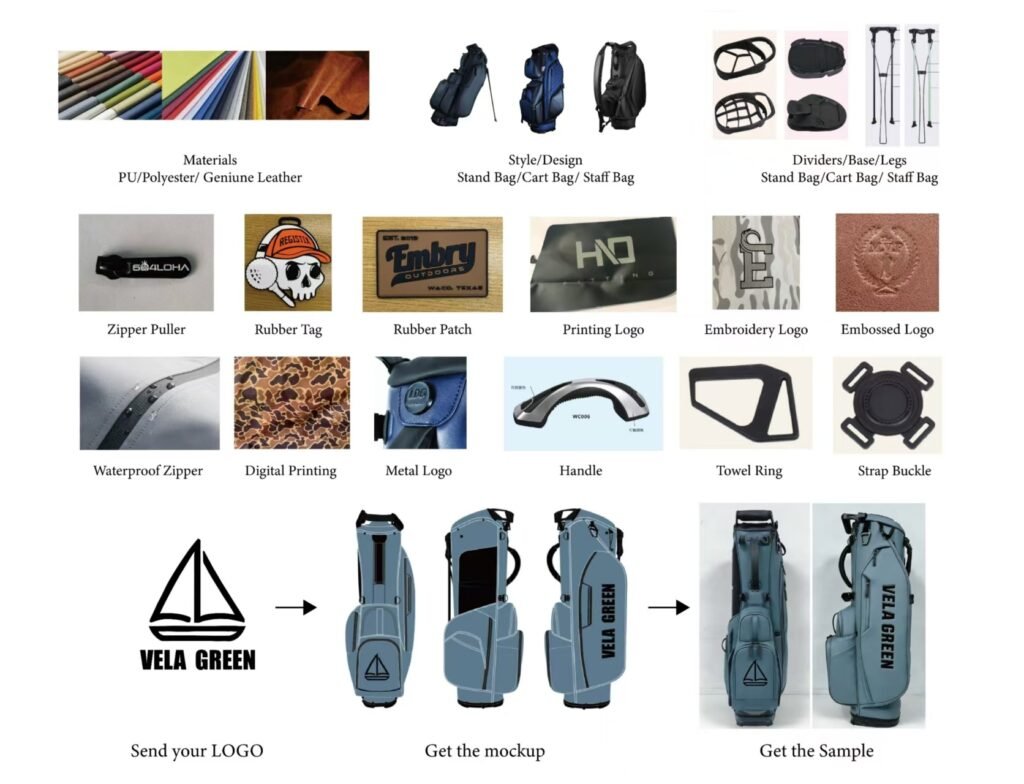
At Vela Green, we provide full-range OEM & ODM services for golf bags, golf headcovers, gloves, towels and other golf accessories. We support custom design, material selection, logo branding, color matching and mass production, strictly complying with CPSC, REACH and other international standards. With mature production experience, reliable quality control and professional export support, we help brands and importers develop market-oriented products with efficient lead times and flexible order quantities.