Effective golf bag inventory management is one of the most critical yet overlooked skills in B2B golf equipment sourcing. Poor inventory decisions lead to stockouts that lose sales during peak demand, or overstock that ties up cash flow and incurs carrying costs. The global golf bags market is expected to reach $2.3 billion by 2031-, with sustained participation growth making quality pro shop merchandise demand a structural shift-. Yet many B2B buyers treat golf bag inventory management as an afterthought, ordering based on supplier MOQs rather than actual demand patterns.
This guide presents five essential golf bag inventory management strategies—from turnover rate optimization to demand forecasting—that protect your margins and ensure you have the right bags at the right time.
Strategy #1: Master Inventory Turnover Rate in Golf Bag Inventory Management
Inventory turnover is the most important metric in golf bag inventory management. It measures how many times your inventory sells and is replaced within a given period. High turnover indicates fresh inventory and strong cash flow; low turnover suggests overbuying or poor merchandising-.
Calculating Inventory Turnover for Golf Bags
Inventory Turnover = Cost of Goods Sold ÷ Average Inventory Value
For a golf pro shop with annual COGS of $205,000 and average inventory of $82,000, the turnover rate is 2.5-. This means inventory turns over approximately every 4.8 months.
What Is a Good Turnover Rate for Golf Bags?
- Stand bags and cart bags: 2.0–3.0 turns per year is healthy
- Tour bags and travel bags: 1.5–2.5 turns (slower-moving, higher-ticket items)
- Accessories (headcovers, towels): 3.0–5.0 turns (higher frequency)
A golf bag inventory management system that tracks turnover by SKU reveals which products are moving and which are sitting. Slow movers should be discounted or discontinued; fast movers should be prioritized for reorder.
How to Improve Turnover Rate
- Reduce order quantities on new or untested designs. Start with lower MOQs and reorder based on sell-through data
- Implement markdown strategies for slow-moving inventory before it becomes obsolete
- Use a monthly inventory count to maintain accuracy-
Strategy #2: Understand Seasonal Demand Patterns in Golf Bag Inventory Management
Golf is a seasonal sport, with peak demand typically occurring during warmer months-. This seasonal nature creates fluctuations in demand for golf bags-. Effective golf bag inventory management anticipates these cycles rather than reacting to them.
Seasonal Golf Bag Demand Calendar
| Season | Demand Level | Inventory Strategy |
|---|---|---|
| Spring (March–May) | Peak | Full stock before season starts; reorder fast-movers |
| Summer (June–August) | High | Monitor sell-through; prepare for fall transition |
| Fall (September–November) | Declining | Reduce orders; clear summer inventory |
| Winter (December–February) | Low | Plan for spring; place preseason orders |
Applying Seasonal Strategy to Golf Bag Inventory Management
- Place spring orders in December–January to ensure delivery before peak demand
- Reserve 20–30% of budget for in-season reorders of proven winners
- Reduce fall orders to avoid carrying winter inventory
- Use preseason bookings to lock in pricing and secure production slots
The U.S. golf market experiences these seasonal patterns, with sales typically peaking in spring and early summer but dropping significantly in fall and winter-. A golf bag inventory management system that aligns ordering with these cycles reduces carrying costs and prevents stockouts.
Strategy #3: Maintain Safety Stock for High-Demand Golf Bags
Safety stock is the buffer inventory held to protect against demand spikes or supply delays. In golf bag inventory management, safety stock is essential for best-selling models and tournament-season SKUs.
How Much Safety Stock to Hold
The optimal safety stock level depends on three factors:
- Demand variability: How much does weekly demand fluctuate?
- Supplier lead time: How long does it take to receive a reorder?
- Service level target: What percentage of demand must be met without stockout?
Safety Stock Calculation for Golf Bag Inventory Management
A simplified formula: Safety Stock = (Maximum Daily Usage × Maximum Lead Time) − (Average Daily Usage × Average Lead Time)
For a popular stand bag that sells 5 units per day on average (10 units per day at peak) with a 30-day lead time (45 days maximum):
- Safety stock = (10 × 45) − (5 × 30) = 450 − 150 = 300 units
Practical Safety Stock Guidelines
- Best-selling models: 4–6 weeks of additional coverage
- Seasonal designs: 2–3 weeks (limited window reduces risk)
- New designs: Minimal safety stock until demand is validated
Ask your supplier whether they maintain safety stock for high-demand materials and clarify their typical order lead times-. This insight helps you assess whether they can handle sudden spikes in order volume without material shortages-.
Strategy #4: Use Demand Forecasting to Drive Golf Bag Inventory Management
Demand forecasting is the engine of modern golf bag inventory management. Moving away from fragmented spreadsheets and transitioning to a unified wholesale ecosystem allows you to analyze actual retailer behavior as it happens-.
Demand Forecasting Methods for Golf Bags
- Historical sales data: Analyze last year‘s sell-through by SKU, month, and channel
- Point-of-sale (POS) data: Real-time data from retail partners shows what is actually selling-
- Pre-book data: Orders placed in advance provide visibility into future demand-
- Market trends: Participation growth, demographic shifts, and new course openings
Building a Forecasting System
- Track sell-through rates by SKU and by retailer type (pro shop, off-course, online)
- Monitor pre-book orders to identify emerging trends before peak season
- Use a single platform for order management, rather than disconnected systems-
- Review forecasts quarterly and adjust ordering accordingly
Advanced B2B management frameworks allow you to turn raw data into a reliable forecasting engine-. Brands that use data-driven golf bag inventory management consistently achieve higher margins and fewer stockouts.
Strategy #5: Optimize Order Quantities and Reorder Cadence
The final golf bag inventory management strategy focuses on order timing and quantity. The goal is to balance MOQ requirements with seasonal fluctuations to avoid excess inventory during slower periods-.
Reorder Point Formula
Reorder Point = (Average Daily Demand × Lead Time in Days) + Safety Stock
If a cart bag sells 3 units per day, lead time is 30 days, and safety stock is 60 units:
- Reorder point = (3 × 30) + 60 = 150 units
When inventory drops to 150 units, place a new order.
Reorder Cadence Strategies
| Order Frequency | Best For | Trade-offs |
|---|---|---|
| Monthly | Fast-moving models, proven designs | Higher administrative cost, lower risk |
| Quarterly | Stable demand, core SKUs | Lower cost, higher stockout risk |
| Seasonal | Tournament-specific or seasonal designs | Matches demand window, limited flexibility |
Practical Tips for Golf Bag Inventory Management
- Combine multiple SKUs into one order to reach volume pricing tiers
- Negotiate phased delivery—receive 30% of order upfront, 40% mid-season, 30% for fall
- Use supplier reorder lead times as a planning input: if reorders take 30 days, plan accordingly
- Monitor container fill rates—a 20-foot container holds 400–600 bags; optimize order quantity to fill containers efficiently
Common Golf Bag Inventory Management Mistakes to Avoid
| Mistake | Consequence | Solution |
|---|---|---|
| Ordering to MOQ without demand data | Excess inventory, cash flow strain | Validate demand with trial orders first |
| Ignoring seasonal patterns | Stockouts in spring, overstock in fall | Align ordering with seasonal demand calendar |
| No safety stock for bestsellers | Lost sales during demand spikes | Maintain 4–6 weeks of buffer for proven models |
| Fragmented data systems | Inaccurate forecasts, poor decisions | Use unified order management platform |
| No sell-through tracking | Reordering blind, guessing demand | Track POS and pre-book data by SKU |
Golf Bag Inventory Management Metrics to Track
| Metric | Target | Why It Matters |
|---|---|---|
| Inventory turnover | 2.0–3.0x/year for bags | Indicates healthy cash flow and fresh stock |
| Sell-through rate | 70%+ within season | Measures retailer demand and product fit |
| Stockout rate | Under 5% | Minimizes lost sales opportunities |
| Days inventory outstanding | 60–90 days | Balances availability with carrying costs |
| Forecast accuracy | 80%+ | Reduces both stockouts and overstock |
Review these metrics monthly. Adjust your golf bag inventory management strategy based on what the data reveals.
Conclusion: Master Golf Bag Inventory Management for 2026 Success
Effective golf bag inventory management separates profitable B2B buyers from those constantly fighting stockouts or sitting on excess inventory. The five strategies in this guide—turnover rate optimization, seasonal planning, safety stock maintenance, demand forecasting, and reorder cadence optimization—provide a complete framework for inventory success.
The golf bags market is growing. Participation is surging. But growth without disciplined golf bag inventory management is growth that consumes cash rather than generating it. Start by tracking your inventory turnover rate. Map your seasonal demand patterns. Build safety stock for bestsellers. Implement demand forecasting. Optimize your reorder cadence.
The brands that master golf bag inventory management will capture the market‘s growth with healthy margins. Those that ignore it will watch profits disappear into excess inventory and lost sales.
With 20 years of golf bag manufacturing experience and flexible MOQ options, we help B2B clients align their ordering with actual demand patterns. Contact us to discuss how our production capacity and lead times can support your inventory management strategy.
OEM & ODM Service
Whether you’re planning to build your own brand, develop new products, or find a stable manufacturing partner for the US and European markets, working with a professional OEM & ODM factory can significantly improve your product quality and market competitiveness.
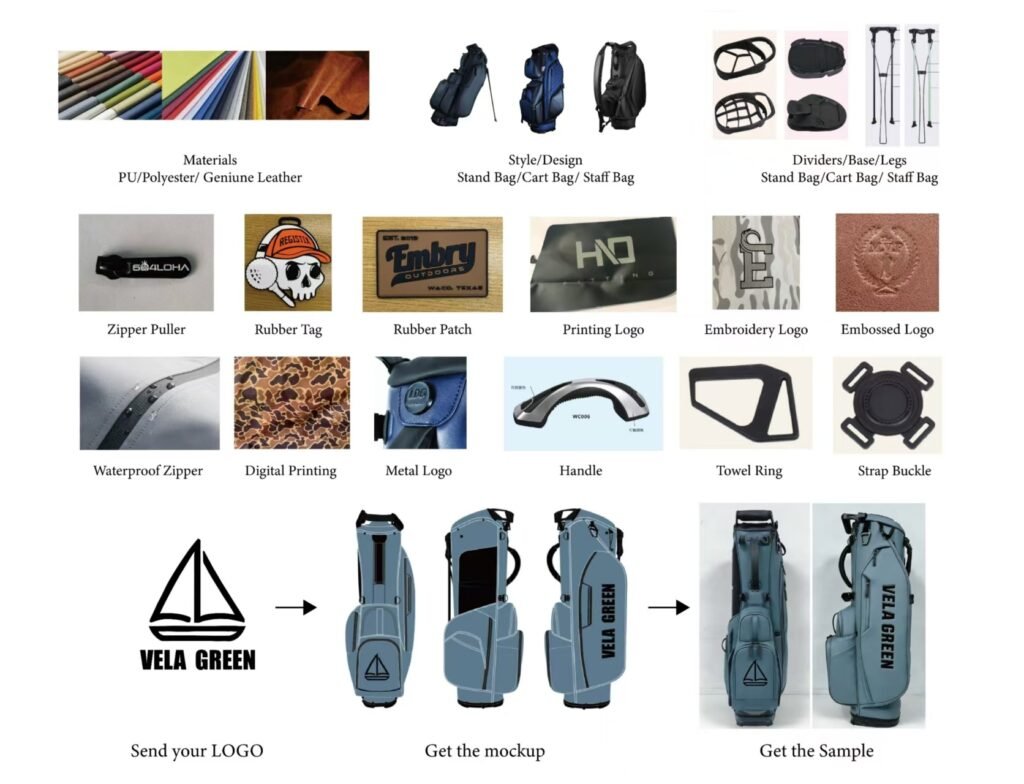
At Vela Green, we provide full-range OEM & ODM services for golf bags, golf headcovers, gloves, towels and other golf accessories. We support custom design, material selection, logo branding, color matching and mass production, strictly complying with CPSC, REACH and other international standards. With mature production experience, reliable quality control and professional export support, we help brands and importers develop market-oriented products with efficient lead times and flexible order quantities.