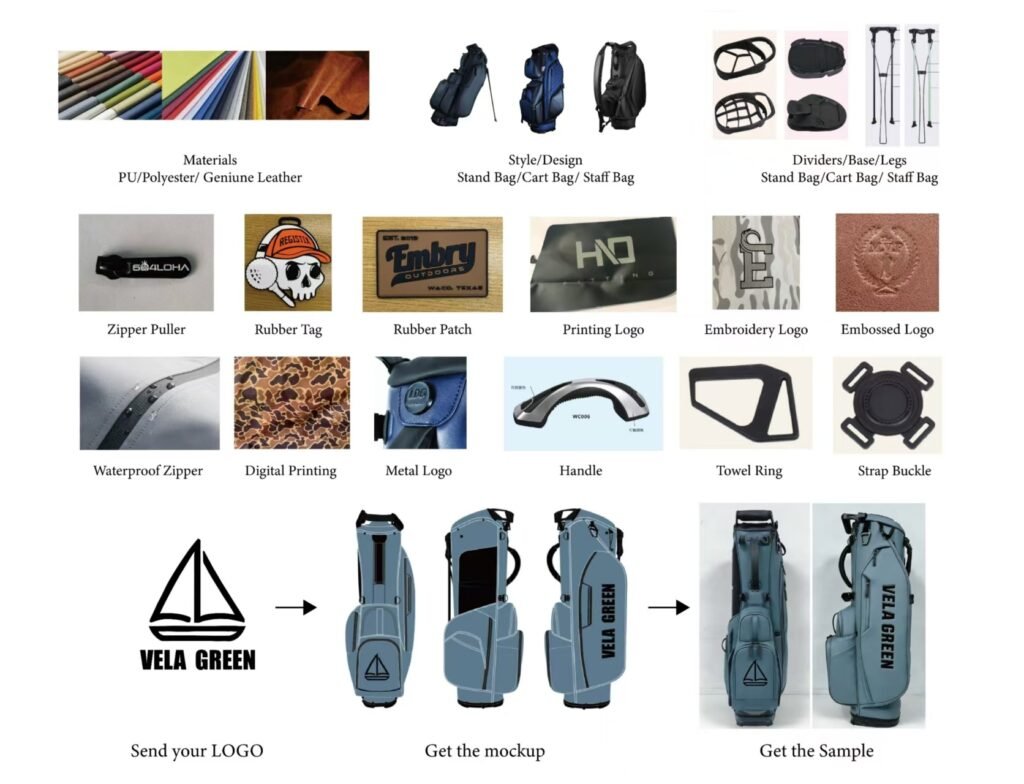
The foundation of every great golf bag is its materials. In today’s competitive golf bag market, golf bag material sourcing has become a strategic priority for B2B buyers who understand that fabric quality directly impacts product durability, brand perception, and customer satisfaction. The global golf bag market is projected to grow from USD 1.43 billion in 2025 to USD 1.75 billion by 2031, with premium materials driving much of this value growth. Yet effective golf bag material sourcing requires more than finding the lowest price—it demands a strategic approach that balances quality, sustainability, cost, and supply chain reliability.
This guide explores five proven strategies for successful golf bag material sourcing in 2026, helping B2B buyers secure premium fabrics while protecting their margins.
Why Golf Bag Material Sourcing Matters More Than Ever
The golf bag market is increasingly defined by material innovation. The global golf equipment market grew to an estimated USD 20.9 billion in 2026, driven partly by the adoption of advanced materials. Switching to sustainable materials can slash a golf bag’s carbon footprint by up to 85%, while bio-based polymers deliver 95% of the durability and 92% of the water resistance of traditional materials.
These material trends are reshaping the golf bag market. Golfers now expect bags that are lightweight, durable, and eco-friendly. Premium golf bags are expected to grow at an annual rate of 6.47% through 2030, with high-grade leathers and advanced synthetic composites leading the way.
For B2B buyers, strategic golf bag material sourcing is the key to capturing this growth. The right materials protect your margins, differentiate your brand, and meet evolving consumer expectations.
Strategy #1: Build Long-Term Relationships with Tier-1 Material Suppliers
The first strategy for effective golf bag material sourcing is developing direct relationships with top-tier material producers. Tier-1 suppliers—those who manufacture fabrics, zippers, and hardware at the source—offer superior quality, consistency, and pricing.
Benefits of Direct Golf Bag Material Sourcing Relationships
- Better pricing: Eliminate middleman markups by sourcing directly from mills
- Quality assurance: Work directly with manufacturers who control the entire production process
- Priority access: During material shortages, direct partners are prioritized
- Custom development: Collaborate on exclusive materials that differentiate your brand
Leading manufacturers maintain close relationships with local zipper, foam padding, and alloy component suppliers, reducing lead times by up to 25% compared to offshore alternatives. For golf bag material sourcing, this supply chain integration directly translates to faster delivery and lower costs.
Strategy #2: Verify Material Certifications and Traceability
The second pillar of professional golf bag material sourcing is certification verification. Without third-party validation, you cannot confirm material quality or sustainability claims.
Essential Certifications for Golf Bag Material Sourcing
| Certification | What It Validates |
|---|---|
| GRS | Global Recycled Standard — verifies recycled content |
| OEKO-TEX | Textile safety — tests for harmful substances |
| ISO 9001 | Quality management — consistent production standards |
| REACH | Chemical safety — compliance with EU regulations |
| Prop 65 | US chemical safety — California compliance |
Modern golf bag material sourcing requires complete traceability—knowing exactly where each fabric roll, zipper batch, and foam component originated. Factories with documented supply chains can trace materials from source to finished product, reducing reputational risk and ensuring compliance.
Strategy #3: Balance Sustainability with Performance
Sustainability has become a defining factor in golf bag material sourcing. Eco-friendly golf bag sales surged 145% from 2023 to 2025, with 78% of golfers factoring sustainability into purchasing decisions. Yet sustainable golf bag material sourcing must deliver performance—golfers won’t compromise durability for eco-credentials.
Sustainable Material Options for Golf Bag Material Sourcing
Recycled polyester (rPET) is a standout material, crafted from plastic bottles and textile waste. Many golf bags now incorporate fabric made from 25–30 recycled plastic bottles while maintaining durability and water resistance.
Bio-based polymers offer renewable, sturdy components derived from sugarcane and algae. These materials deliver 95% of the durability of traditional materials while dramatically reducing carbon footprint.
Recycled ocean plastics provide premium performance—95% of the durability and 92% of the water resistance of new materials—while helping clean our oceans.
The Economics of Sustainable Material Sourcing
While sustainable materials can be 15–20% more expensive upfront, they enable premium positioning with 65% of golfers willing to pay a premium for eco-friendly gear. For B2B buyers, sustainable golf bag material sourcing represents a margin opportunity, not just a cost.
Strategy #4: Diversify Your Golf Bag Material Sourcing Geography
Geographic concentration is one of the biggest hidden risks in golf bag material sourcing. Over-reliance on a single country or region exposes you to tariffs, shipping delays, and supply disruptions.
Key Regions for Golf Bag Material Sourcing
China remains the dominant source for golf bag materials, with Guangdong’s integrated supply chains offering unbeatable selection and efficiency. Inland provinces offer 10–20% lower unit production costs but higher inland logistics expenses.
Vietnam is gaining ground as a cost-effective production hub with lower tariff exposure. Vietnam still imports 60-70% of raw materials from China, but this is changing as local supply chains mature.
Taiwan provides established quality systems and lower tariff exposure for US-bound shipments, though production capacity is more limited.
A resilient golf bag material sourcing strategy maintains primary relationships in Asia while developing backup options in other regions.
Strategy #5: Implement Material Quality Testing and Monitoring
The final strategy for successful golf bag material sourcing is systematic quality verification. Even the best suppliers can have quality variations—professional sourcing includes testing and monitoring.
Material Testing Protocols
- Hydrostatic pressure testing (≥10,000mm H₂O for waterproof fabrics)
- UV stability testing (color retention ≥85% after prolonged exposure)
- Abrasion resistance (10,000+ Martindale cycles without damage)
- Tear strength testing (12.7kg benchmark for premium bags)
- Chemical compliance testing (REACH, Prop 65, OEKO-TEX)
Golf Bag Material Sourcing Checklist
| Strategy | Key Action | Status |
|---|---|---|
| Build supplier relationships | Develop direct relationships with tier-1 mills | ☐ |
| Verify certifications | Check GRS, OEKO-TEX, ISO 9001 validity | ☐ |
| Balance sustainability | Evaluate rPET, bio-based, and ocean plastic options | ☐ |
| Diversify geography | Maintain relationships across multiple regions | ☐ |
| Test material quality | Conduct hydrostatic, UV, and abrasion testing | ☐ |
Common Golf Bag Material Sourcing Mistakes to Avoid
| Mistake | Consequence | Solution |
|---|---|---|
| Choosing solely on price | Hidden quality issues, supply chain risk | Balance cost with quality and reliability |
| No certification verification | Greenwashing, reputational damage | Request third-party lab test reports |
| Single-source dependency | Supply chain vulnerability | Develop backup supplier relationships |
| No quality testing | Undiscovered defects reach customers | Implement systematic material testing |
| Ignoring sustainability | Missed premium opportunities | Evaluate sustainable material options |
Conclusion: Make Golf Bag Material Sourcing a Strategic Priority
Golf bag material sourcing is not just procurement—it is a strategic capability that directly impacts your product quality, brand reputation, and profit margins. The five strategies in this guide—building supplier relationships, verifying certifications, balancing sustainability, diversifying geography, and implementing quality testing—provide a complete framework for securing premium materials.
In 2026, the golf bag market rewards brands that invest in strategic material sourcing. Buyers who implement these strategies will capture the premium segment of the market while competitors compete on price alone. Start your golf bag material sourcing journey by auditing your current suppliers, verifying their certifications, and exploring sustainable alternatives.
With 20 years of golf bag manufacturing experience and established relationships with tier-1 material suppliers across Asia, we help B2B clients secure premium fabrics and hardware. Contact us to discuss your golf bag material sourcing requirements.
OEM & ODM Service
Whether you’re planning to build your own brand, develop new products, or find a stable manufacturing partner for the US and European markets, working with a professional OEM & ODM factory can significantly improve your product quality and market competitiveness.
At Vela Green, we provide full-range OEM & ODM services for golf bags, golf headcovers, gloves, towels and other golf accessories. We support custom design, material selection, logo branding, color matching and mass production, strictly complying with CPSC, REACH and other international standards. With mature production experience, reliable quality control and professional export support, we help brands and importers develop market-oriented products with efficient lead times and flexible order quantities.