
Golf Bag Shipping Guide for Global Distributors is an essential logistics reference for international golf bag wholesalers, distributors, and B2B suppliers serving US, European, and global markets. Golf bags are oversized, semi-rigid sporting goods with unique shipping challenges, including dimensional weight surcharges, easy extrusion damage, strict customs inspection rules, and special carrier size limitations. For global distributors, unreasonable shipping plans and non-standard packaging often lead to high logistics costs, delayed deliveries, product damage, and customs clearance failures. Mastering professional golf bag shipping processes and industry best practices helps distributors cut logistics expenses, reduce cargo loss rates, and build stable and reliable global supply chain delivery systems.
Unlike small regular parcels, bulk golf bag shipments require standardized packaging, scientific freight selection, and compliant document declaration. Many global distributors suffer profit losses due to unfamiliarity with oversized cargo rules and regional shipping policies. This professional golf bag shipping guide for global distributors systematically covers packaging standards, freight options, customs compliance, cost control, and risk avoidance, helping B2B operators achieve efficient and low-cost global distribution.
Unique Shipping Challenges for Bulk Golf Bag Shipments
Global distributors face three core challenges when shipping golf bags in bulk. First, dimensional weight surcharges are inevitable. Most golf bags exceed 48 inches in length, belonging to oversized cargo that triggers extra handling fees from mainstream carriers. Second, product damage risks are high. Unfixed club structures and soft bag bodies are prone to extrusion, scratching, and deformation during long-distance sea and air transportation. Third, cross-border customs thresholds are strict. Different countries have varying import duty rates, prohibited item rules, and commodity declaration standards, easily causing clearance delays.
Without standardized shipping operations, distributors will face increased logistics costs, after-sales compensation for damaged goods, and customer complaints about delayed orders, seriously affecting long-term cooperative relationships and brand credibility.
Standard Bulk Packaging Standards for Global Golf Bag Shipping
Standardized packaging is the first step to reducing shipping damage and avoiding carrier rejection, which is a key core of this golf bag shipping guide for global distributors. For bulk B2B shipments, unified packaging specifications can greatly improve loading efficiency and reduce dimensional weight waste.
First, internal fixation and protection. Require workers to install complete club head covers, use buffer foam or bubble wrap to fill internal gaps, and fix club sets to avoid shaking and collision during transportation. Remove all loose small accessories to prevent loss and abnormal noise during transit inspection. Second, external protection upgrades. Wrap each golf bag with waterproof and dustproof film, then use reinforced double-walled cartons or professional golf bag shipping boxes for outer packaging. Seal box seams with H-type tape to enhance pressure resistance and prevent box rupture.
Finally, unified labeling. Paste clear shipping marks, product quantity labels, and fragile cargo reminders on the outer box. Standard packaging not only reduces damage rates below 1% but also meets the unified loading requirements of international freight forwarders.
Best Freight Options for Global Distributors
Distributors need to select targeted shipping solutions based on order volume, timeliness requirements, and destination regions to balance cost and efficiency.
For small-batch and urgent orders to the US and Europe, international express services such as FedEx International Economy are the most reliable, with stable timeliness of 7–12 days and complete cargo insurance services. For large-batch seasonal bulk orders, sea freight consolidation is the most cost-effective choice, suitable for inventory replenishment of overseas warehouses and offline retail stores. For medium-batch orders with flexible timeliness, air freight consolidation can balance cost and delivery speed, avoiding excessive express fees and slow sea freight efficiency.
Professional golf bag dedicated shipping channels are also recommended for distributors. These channels are familiar with oversized cargo rules, can effectively reduce surcharges, and provide professional damage compensation mechanisms, greatly reducing operational risks.
Cross-Border Customs Compliance & Declaration Tips
Customs clearance is the key link affecting global shipping efficiency. Distributors must follow regional compliance rules to avoid detention. For EU markets, accurately declare commodity HS codes, provide valid commercial invoices, and comply with REACH environmental material standards to avoid environmental inspection penalties. The US market requires strict CPSIA compliance verification and accurate product value declaration to prevent anti-dumping investigations and customs fines.
In addition, never place prohibited items such as unremoved batteries, pressurized sprays, and liquid cosmetics in bulk golf bag shipments. Complete pre-shipment document sorting, including packing lists, invoices, and certification reports, to ensure one-time smooth customs clearance and avoid delivery delays.
Practical Cost Control & Risk Avoidance Strategies
To maximize profit margins, global distributors need to master refined shipping cost control skills. First, optimize packaging size to reduce dimensional weight waste and avoid excessive redundant packaging. Second, negotiate long-term contract prices with forwarders for stable bulk shipments to obtain preferential freight rates. Third, purchase full-value cargo insurance for all cross-border shipments to transfer damage and loss risks.
For peak shipping seasons, arrange shipment plans in advance to avoid fuel surcharges and space shortages. Regularly sort out shipping data, summarize the most cost-effective channel schemes for different regions, and form standardized long-term shipping SOPs for enterprises.
Final Thoughts
Golf Bag Shipping Guide for Global Distributors provides systematic packaging, freight selection, customs compliance, and cost control solutions for B2B golf bag global distribution business. In the competitive international golf equipment market, stable, low-cost, and low-risk shipping capability has become an important core competitiveness of distributors. By standardizing packaging processes, matching accurate shipping channels, complying with regional customs rules, and optimizing logistics costs, distributors can effectively improve order delivery efficiency, reduce operating risks, and maintain long-term stable cooperative relationships with global retailers and brands.
Whether you’re planning to launch your own golf product line, upgrade existing designs, or find a stable manufacturing partner for the US and European markets, working with a professional OEM & ODM factory can greatly improve your product quality and brand competitiveness.
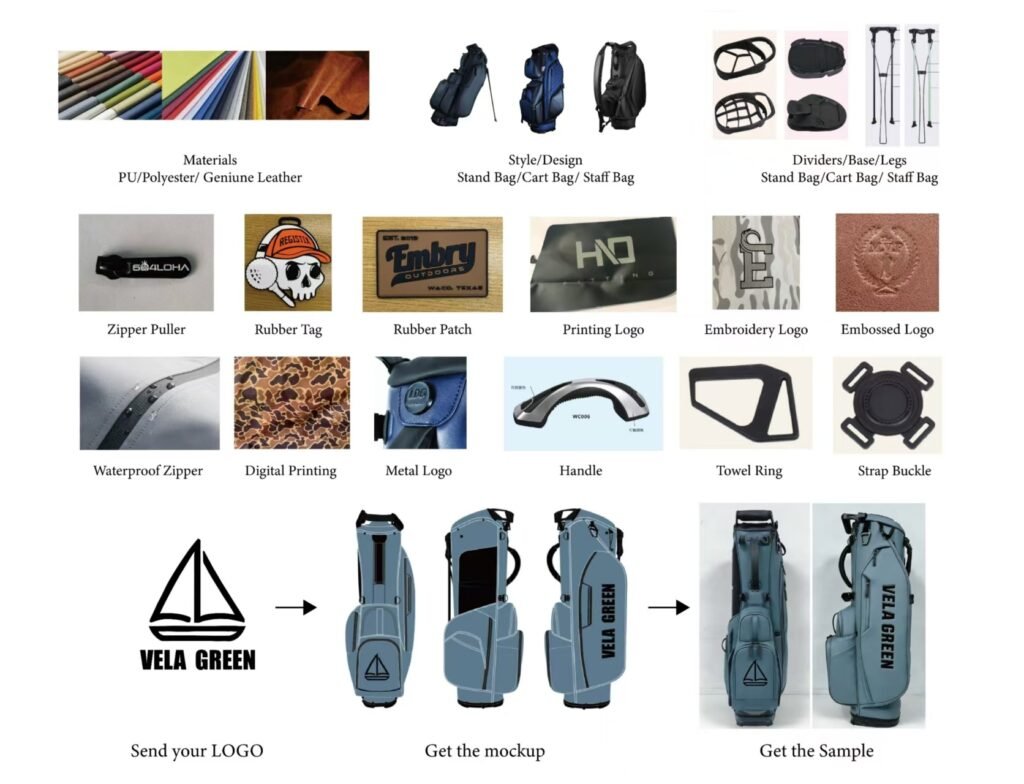
At Vela Green, we specialize in full-range OEM & ODM services for golf bags, golf headcovers, gloves, towels and other golf accessories. We support custom design, material selection, logo branding, color matching and mass production, strictly following CPSC, REACH and other international compliance standards. With mature production experience, stable quality control and professional export support, we help brands and importers develop reliable, market-oriented golf products with efficient lead times and flexible order quantities.
Feel free to contact us today for a custom solution or detailed quotation.