
Understanding the future of the golf bag industry and emerging market trends is essential for B2B wholesalers, brand owners, and golf equipment suppliers to stay competitive in 2026 and beyond. The global golf sector is undergoing steady transformation, driven by rising amateur participation, sustainable consumption demands, advanced manufacturing upgrades, and diversified scenario-based usage needs. Traditional generic, single-function golf bags can no longer meet modern consumer and retail market standards. This in-depth B2B guide explores the key future golf bag industry trends, helping global buyers adjust product lines, optimize wholesale inventory, and seize high-margin market opportunities in the coming years.
In recent years, the golf bag wholesale market has shifted from pure price competition to functional innovation, sustainable production, and personalized customization. End users prioritize comfort, practicality, eco-friendliness, and lightweight performance, while B2B retailers focus on differentiated products with low return rates and high retail premiums. Keeping up with the latest industry trends allows suppliers and distributors to eliminate outdated inventory, upgrade product structures, and build sustainable long-term profit growth in the global golf equipment market.
1. Sustainable & Eco-Friendly Golf Bag Materials Become Mainstream
One of the most dominant trends shaping the future of the golf bag industry is the widespread adoption of eco-friendly manufacturing. With strict EU environmental regulations and global consumer awareness of green consumption rising, traditional non-recyclable PVC and low-grade chemical-coated fabrics are gradually being phased out. More professional manufacturers are switching to GRS-certified recycled polyester, biodegradable auxiliary materials, and water-based environmental protection coatings for golf bag production.
Sustainable golf bags have become a mandatory product line for European and American boutique pro shops, high-end golf clubs, and branded retail platforms. These eco-friendly products feature low odor, zero harmful chemical residues, and recyclable properties, perfectly complying with international environmental compliance standards. For B2B wholesale buyers, stocking eco-friendly golf bags not only meets market policy requirements but also improves brand image and attracts environmentally conscious consumer groups, forming a core differentiated competitive advantage.
2. Ultra-Lightweight & Ergonomic Functional Upgrades
As casual walking golf becomes increasingly popular worldwide, lightweight and ergonomic design has become an irreversible future trend for golf bag iteration. Traditional heavy-duty golf bags cause fatigue during long-time walking gameplay, which can no longer adapt to the fast-paced casual golf lifestyle. In 2026 and beyond, mainstream wholesale golf bags will focus on ultra-light fabric optimization, hollow back support systems, curved bionic shoulder straps, and gravity balance structural design.
Future golf bags balance ultra-light weight and structural durability, abandoning redundant heavy accessories and retaining only core functional configurations. Ergonomic upgrades effectively reduce sports fatigue, greatly improving user experience. This trend applies to stand bags, cart bags, and beginner golf bags, becoming a basic standard for mainstream retail products and a key inspection item for B2B bulk procurement.
3. Smart & Multi-Functional Scenario-Oriented Design
The future of the golf bag industry is moving from single storage function to multi-scenario intelligent functional integration. Modern golfers demand more than just club storage; they need golf bags that adapt to all-weather, all-scenario use. New-generation golf bags are continuously upgrading practical functions including built-in insulated cooling pockets for beverages, waterproof hidden storage zones for electronic devices, anti-lost hanging systems, and integrated rain hood storage structures.
High-end customized golf bags even reserve mounting positions for rangefinders, Bluetooth speakers, and small smart sports devices, realizing intelligent sports matching. Scenario-based multi-functional design enhances product added value significantly, bringing higher retail premium space for B2B sellers. Products with comprehensive functional configurations will dominate the mid-to-high-end wholesale market in the next few years.
4. Low-MOQ Personalized Customization & Private Label Growth
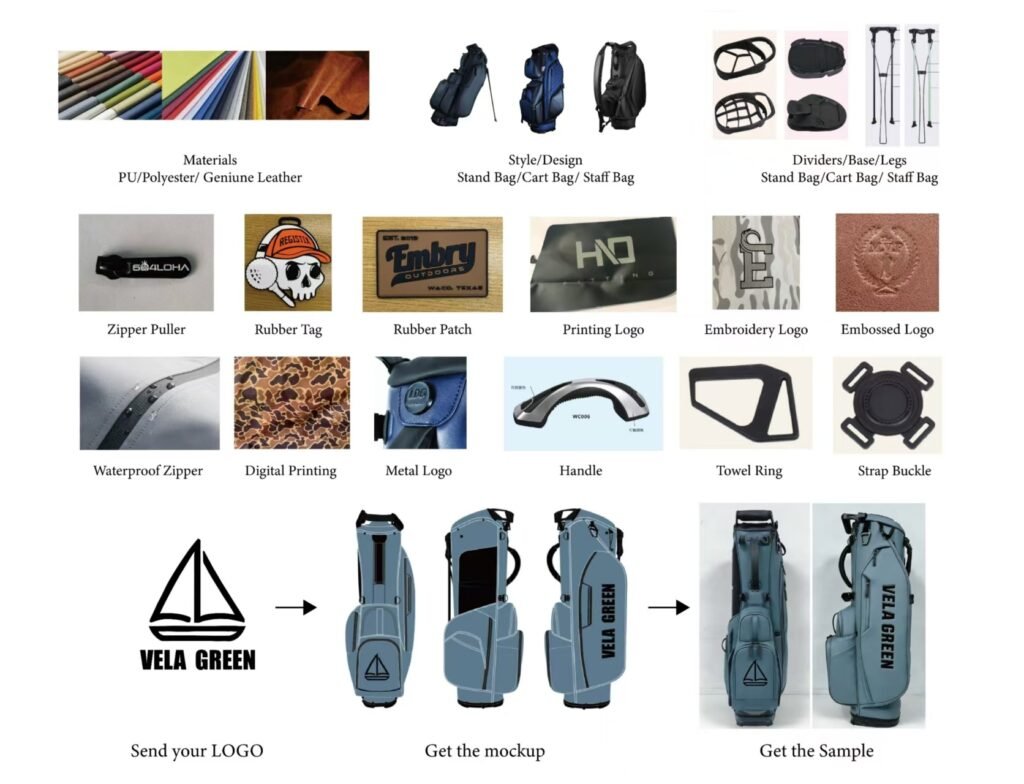
With the rise of small and medium-sized golf brands and independent boutique retailers, low-MOQ personalized private label customization has become a core developing trend in the golf bag industry. In the past, golf bag customization relied on large-batch OEM orders with high thresholds. In 2026 and beyond, manufacturers will support flexible small-batch ODM customization, covering exclusive color matching, brand logo embossing, personalized pattern printing, and functional tailored modifications.
This trend greatly lowers the entry threshold for new golf brands and pro shop private label businesses. B2B buyers can test market trends with low-cost small-batch orders, avoiding large inventory risks. Flexible customized production will become the standard cooperation mode for most global golf bag wholesale orders, replacing traditional single-style bulk stocking.
5. High-Durability & Weather-Resistant Standardization
Global end consumers are increasingly rational, paying more attention to product service life and outdoor durability rather than superficial appearance. The future golf bag market will raise unified standards for weather resistance, including UV anti-fading, mildew resistance for humid climates, low-temperature crack resistance, and hardware anti-rust performance. Standardized wear-resistant stitching, reinforced stress structure, and aging-resistant fabric treatment will become basic factory production specifications.
High weather-resistant and durable golf bags effectively reduce retail after-sales return rates and improve user repurchase rates. For B2B suppliers, standardized durable product lines can stabilize long-term cooperative relationships with golf courses, chain pro shops, and large distributors, forming stable and sustainable wholesale business.
6. Minimalist & High-End Aesthetic Styling
Golf bag aesthetic trends are gradually abandoning complex fancy designs and moving toward minimalist, textured, and versatile styling. Low-saturation neutral colors, matte texture fabrics, subtle silicone logos, and integrated seamless craftsmanship have become mainstream popular styles. This minimalist high-end design is suitable for all age groups and global regional markets, with strong market universality and long product life cycles.
Minimalist golf bags are easy to match brand positioning, suitable for retail sales, club display, and corporate gift customization, bringing broader sales channels for B2B wholesale buyers.
B2B Sourcing Strategies for Future Golf Bag Trends
To adapt to the future development of the golf bag industry, global wholesale buyers need to adjust their product layout in advance. Prioritize stocking eco-friendly lightweight golf bags with standardized durability performance; reserve flexible low-MOQ customization channels for private label orders; increase multi-functional scenario-style product ratios to enrich high-value product lines. Avoid overstocking outdated heavy, single-function, and non-environmental golf bags to eliminate inventory risks.
Final Thoughts
The future of the golf bag industry in 2026 and beyond will be defined by sustainability, lightweight ergonomics, multi-functional intelligence, flexible customization, high durability, and minimalist aesthetics. As market demands continue to upgrade, homogeneous low-price products will be gradually eliminated, while high-value, trend-compliant golf bags will occupy the mainstream wholesale market. B2B buyers who accurately grasp these emerging trends can optimize their supply chains, seize market dividends, and maintain long-term leading competitiveness in the global golf equipment industry.
Whether you’re planning to launch your own golf product line, upgrade existing designs, or find a stable manufacturing partner for the US and European markets, working with a professional OEM & ODM factory can greatly improve your product quality and brand competitiveness.
At Vela Green, we specialize in full-range OEM & ODM services for golf bags, golf headcovers, gloves, towels and other golf accessories. We support custom design, material selection, logo branding, color matching and mass production, strictly following CPSC, REACH and other international compliance standards. With mature production experience, stable quality control and professional export support, we help brands and importers develop reliable, market-oriented golf products with efficient lead times and flexible order quantities.
Feel free to contact us today for a custom solution or detailed quotation.