Golf bag strap design is one of those things you don‘t appreciate until it’s wrong. I‘ve been in this business for over 20 years, and I can’t tell you how many times a buyer has sent me a bag to inspect because customers complained about shoulder pain, straps that slip, or stitching that ripped after a month. Every single time, the root cause was golf bag strap design. Not the fabric. Not the zippers. The straps.
If you‘re sourcing stand bags or carry bags for the US or European market, golf bag strap design is not a cosmetic detail. It‘s the difference between a bag that gets used every weekend and one that gets returned with a one-star review. Here are five mistakes I see all the time—and how to avoid them.
Why Golf Bag Strap Design Makes or Breaks a Bag
A golfer carries a loaded bag for four hours. That‘s 15 to 25 pounds on one or two shoulders. If the golf bag strap design doesn’t distribute that weight properly, the round becomes a chore. Customers blame the bag, not their shoulders. They return it, leave a bad review, and never buy from that brand again.
For B2B buyers, this matters because returns eat margins. A bag that costs you $28 to land can cost $50 in return shipping, replacement, and lost customer trust. Good golf bag strap design is not an upgrade—it‘s a baseline requirement.
Mistake #1: Straps That Are Too Narrow
Narrow straps concentrate pressure on a small area of the shoulder. After 18 holes, that pressure becomes pain. I‘ve seen bags with straps only 2 inches wide. That‘s fine for a Sunday carry bag with six clubs. It‘s unacceptable for a full stand bag.
What Good Golf Bag Strap Design Looks Like
For a stand bag, straps should be at least 2.5 to 3 inches wide at the shoulder contact point. Wider straps distribute weight across a larger surface area, reducing pressure. Some premium golf bag strap design uses contoured shapes that follow the curve of the shoulder and chest.
What to Ask Your Supplier
Ask for the strap width in millimeters. If they say “standard,” ask for the exact measurement. A supplier who knows their golf bag strap design will have an answer immediately.
Mistake #2: Foam That Compresses After a Month
Padding looks great in a sample. Then it flattens. This is the most common golf bag strap design failure I see. Cheap foam loses its resilience after a few weeks of use. The strap becomes a thin piece of fabric with no cushioning.
Minimum Foam Specs for Golf Bag Strap Design
Use closed-cell EVA foam with a density of 45–60 kg/m³. Thickness should be at least 10–12mm. Open-cell foam is cheaper but compresses permanently. Closed-cell foam bounces back.
How to Test It
Press the strap between your thumb and forefinger. It should feel firm, not spongy. Then compress it hard for 10 seconds and release. If it doesn‘t spring back immediately, the foam is too soft.
Mistake #3: Poor Weight Distribution
A golf bag strap design that doesn‘t balance the load will cause the bag to tilt, bounce, or slide. This is especially common with dual-strap systems that aren‘t anchored correctly.
The Balance Test
Load a sample bag with a full set of clubs, a water bottle, and a rangefinder. Put it on. Walk 100 yards. Does the bag stay centered on your back? Or does it pull to one side? If it pulls, the golf bag strap design needs adjustment.
Attachment Points Matter
The top attachment point should be near the top of the bag, and the bottom attachment should be near the base. This creates a stable triangle. If both attachment points are too close together, the bag will swing.
Mistake #4: Strap Attachment Points That Tear
This is a warranty claim waiting to happen. The stitching that holds the strap to the bag takes enormous stress. If it‘s not reinforced, it will fail.
What to Demand in Golf Bag Strap Design
Every strap attachment point must be bar-tacked—not just backstitched. Bar-tacking uses multiple zigzag stitches to spread the load. Look for at least 4 bar-tacks at each attachment point.
The Pull Test
Grab the strap and pull hard. Then pull again. If you hear stitching ripping or see the fabric distort, the golf bag strap design is not strong enough.
Mistake #5: No Adjustment Range for Different Body Types
Golfers come in all sizes. A golf bag strap design that only fits one body type will generate complaints from everyone else.
What to Look For
Straps should have at least 12 inches of adjustment range. The buckles should slide smoothly but lock securely. Test them under load—if they slip while walking, they‘re useless.
The One-Size-Fits-All Trap
Some factories offer a “standard” strap length that fits average-height men. That leaves out women, shorter players, and taller players. For the US and European markets, you need a golf bag strap design that accommodates a wide range of body types.
How to Test Golf Bag Strap Design Before You Order
Before you commit to 500 units, order a pre-production sample and do this:
- Load it up. Fill every pocket. Add a full set of clubs.
- Walk with it. At least 10 minutes. Pay attention to shoulder pressure.
- Pull the straps. Hard. Check for stitching failure.
- Compress the foam. Does it spring back?
- Adjust the straps. Do the buckles hold under load?
- Check the balance. Does the bag stay centered?
If the sample passes, you have a golf bag strap design worth scaling. If it fails, you just saved yourself thousands in returns.
What Good Golf Bag Strap Design Looks Like in 2026
The best golf bag strap design I‘ve seen this year uses a contoured, dual-strap system with 3-inch wide shoulder pads, 12mm closed-cell foam, and bar-tacked attachment points. The straps adjust over a 14-inch range. The buckles are metal, not plastic. And the whole system weighs under 400 grams.
That‘s the standard you should demand. Not every bag needs it, but every bag that claims to be comfortable should have it.
Conclusion: Don‘t Let Bad Straps Ruin a Good Bag
Golf bag strap design is not glamorous. It‘s not the first thing buyers look at. But it‘s the first thing customers complain about. If you want fewer returns, better reviews, and repeat orders, get the straps right.
The five mistakes in this guide—narrow straps, cheap foam, poor balance, weak attachment points, and limited adjustment—are all avoidable. Test for them before you order. Your customers will thank you.
With 20 years of golf bag manufacturing experience, we build every stand bag and carry bag with tested, padded, bar-tacked strap systems. Contact us to discuss your golf bag strap design requirements and request a sample.
OEM & ODM Service
Whether you’re planning to build your own brand, develop new products, or find a stable manufacturing partner for the US and European markets, working with a professional OEM & ODM factory can significantly improve your product quality and market competitiveness.
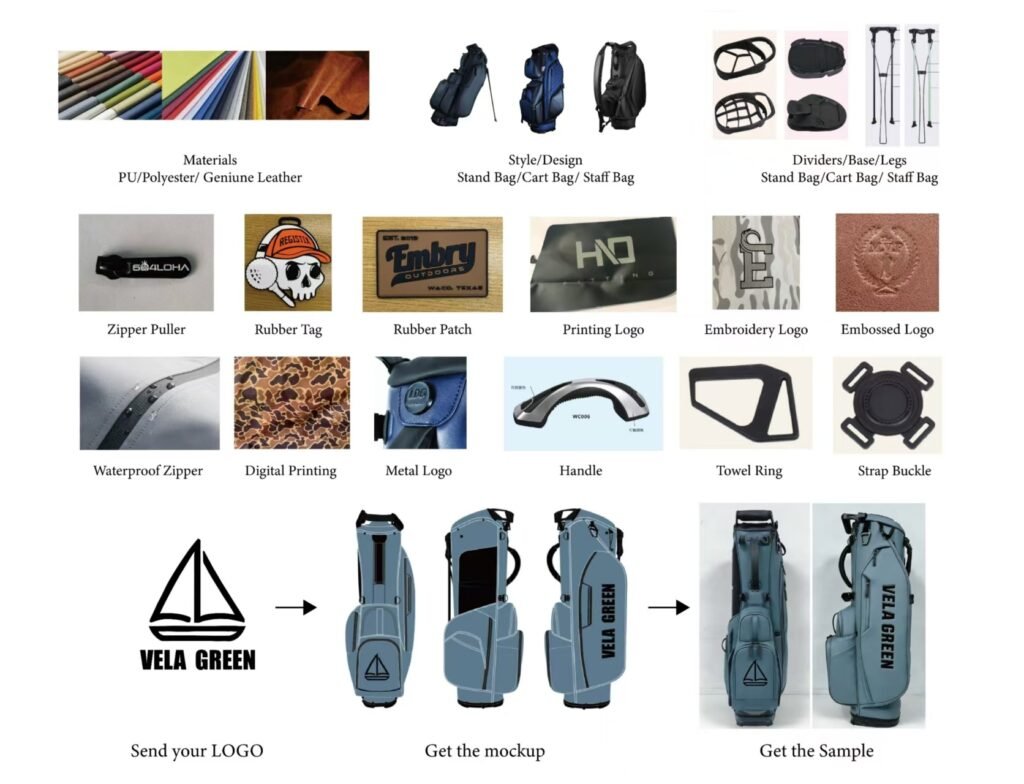
At Vela Green, we provide full-range OEM & ODM services for golf bags, golf headcovers, gloves, towels and other golf accessories. We support custom design, material selection, logo branding, color matching and mass production, strictly complying with CPSC, REACH and other international standards. With mature production experience, reliable quality control and professional export support, we help brands and importers develop market-oriented products with efficient lead times and flexible order quantities.