For B2B golf bag manufacturers, distributors, and importers targeting US and EU markets, smooth cross-border logistics and strict customs compliance are critical to avoiding delays, fines, and lost orders. In 2026, US and EU customs regulations for sports goods (including golf bags) have become stricter, with 40% of B2B shipments facing detention due to non-compliant documentation or improper packaging. This blog is tailored for B2B players, sharing actionable logistics strategies, customs compliance requirements, and risk avoidance tips to ensure your golf bag bulk shipments reach US/EU clients on time, without extra costs or disruptions.
Why B2B Golf Bag Cross-Border Logistics & Compliance Matter
Cross-border logistics is the backbone of B2B golf bag trade—delays or customs issues can damage your relationship with US/EU clients, who rely on timely inventory restocks (especially during peak golf seasons). Non-compliance with US/EU customs regulations (e.g., missing documentation, non-compliant materials) can lead to shipment detention, fines (up to 20% of the shipment value), or even confiscation. For B2B players, mastering logistics and compliance not only reduces risks but also improves client trust, shortens delivery times, and gives you a competitive edge over suppliers who struggle with cross-border challenges.
Key US/EU Customs Compliance Requirements for B2B Golf Bags
US and EU have distinct customs requirements for golf bags—understanding these is essential to avoid delays. Below are the 2026 updated compliance rules for B2B shipments:
1. US Customs Compliance (CBP Requirements)
For B2B golf bag shipments to the US, you must meet the following requirements: – HTS Code: Classify golf bags under HTS 4202.92.0040 (sports bags) to ensure correct duty rates (typically 10–15%). – Documentation: Provide a commercial invoice (detailing product name, quantity, value, and country of origin), packing list, and FDA compliance statement (if using materials that touch skin, e.g., padded straps). – Material Compliance: Ensure fabrics and hardware meet CPSC safety standards (no lead, phthalates, or harmful chemicals).
2. EU Customs Compliance (EU Customs Union)
For B2B shipments to the EU, focus on these key requirements: – HS Code: Use HS 4202.92 (sports bags) with correct tariff codes for each EU country (duty rates vary by country, 5–12% on average). – Documentation: Submit a commercial invoice, packing list, EUR1 certificate (for preferential duty rates), and REACH compliance certificate (for materials like fabrics, zippers, and coatings). – Sustainability Compliance: If using recycled materials (e.g., rPET), provide GRS certification to avoid customs scrutiny.
Optimal Cross-Border Logistics Strategies for B2B Golf Bags
Choosing the right logistics method and partner can streamline your B2B shipments and reduce costs. Here are the most effective strategies for 2026:
1. Choose the Right Shipping Method
Match your shipping method to order size and delivery timeline: – FCL (Full Container Load): Ideal for bulk orders (500+ bags) to US/EU ports—lower per-unit shipping cost, faster transit (20–30 days). – LCL (Less than Container Load): Suitable for small-to-medium bulk orders (50–500 bags)—flexible, no need to fill a full container, but slightly higher per-unit cost. – Air Freight: For urgent orders (e.g., peak season restocks)—fast (3–7 days), but more expensive; best for high-value small batches.
2. Partner with a B2B Golf Bag-Specialized Logistics Provider
Choose a logistics provider with experience in B2B golf bag shipments—they understand the unique requirements (e.g., packaging to prevent damage, compliance documentation). Look for providers that offer end-to-end services: customs clearance, warehousing, and last-mile delivery to US/EU retail locations or pro shops. This reduces your workload and ensures compliance.
3. Optimize Packaging for Cross-Border Shipment
Golf bags are prone to damage during transit—optimize packaging to reduce losses: – Use sturdy corrugated boxes with foam padding for stand bags and cart bags. – Disassemble retractable legs (for stand bags) to save space and prevent breakage. – Label packages clearly with “Fragile” and “Sports Equipment” to ensure careful handling. – Include compliance labels (country of origin, material composition) on each package.
Common B2B Cross-Border Logistics & Compliance Pitfalls to Avoid
- Incorrect HTS/HS Coding: Using the wrong tariff code leads to duty miscalculations and detention—verify codes with a customs expert.
- Missing Documentation: Incomplete commercial invoices or compliance certificates are the top cause of detention—double-check all documents before shipping.
- Poor Packaging: Damaged golf bags lead to returns and client complaints—invest in quality packaging to reduce losses.
- Ignoring Regional Regulations: EU REACH and US CPSC requirements differ—tailor compliance to each market to avoid fines.
Final Thoughts for B2B Golf Bag Players
In 2026, smooth cross-border logistics and strict customs compliance are non-negotiable for B2B golf bag brands targeting US/EU markets. By understanding regional compliance requirements, choosing the right shipping method, and partnering with a specialized logistics provider, you can avoid delays, reduce risks, and build trust with your B2B clients. Remember: B2B cross-border success is about attention to detail—invest time in compliance and logistics, and you’ll ensure consistent, on-time deliveries that keep your clients coming back.
OEM & ODM Service
Whether you’re planning to build your own brand, develop new products, or find a stable manufacturing partner for the US and European markets, working with a professional OEM & ODM factory can significantly improve your product quality and market competitiveness.
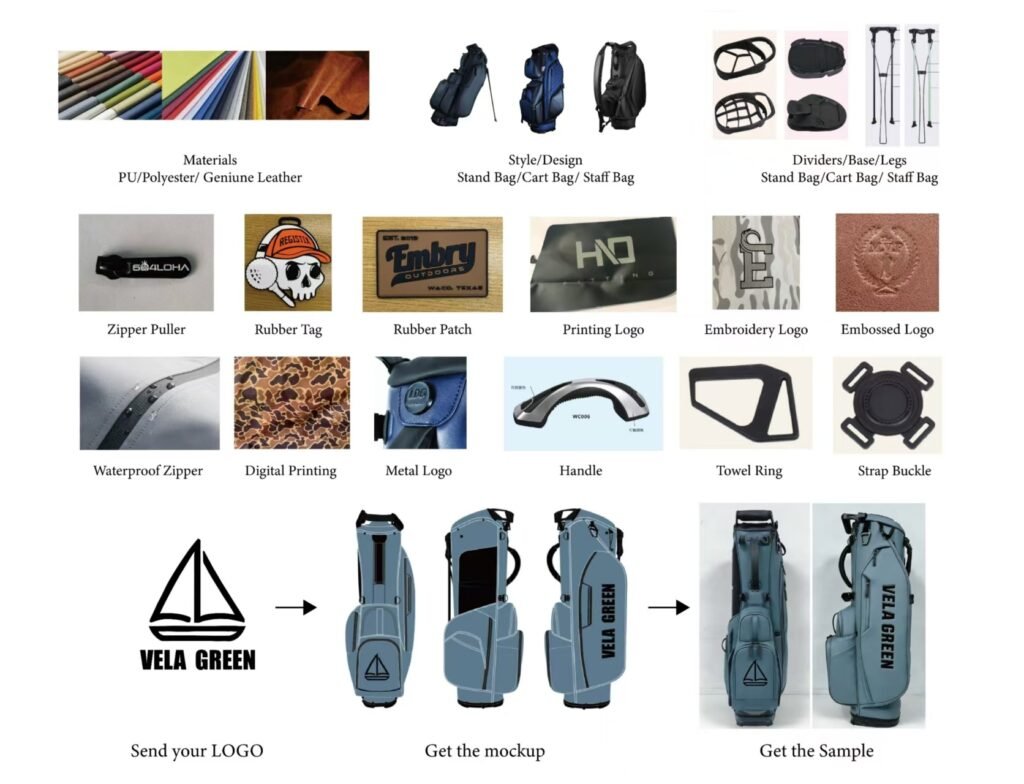
At Vela Green, we provide full-range OEM & ODM services for golf bags, golf headcovers, gloves, towels and other golf accessories. We support custom design, material selection, logo branding, color matching and mass production, strictly complying with CPSC, REACH and other international standards. With mature production experience, reliable quality control and professional export support, we help brands and importers develop market-oriented products with efficient lead times and flexible order quantities.