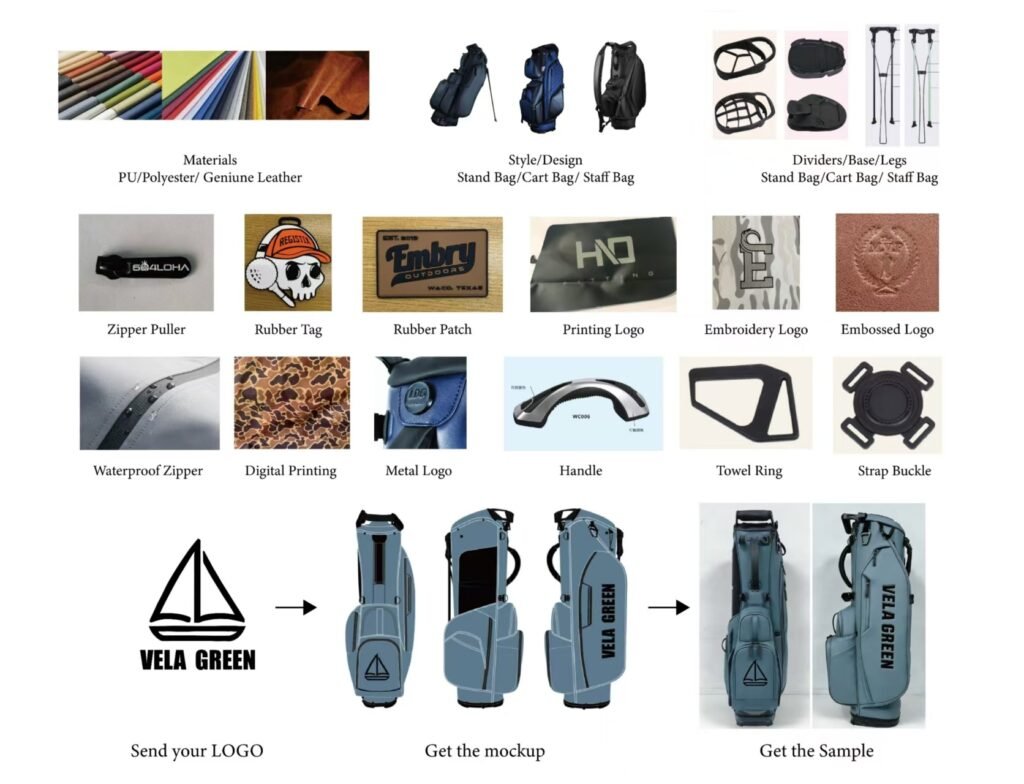
Walk into any pro shop or scroll through online stores, and you will see golf bag materials listed as nylon, polyester, PU leather, or something “waterproof.” But what do these terms actually mean for durability, weight, weather resistance, and price? Choosing the right golf bag materials can mean the difference between a bag that lasts five seasons and one that falls apart after one.
This guide compares the most common golf bag materials side by side, so you can make an informed decision whether you are buying for yourself or sourcing custom golf bag materials for a brand.
Nylon: The Most Popular Golf Bag Material
Nylon dominates the golf bag materials market. Most stand bags, cart bags, and travel bags use nylon because it offers an excellent balance of strength, weight, and cost.
Types of Nylon Used in Golf Bags
- 420D Nylon: Lightweight and flexible, used for entry-level bags. Adequate for occasional play but less resistant to abrasion.
- 1680D Nylon: Heavy-duty ballistic nylon. Extremely tear-resistant and used in premium bags. Weighs more but lasts much longer.
- Nylon with PVC backing: Adds water resistance. Common in budget-friendly “weather-resistant” bags.
Pros and Cons of Nylon Golf Bags
| Aspect | Rating | Notes |
|---|---|---|
| Durability | ★★★★☆ | 1680D nylon is exceptionally tough |
| Weight | ★★★☆☆ | Mid-range; heavier than polyester but lighter than leather |
| Water resistance | ★★★☆☆ | Naturally water-repellent but not fully waterproof |
| Cost | ★★★★☆ | Generally affordable, especially 420D |
| UV resistance | ★★★☆☆ | Can fade over time with constant sun exposure |
Best for: Daily use, walking golfers, travel bags, and anyone wanting a durable golf bag without spending a fortune.
Polyester: The Lightweight Alternative
Polyester is the second most common golf bag material. It is lighter than nylon and resists UV fading better, but it is generally less abrasion-resistant.
When to Choose Polyester
Polyester excels in lightweight golf bags designed for walking. Many Sunday bags and ultra-compact carry bags use polyester to keep total weight under 3 pounds. Polyester also holds dye exceptionally well, so vibrant colors and patterns look sharp for years without fading.
Pros and Cons of Polyester Golf Bags
| Aspect | Rating | Notes |
|---|---|---|
| Durability | ★★★☆☆ | Less tear-resistant than 1680D nylon |
| Weight | ★★★★★ | Lightest among common materials |
| Water resistance | ★★☆☆☆ | Absorbs moisture more than nylon |
| Cost | ★★★★★ | Very affordable |
| UV resistance | ★★★★★ | Excellent; colors stay bright |
Best for: Walkers who prioritize low weight, casual weekend players, and bags with bold color designs.
PU Leather: The Premium Choice for Style
PU leather (polyurethane leather) appears on high-end cart bags, tour bags, and luxury custom golf bags. It mimics genuine leather at a fraction of the cost and weight while offering good durability.
How PU Leather Performs
PU leather is not as breathable as fabric, but it wipes clean easily and looks sophisticated. Many premium golf bag materials combine PU leather panels with nylon or polyester bodies to balance aesthetics and functionality. Pure PU leather bags are heavy and best suited for cart use only.
Pros and Cons of PU Leather Golf Bags
| Aspect | Rating | Notes |
|---|---|---|
| Durability | ★★★★☆ | Resists scuffs; can crack if not conditioned |
| Weight | ★★☆☆☆ | Heavier than fabric bags |
| Water resistance | ★★★★☆ | Naturally water-repellent on surface |
| Cost | ★★☆☆☆ | More expensive than nylon or polyester |
| Appearance | ★★★★★ | Looks elegant and professional |
Best for: Country club members, corporate tournament prizes, and brands seeking a premium look for custom golf bag materials.
Waterproof Golf Bag Materials: Fully Sealed Protection
Genuine waterproof golf bag materials go beyond water-resistant coatings. These bags use heat-welded seams, waterproof zippers, and laminated fabrics like polyester with TPU (thermoplastic polyurethane) membranes.
What Makes a Bag Truly Waterproof?
- IPX-rated zippers that seal out rain
- Welded seams (no stitching holes)
- Fully laminated fabric that does not absorb moisture
Popular waterproof golf bag materials include TPU-laminated polyester and dry-tech nylon. Brands like Sun Mountain and Titleist use these in their rain-ready models.
Pros and Cons of Waterproof Golf Bags
| Aspect | Rating | Notes |
|---|---|---|
| Durability | ★★★★☆ | High-quality construction lasts |
| Weight | ★★★☆☆ | Slightly heavier due to laminates |
| Water resistance | ★★★★★ | Truly waterproof, not just repellent |
| Cost | ★★★☆☆ | Premium pricing |
| Maintenance | ★★★☆☆ | Requires re-treatment of DWR coating over time |
Best for: Year-round players in rainy climates, walking golfers who refuse to quit in light rain, and anyone tired of wet grips and soggy scorecards.
Material Comparison Summary Table
| Material | Durability | Weight | Water Resistance | Cost | Best Use Case |
|---|---|---|---|---|---|
| 420D Nylon | Medium | Light | Medium | Low | Occasional play |
| 1680D Nylon | High | Medium | Medium | Medium | Daily use, travel |
| Polyester | Medium | Very light | Low | Low | Walking, summer only |
| PU Leather | High | Heavy | High | High | Cart bags, premium looks |
| Waterproof TPU | High | Medium | Very high | High | Rainy climates |
How to Choose Golf Bag Materials for Your Needs
Ask yourself three questions before deciding on golf bag materials:
1. How often do you play?
Frequent players (50+ rounds/year) should prioritize durability—1680D nylon or waterproof TPU. Occasional players can save money with polyester.
2. Do you walk or ride?
Walkers need lightweight materials: 420D nylon or polyester. Riders can handle heavier PU leather or 1680D nylon without complaint.
3. What weather do you face?
Rainy regions demand waterproof golf bag materials with sealed seams. Dry climates can use standard nylon or polyester.
Why Material Choice Matters for Custom Golf Bags
If you are sourcing custom golf bag materials for a brand, your choice directly affects customer satisfaction and return rates. Premium materials (1680D nylon, PU leather, TPU waterproof) reduce warranty claims for torn fabric, broken zipper tracks, and water damage. Lower-cost materials (polyester, 420D nylon) appeal to price-sensitive buyers but may generate more complaints over time.
Work with your custom golf bag manufacturer to request material samples before bulk production. Feel the fabric weight, test zipper smoothness, and if possible, run a quick water test on waterproof claims.
Conclusion: The Best Golf Bag Material Depends on You
There is no single “best” among golf bag materials—only the best for your specific playing style, climate, and budget.
- Go with 1680D nylon for all-around durability and value.
- Choose polyester if every ounce matters and you play in dry conditions.
- Pick PU leather for a professional look on cart-only courses.
- Invest in TPU waterproof if you never want to worry about rain again.
Now that you understand golf bag materials, you can shop with confidence—or specify exactly what you need for your next custom golf bag order.
With 20 years of expertise in custom golf bag manufacturing, we help clients select the optimal materials for their performance, budget, and branding goals. Contact us to request material swatches and discuss your next project.
OEM & ODM Service
Whether you’re planning to build your own brand, develop new products, or find a stable manufacturing partner for the US and European markets, working with a professional OEM & ODM factory can significantly improve your product quality and market competitiveness.
At Vela Green, we provide full-range OEM & ODM services for golf bags, golf headcovers, gloves, towels and other golf accessories. We support custom design, material selection, logo branding, color matching and mass production, strictly complying with CPSC, REACH and other international standards. With mature production experience, reliable quality control and professional export support, we help brands and importers develop market-oriented products with efficient lead times and flexible order quantities.