The golf industry is evolving rapidly, and 2026 brings new opportunities and trends for US and European golf brands, importers, and OEM partners. As consumer preferences shift toward sustainability, functionality, and personalization, golf bags OEM factories must adapt to meet the changing demands of these key markets. For US and European brands looking to stay competitive, understanding the latest OEM trends is critical to developing products that resonate with golfers and drive sales. As a professional golf bags OEM factory with over 20 years of experience serving US and European clients, we’ve identified the top trends shaping the golf bags OEM industry in 2026, helping you make informed decisions for your brand.
1. Eco-Friendly & Sustainable Materials Take Center Stage
The US and European golf markets are distinct but share core trends: both prioritize quality, compliance, and innovation. In 2026, the line between “functional” and “premium” will blur, with golfers expecting high-performance features at every price point. Additionally, sustainability is no longer a niche concern—it’s a mainstream requirement that influences every aspect of product development, from material selection to production processes. Let’s dive into the key trends that will define golf bags OEM in 2026.
Sustainability continues to be the most impactful trend in the golf industry, and 2026 will see eco-friendly materials become standard for golf bags OEM, not just an option. US and European consumers are increasingly conscious of their environmental footprint, and they’re choosing brands that align with their values. A recent industry report shows that 78% of US golfers and 83% of European golfers are willing to pay a 10–15% premium for eco-friendly golf equipment, including golf bags.
The most popular sustainable materials for 2026 golf bags OEM include GRS-certified recycled nylon and polyester, which repurpose plastic waste into durable, waterproof fabrics. These materials are just as high-performing as traditional options but reduce carbon emissions and plastic pollution. For premium brands, vegan leather (made from pineapple leaf fiber, mushroom leather, or apple leather) is gaining traction, offering a luxurious, cruelty-free alternative to traditional leather. Additionally, bio-based materials like bamboo and hemp are being used for linings and pockets, adding a natural touch while maintaining functionality.
US and European brands are also prioritizing OEM factories with green production processes. Waterless dyeing technology, zero-waste manufacturing, and energy-efficient equipment are no longer optional—they’re requirements for brands looking to market their products as sustainable. Factories that hold GRS (Global Recycled Standard) and ISO 14001 certifications will have a competitive edge, as these certifications provide transparency and credibility to consumers and retailers.
2. Smart & Tech-Integrated Golf Bags
Technology is transforming the golf industry, and 2026 will see smart features become more accessible in golf bags OEM. US and European golfers—especially millennial and Gen Z players—are embracing tech-driven products that enhance their on-course experience. Smart golf bags are no longer just for professional players; they’re becoming a mainstream trend for casual golfers too.
Key tech features for 2026 include built-in GPS trackers, which help golfers locate their bags on large courses, and USB charging ports for smartphones and golf rangefinders. Some high-end OEM designs also include weight sensors to help golfers monitor their bag weight (critical for walkers) and Bluetooth connectivity to sync with golf apps, providing swing analysis and course data. These features not only add value for golfers but also help brands differentiate their products in a crowded market.
For US and European brands, the key is to balance tech functionality with practicality. Golfers don’t want overly complex features—they want simple, user-friendly tech that enhances their game without adding bulk or cost. OEM factories that can integrate smart features seamlessly into the bag’s design (without compromising durability or weight) will be in high demand.
3. Hyper-Personalization & Brand-Centric Customization
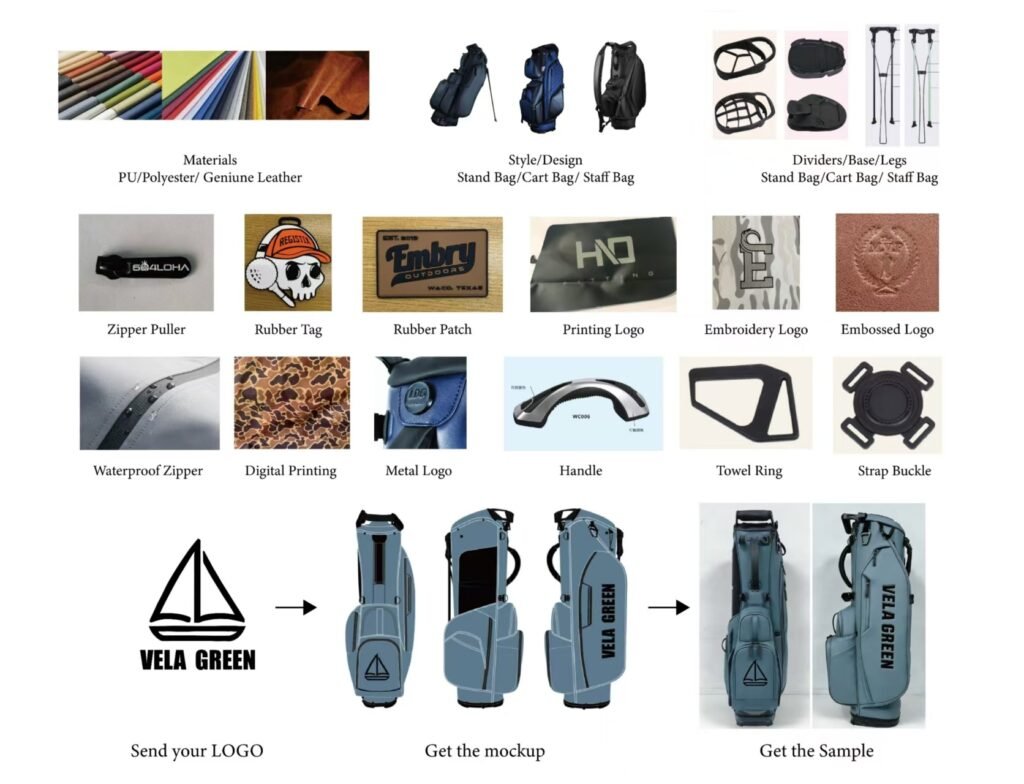
Personalization has been a growing trend in golf bags OEM, and 2026 will take it to the next level with hyper-personalization options. US and European brands are moving beyond basic logo embroidery to offer fully customizable designs that reflect their brand identity and resonate with their target audience. This includes custom color matching (using Pantone codes), unique panel designs, branded hardware (zippers, buckles, handles), and even personalized monograms for individual customers.
For European brands, minimalist, elegant customization is preferred—think subtle logo debossing, neutral color palettes, and premium finishes. US brands, on the other hand, often opt for bold, vibrant colors, large logo embroidery, and unique patterns that stand out on the course. OEM factories that can accommodate both styles and offer flexible customization options (even for small order quantities) will be key partners for brands.
Another customization trend for 2026 is matching sets—golf bags paired with custom headcovers, gloves, and towels that share the same design elements. This creates a cohesive brand image and adds value for customers, who appreciate a coordinated look. OEM factories that can produce matching accessories alongside golf bags will have a competitive advantage.
4. Compliance & Safety Standards Become More Stringent
US and European markets have always had strict compliance standards, but 2026 will see even more rigorous requirements for golf bags OEM. For the US market, CPSC (Consumer Product Safety Commission) regulations will focus more on lead content in hardware, flammability standards for fabrics, and Prop 65 labeling for products sold in California. European brands will need to comply with updated REACH regulations, which restrict the use of additional harmful chemicals, and EPR (Extended Producer Responsibility) rules, which require brands to take responsibility for the end-of-life disposal of their products.
The biggest challenge for brands and OEM factories is staying up-to-date with these changing regulations. A reliable OEM factory will have a dedicated compliance team that monitors regulatory changes and ensures all products meet US and European standards. They will also provide complete documentation, including test reports and compliance certificates, to help brands avoid customs delays and legal risks.
For junior golf bags, compliance standards are even stricter. US and European regulations require junior bags to be free of sharp edges, small parts that pose a choking hazard, and harmful chemicals. OEM factories that specialize in junior golf bags must have specialized quality control processes to ensure these standards are met.
5. Lightweight & Ergonomic Design
Comfort and portability are top priorities for US and European golfers, and 2026 will see a continued focus on lightweight, ergonomic golf bag designs. Walkers (golfers who walk the course instead of using a cart) make up a large portion of the market—65% in the US and 70% in Europe—and they demand bags that are easy to carry without sacrificing storage or durability.
OEM factories are using advanced lightweight materials (like high-density nylon and carbon fiber frames) to reduce bag weight while maintaining strength. Ergonomic shoulder straps with padded foam and adjustable straps are also becoming standard, reducing strain on the shoulders and back. Additionally, stand bags with improved stand mechanisms (more stable, easier to deploy) are in high demand, as they allow golfers to set their bags down easily on any terrain.
For cart bags, the trend is toward compact designs that fit securely on golf carts while still offering ample storage for clubs, balls, and accessories. OEM factories are also adding features like padded club dividers (to prevent scratches) and insulated pockets (for drinks) to enhance functionality.
OEM & ODM Service
Whether you’re planning to build your own brand, develop new products, or find a stable manufacturing partner for the US and European markets, working with a professional OEM & ODM factory can significantly improve your product quality and market competitiveness.
At Vela Green, we provide full-range OEM & ODM services for golf bags, golf headcovers, gloves, towels and other golf accessories. We support custom design, material selection, logo branding, color matching and mass production, strictly complying with CPSC, REACH and other international standards. With mature production experience, reliable quality control and professional export support, we help brands and importers develop market-oriented products with efficient lead times and flexible order quantities.