The global golf bags market is projected to expand from USD 1.43 billion in 2025 to USD 1.75 billion by 2031-. Yet growth alone does not guarantee success. In a market where over 70% of global production is concentrated in China, commoditization is a constant threat. Effective golf bag product differentiation is the single most important strategy for B2B brands seeking to command premium pricing, build wholesale loyalty, and avoid competing solely on cost.
This guide presents five essential golf bag product differentiation strategies—from design and materials to smart features and sustainability—that B2B buyers can leverage to create distinctive products that win wholesale accounts.
Strategy #1: Design as the First Differentiator in Golf Bag Product Differentiation
Design is the most visible element of golf bag product differentiation. In 2026, bold, distinctive designs are transforming golf bags from mere equipment into statement pieces.
Color and Pattern Innovation
The industry is embracing color and pattern as key differentiation tools. One brand‘s 2026 range introduced a “Ham and Eggs” colorway that combines contrast and character, continuing a mission to inject personality into the fairways-. Another collaboration series saw custom bags designed by artists and carried during professional play, with one artist collaboration introduced at each tour stop-. These bags look more like art pieces than traditional gear-.
For B2B buyers pursuing golf bag product differentiation through design, consider:
- Limited-edition colorways that give retailers a fresh story each season
- Artist or designer collaborations that create exclusive, collectible products
- Bold color blocking that distinguishes your bags from competitors
- Custom pattern development that becomes your brand‘s signature
Silhouette and Form Factor
Stand bags are expected to hold a dominant market share due to increasing demand for multi-functional bags-. Lightweight and ergonomic designs that cater to walking golfers are gaining traction-. Differentiating through unique silhouette—whether ultra-minimalist Sunday bags or feature-rich tour bags—positions your brand in a distinct segment.
Strategy #2: Material Innovation for Golf Bag Product Differentiation
Material selection is the foundation of meaningful golf bag product differentiation. Innovation in materials is reshaping how golf bags are constructed, making them lighter, stronger, and more durable-.
Lightweight Materials
Weight reduction has become a competitive battleground. Carbon fiber composites are ultra-lightweight yet incredibly strong-. High-tenacity nylon resists tears, abrasions, and water damage-. Leading brands are using lighter exterior fabrics to achieve significant weight reductions without sacrificing durability-.
Premium Materials
The premium segment is defined by material quality. One brand builds its stand bag using a matte microfiber composite leather that delivers a tactile experience far beyond standard synthetic leather-. Another brand positions its Prime Collection around material robustness—durable enough to handle transport, travel, and regular course use-. Full-grain leather and heavy-duty waxed cotton canvas create a classic, premium aesthetic-.
Sustainable Materials
Recycled materials are becoming a differentiation point. Recycled polyester (rPET) reduces carbon emissions by approximately 3.8 kg per 1 kg used-. One brand built its apparel line on a 100% recycled polyester foundation, demonstrating commitment to sustainability without overt marketing-.
For B2B buyers, golf bag product differentiation through materials means:
- Specifying premium fabrics (CORDURA®, high-tenacity nylon, microfiber composite leather)
- Offering sustainable alternatives (rPET, recycled content with GRS certification)
- Differentiating by weight class (ultra-lightweight carbon fiber vs. standard construction)
Strategy #3: Smart Features as a Golf Bag Product Differentiation Advantage
Smart technology integration is one of the fastest-growing opportunities for golf bag product differentiation. The smart golf equipment market is expected to grow by 15% annually through 2027, with over 35% of golfers expressing interest in features like GPS tracking and mobile connectivity-.
Key Smart Feature Differentiators
- Silencer technology. Systems that cradle each club individually, preventing movement and club chatter during transit-
- Drop top technology. Innovative features that let bags sit securely on trolleys without stand leg interference-
- Integrated storage solutions. Quick-access putter wells, insulated cooler storage, and dedicated valuables pockets-
- Travel bag innovations. Retractable legs that lock in place so the bag stands on its own, integrated TSA locks, and internal AirTag pockets for luggage tracking-
- Magnetic pockets. Magnetic tee pockets and closure systems that simplify access-
For B2B buyers, golf bag product differentiation through smart features means:
- Identifying which features resonate with your target market (walkers vs. riders, frequent travelers vs. weekend players)
- Partnering with manufacturers who have experience integrating electronics and mechanical innovations
- Creating feature combinations that competitors cannot easily replicate
Strategy #4: Customization and Personalization in Golf Bag Product Differentiation
Customization is one of the most powerful tools for golf bag product differentiation. According to a 2025 Golf Digest Consumer Survey, 68% of golfers prefer customizable bags over standard ones, citing better fit and longer lifespan as top reasons-.
Customization Options That Differentiate
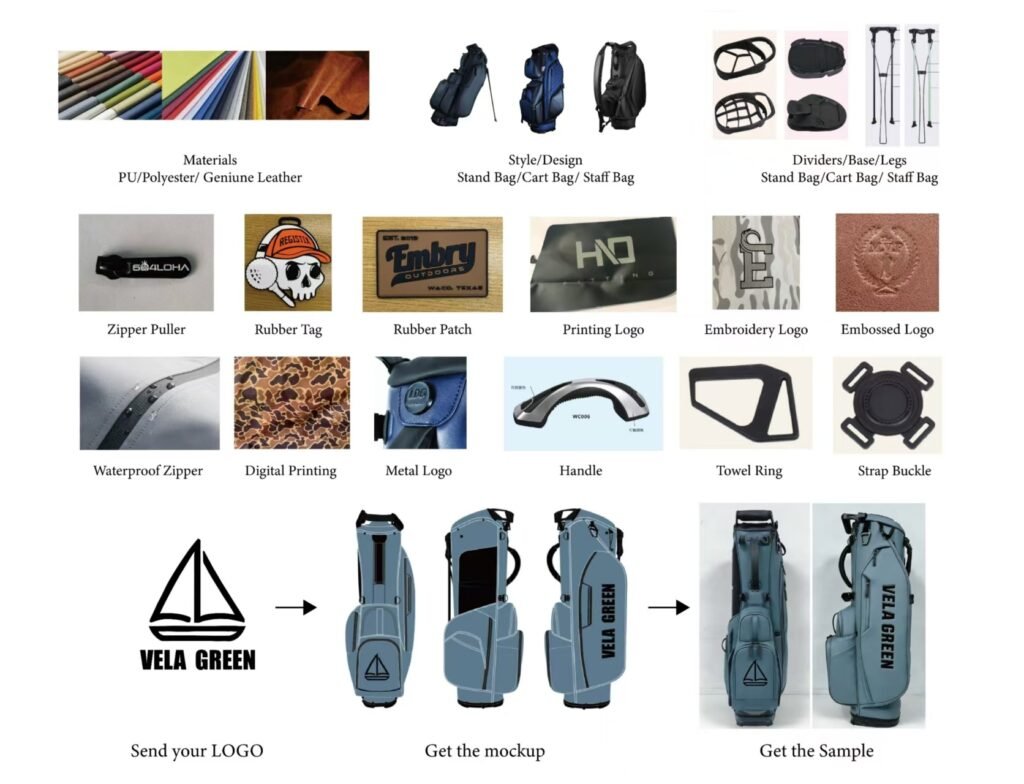
- Logo placement. Logos transform a standard bag into a branded statement piece-. Positioning options include large front pockets for maximum visibility and side pockets for personal details-
- Color customization. Offering a palette of custom colors allows buyers to match team or brand identity
- Modular designs. Modular golf bags achieved 40% higher funding goals on crowdfunding platforms-
- Personalization. Names, monograms, and unique combinations create one-of-a-kind products
Customization Lead Times
Professional customization typically takes 2–3 weeks after proof approval-. Fully custom, made-to-order bags may require 60–88 business days-. For B2B buyers, offering customization as a golf bag product differentiation strategy means balancing lead times against the premium positioning customization enables.
Strategy #5: Sustainability as a Golf Bag Product Differentiation Advantage
Sustainability has evolved from a nice-to-have to a genuine golf bag product differentiation strategy. Environmentally conscious consumers and retailers increasingly reward brands that demonstrate genuine environmental commitment.
Sustainable Differentiation Tactics
- Recycled materials. rPET from recycled plastic bottles reduces carbon footprint significantly-
- Durable construction. Bags that last longer reduce waste—a differentiation point that resonates with quality-focused buyers
- Reduced packaging. Minimizing plastic and using recyclable materials in packaging
- Certification. GRS (Global Recycled Standard) and OEKO-TEX certifications provide third-party validation
The Business Case for Sustainable Differentiation
Sustainable golf bag product differentiation appeals to:
- European retailers with strict environmental procurement policies
- Eco-conscious country clubs and resorts
- Corporate gift buyers seeking aligned values
- Younger golfers who prioritize sustainability
B2B buyers should verify sustainable claims through certification rather than accepting generic “eco-friendly” statements.
Implementing Golf Bag Product Differentiation: A Practical Framework
Successful golf bag product differentiation requires a systematic approach:
Step 1: Audit Your Current Product Line
Identify which of the five strategies you already employ and where gaps exist.
Step 2: Understand Your Target Market
Different segments value different differentiators. Walking golfers prioritize weight; frequent travelers value smart features; premium buyers seek materials and design.
Step 3: Prioritize Differentiators
Not every bag needs every feature. Select 2–3 differentiators per product line that align with your target customer‘s priorities.
Step 4: Partner with the Right Manufacturer
Ensure your OEM partner can deliver your chosen differentiators—whether that‘s carbon fiber construction, smart feature integration, or sustainable material sourcing.
Step 5: Tell the Story
Product differentiation is only valuable if buyers understand it. Develop marketing materials that explain why your differentiators matter.
Golf Bag Product Differentiation Metrics to Track
| Metric | What It Measures | Target |
|---|---|---|
| Wholesale price premium | Price vs. market average | 15–30% premium for differentiated products |
| Retailer reorder rate | Wholesale loyalty | 40%+ |
| Customer satisfaction | Post-purchase feedback | 4.5/5+ |
| Sell-through rate | Retailer inventory movement | 70%+ within season |
Conclusion: Master Golf Bag Product Differentiation for 2026 Success
Golf bag product differentiation is not optional in 2026. The market is growing—from USD 1.43 billion to USD 1.75 billion by 2031-—but competition is intensifying. Brands that differentiate through design, materials, smart features, customization, and sustainability will capture premium pricing and wholesale loyalty. Those that compete solely on price will find margins squeezed and retailers disloyal.
The five strategies in this guide provide a complete framework for golf bag product differentiation. Start by auditing your current product line against these strategies. Identify the differentiation gaps. Partner with manufacturers who can deliver your chosen differentiators. Tell your story effectively.
The brands that master golf bag product differentiation today will capture the market‘s growth tomorrow. Those that ignore it will watch their products become indistinguishable from competitors—and their margins disappear.
With 20 years of golf bag manufacturing experience, we help B2B clients execute product differentiation strategies through custom design, material innovation, and flexible production. Contact us to discuss how we can bring your differentiated golf bag vision to life.
OEM & ODM Service
Whether you’re planning to build your own brand, develop new products, or find a stable manufacturing partner for the US and European markets, working with a professional OEM & ODM factory can significantly improve your product quality and market competitiveness.
At Vela Green, we provide full-range OEM & ODM services for golf bags, golf headcovers, gloves, towels and other golf accessories. We support custom design, material selection, logo branding, color matching and mass production, strictly complying with CPSC, REACH and other international standards. With mature production experience, reliable quality control and professional export support, we help brands and importers develop market-oriented products with efficient lead times and flexible order quantities.